Rejoignez-nous pour un voyage dans le monde des livres!
Ajouter ce livre à l'électronique
Grey
Ecrivez un nouveau commentaire Default profile 50px
Grey
Abonnez-vous pour lire le livre complet ou lisez les premières pages gratuitement!
All characters reduced
On The Border With Crook - Frontier Chronicles: The American Southwest Through Military Eyes - cover

On The Border With Crook - Frontier Chronicles: The American Southwest Through Military Eyes

John Gregory Bourke

Maison d'édition: Good Press

  • 0
  • 0
  • 0

Synopsis

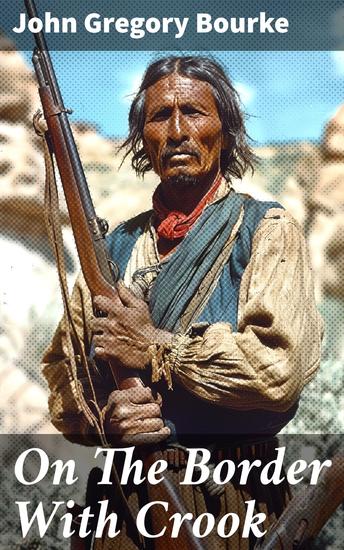
In "On The Border With Crook," John Gregory Bourke offers a compelling and vivid account of the American West during the late 19th century. Bourke, who served as an aide to General George Crook, employs a diary-style narrative that blends personal observation with historical detail, drawing readers into the complexities of military campaigns against Native American tribes. His prose is characterized by a rich, descriptive style that captures the harsh realities of frontier life, while also revealing the intricate dynamics of cultural encounters and conflicts that shaped this turbulent era. This work not only serves as a military chronicle but also as a poignant reflection on the human experience in the face of war and expansionism. An insightful figure in American history, Bourke was not only a soldier but also an accomplished ethnographer, which informs his nuanced portrayal of Indigenous peoples and their perspectives. His firsthand experiences provide a rare lens through which to examine the interactions between the U.S. Army and Native American tribes. Bourke's commitment to documenting these encounters demonstrates his belief in the importance of understanding history from multiple viewpoints. I highly recommend "On The Border With Crook" to scholars and general readers alike who wish to explore the complexities of American expansionism and Indigenous realities. Bourke's vivid storytelling and insightful analysis make this work an indispensable contribution to the historical literature of the American West.
Disponible depuis: 15/12/2023.
Longueur d'impression: 504 pages.
D'autres livres qui pourraient vous intéresser

  • The Pharaohs of Ancient Egypt - Rulers of the Nile - cover

    The Pharaohs of Ancient Egypt -...

    Omar Khalil

    • 0
    • 0
    • 0
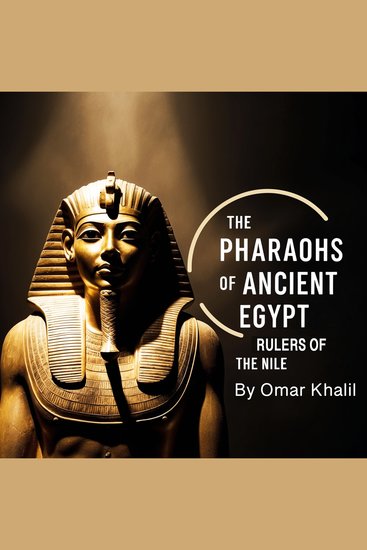
    The emergence of the pharaohs marked the beginning of one of history’s most iconic civilizations. In the early dynastic period around 3100 BCE, Egypt underwent a dramatic transformation as Upper and Lower Egypt were unified under a single ruler, traditionally identified as King Narmer or Menes. This unification not only established centralized rule but also laid the foundations for a dynastic tradition that would endure for millennia. The pharaoh, whose name means “great house,” came to be seen as both a political leader and a divine figure, embodying the will of the gods on earth. 
    As Egypt’s first kings consolidated power, they created administrative systems to manage resources, command armies, and oversee large-scale construction projects. Hierarchical governance emerged, with officials and scribes acting under the pharaoh’s authority to maintain order throughout the land. This new system allowed the pharaohs to centralize authority, control the fertile Nile Valley, and ensure the production and redistribution of grain and other goods, which became critical for sustaining a growing population and for asserting royal dominance. 
    Religious ideology played a key role in solidifying the power of the pharaohs. They were often depicted as the sons of deities, particularly associated with the sun god Ra and the sky god Horus. Temples were erected not just as places of worship, but as instruments of royal propaganda, showcasing the divine legitimacy of the ruler. Rituals, festivals, and monumental inscriptions reinforced the pharaoh’s sacred status and his role in maintaining ma’at, the cosmic order of balance and harmony.
    Voir livre
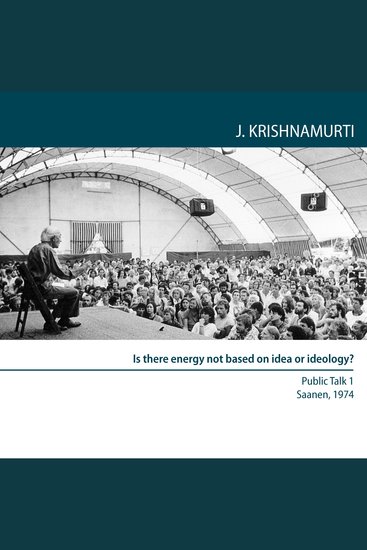
  • Is There Energy Not Based On Idea Or Ideology? - Saanen 1974 - Public Talk 1 - cover

    Is There Energy Not Based On...

    Jiddu Krishnamurti

    • 0
    • 0
    • 0
    "Is there energy not based on idea or ideology? - 16 July 1974  
    • Why is thought divisive? 
    • The desire to change in a particular direction gives an energy that is divisive. 
    • Will you free the mind taking time, through analysis, or can you look totally and 
    therefore be totally free? 
    • Does choiceless rejection of the false give a different kind of energy? 
    • Does a foundation give me direction or does it bring confusion? 
    • Is the operation of intelligence insight? 
    Questions from the audience followed the talk."
    Voir livre
  • The Great Irish Famine - cover

    The Great Irish Famine

    Cathal Poirteir

    • 0
    • 0
    • 0
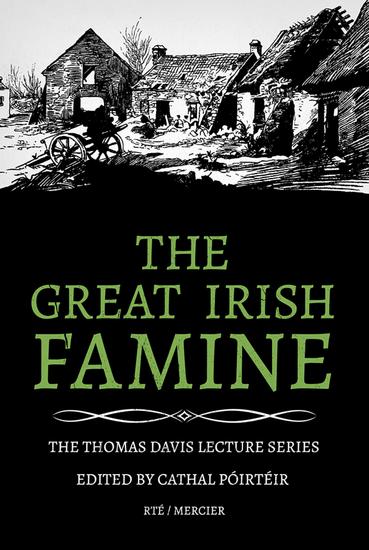
    This is the most wide-ranging series of essays ever published on the Great Irish Famine, and will prove of lasting interest to the general reader. Leading historians, economists and geographers – from Ireland, Britain and the United States – have assembled the most up-to-date research from a wide spectrum of disciplines including medicine, folklore and literature, to give the fullest account yet of the background and consequences of the Famine. Contributors include Dr Kevin Whelan, Professor Mary Daly, Professor James Donnelly and Professor Cormac Ó Gráda. The Great Irish Famine was the first major series of essays on the Famine published in Ireland for almost fifty years.
    Voir livre
  • The Universe Within - cover

    The Universe Within

    Raphael Terra

    • 0
    • 0
    • 0
    This audiobook has been recorded using Text to speech (TTS). 
     
    This is a divided and chaotic world. A world torn apart by greed and hatred. By desires that spread around the world like a disease. The stress of modern life pushes us further and further apart from each other and nature. 
     
    The simple fact is that we are destroying the planet upon which we rely for sustenance. Our chaotic minds form chaotic societies. Power and wealth are in the hands of the people who should not have them. We subconsciously know that we have screwed things up and yet we proceed to screw things up a little more with each passing generation. 
     
    We have forgotten the prime directive of the universe. We ignore its teachings. We fail to listen to its pleas. 
     
    The truth that will save you and all of mankind is very simple. It is the Universal Law of Attraction and it is time to listen and learn from it.
    Voir livre
  • Early America’s Most Important Expeditions: The History of the Lewis and Clark Expedition and Zebulon Pike’s Expeditions - cover

    Early America’s Most Important...

    Editors Charles River

    • 0
    • 0
    • 0
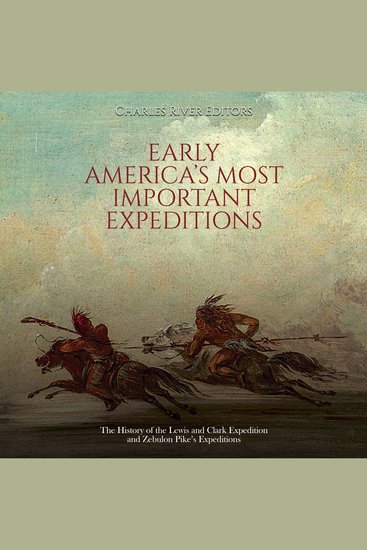
    Throughout his presidency at the beginning of the 19th century, Thomas Jefferson had worried about the future of the western U.S., seeing that settlements in the Ohio Valley and lower South relied upon the Mississippi River. France’s controls over the region, in his estimation, put the U.S. at a severe disadvantage. His solution proved successful beyond his wildest imagination, for Napoleon did not only sell New Orleans to the U.S, the portion that Jefferson instructed his ministers to make an offer on, but all of “New France,” the entire area of Louisiana. Jefferson might have said later that his purchase of the territory “strained” but did not “break” the Constitution, but also should have boasted that, with one stroke, he had removed one less obstacle to American expansionism. The Louisiana Purchase encompassed all or part of 15 current U.S. states and two Canadian provinces, and it allowed Jefferson to plan something he had talked about since taking office: an expedition deep into the unmapped and largely unknown continent with the final destination being the Pacific Ocean. This could prove the most significant of the goals that Jefferson - a person who thought of himself as a scientifically-minded thinker - wanted to accomplish as president. 
    	In the aftermath of the Louisiana Purchase, the Lewis and Clark expedition was a much-heralded blow for American rights in the face of international competition, but that was only one of four expeditions authorized by Jefferson. Four years before Lewis and Clark set off, an army officer from New Jersey led two long-distance treks, one northward to the headwaters of the Mississippi River and the other to the Southwest. These were the only expeditions authorized by Jefferson while they were already en route, planned and launched by subordinates within the military. Indeed, the career of Zebulon Pike was “dominated by ambiguously motivated explorations of the American West.”
    Voir livre
  • Difficult People - Tools for Handling Toxic Stubborn and Manipulative Personalities - cover

    Difficult People - Tools for...

    Rowic Nelligan

    • 0
    • 0
    • 0
    Difficult People: Tools for Handling Toxic, Stubborn, and Manipulative PersonalitiesAre you exhausted from dealing with difficult people? Do you often find yourself unsure of how to handle challenging situations? You're in the right place—this audiobook is designed specifically for you!This audiobook is your ultimate guide to mastering the art of dealing with challenging individuals. Whether you’re facing a toxic coworker, a stubborn friend, or a manipulative partner, this audiobook offers powerful strategies and actionable techniques to help you take control of your interactions. Discover how to set firm boundaries, communicate with confidence, and protect your emotional well-being while navigating even the most difficult personalities. With insights rooted in psychology and real-world experience, this audiobook is a must-have resource for anyone looking to enhance their relationships and thrive in any environment. Don’t let difficult people drain your energy—equip yourself with the tools to turn conflict into cooperation and regain your peace of mind. Transform your approach to challenging situations and take the first step towards a more harmonious life.
    Voir livre