Rejoignez-nous pour un voyage dans le monde des livres!
Ajouter ce livre à l'électronique
Grey
Ecrivez un nouveau commentaire Default profile 50px
Grey
Abonnez-vous pour lire le livre complet ou lisez les premières pages gratuitement!
All characters reduced
The Pilgrim's Progress - cover

The Pilgrim's Progress

John Bunyan

Maison d'édition: Edicions Perelló

  • 0
  • 0
  • 0

Synopsis

A powerful allegory of the spiritual journey, The Pilgrim's Progress follows Christian, an ordinary man who leaves the City of Destruction in search of salvation in the Celestial City. Along a path filled with trials, dangers, and revelations, Christian faces enemies such as despair, vanity, and doubt, while finding guidance and comfort through faith, hope, and truth. Written from a prison cell in the 17th century, this masterpiece by John Bunyan has transcended time with its moral depth, vivid imagination, and enduring ability to move readers across generations. More than a story, it is a map of the human soul in its quest for redemption.
Disponible depuis: 11/06/2025.
Longueur d'impression: 180 pages.


D'autres livres qui pourraient vous intéresser

  • The Sherlock Holmes Collection - The Classic Tales - cover

    The Sherlock Holmes Collection -...

    Arthur Conan Doyle

    • 0
    • 0
    • 0
    Sherlock Holmes was created by British author Sir Arthur Conan Doyle. Referring to himself as a "consulting detective" in the stories, Holmes is known for his proficiency with observation, deduction, forensic science, and logical reasoning that borders on the fantastic, which he employs when investigating cases for a wide variety of clients, including Scotland Yard. 
     
    Holmes first appeared in print in 1887's A Study in Scarlet, the character's popularity became widespread with the first series of short stories in The Strand Magazine, beginning with "A Scandal in Bohemia" in 1891; additional tales appeared from then until 1927, eventually totaling four novels and 56 short stories. All but one are set in the Victorian or Edwardian eras, between about 1880 and 1914. Most are narrated by the character of Holmes's friend and biographer Dr. John H. Watson, who usually accompanies Holmes during his investigations and often shares quarters with him at the address of 221B Baker Street, London, where many of the stories begin. 
     
    Though not the first fictional detective, Sherlock Holmes is arguably the best known. By the 1990s there were already over 25,000 stage adaptations, films, television productions, and publications featuring the detective, and Guinness World Records lists him as the most portrayed literary human character in film and television history. Holmes's popularity and fame are such that many have believed him to be not a fictional character but a real individual; numerous literary and fan societies have been founded on this pretense. Avid readers of the Holmes stories helped create the modern practice of fandom.  
     
    Sir Arthur Ignatius Conan Doyle KStJ DL was a British writer and physician.
    Voir livre
  • Heart of Darkness - cover

    Heart of Darkness

    Joseph Conrad

    • 0
    • 0
    • 0
    Heart of Darkness is Joseph Conrad's haunting and profoundly influential novella, a powerful exploration of imperialism, moral ambiguity, and the darkness that lies within the human soul. Framed as a seafaring tale yet unfolding as a psychological journey, the novel remains one of the most enduring works of modern literature.
    
    The story follows Charles Marlow, a seasoned sailor who recounts his voyage up the Congo River while working for a Belgian trading company. Tasked with transporting supplies and eventually meeting the enigmatic agent Kurtz, Marlow travels deeper into the African interior, where the trappings of European "civilization" gradually dissolve. As the jungle closes in, so too does a sense of unease, revealing the brutal realities of colonial exploitation and unchecked power.
    
    Kurtz, once celebrated as a man of exceptional promise and ideals, becomes the embodiment of moral collapse. His descent into tyranny and madness exposes the hypocrisy of imperial ambitions and challenges the belief that progress and enlightenment accompany empire. Through Marlow's reflections, Conrad interrogates the fragile boundaries between civilization and savagery, reason and obsession.
    
    Written in Conrad's dense, evocative prose, Heart of Darkness is as much an inward journey as a physical one. The novella confronts readers with unsettling questions about human nature, greed, and responsibility, suggesting that the true "darkness" resides not in distant lands but within the hearts of men themselves.
    
    Provocative, unsettling, and timeless, Heart of Darkness continues to inspire debate and interpretation, influencing countless writers, filmmakers, and thinkers. It is an essential work for readers seeking a profound meditation on power, conscience, and the complexities of the modern world.
    Voir livre
  • No Living Voice - From their pens to your ears genius in every story - cover

    No Living Voice - From their...

    Thomas Street Millington

    • 0
    • 0
    • 0
    The bookshelves of British literature are incredible collections that have gathered together centuries of very talented authors.  From these Isles their fame spread and whilst among their number many are now forgotten or neglected their talents endure.  Among them is Thomas Street Millington.
    Voir livre
  • Gulliver's Travels - cover

    Gulliver's Travels

    Jonathan Swift

    • 0
    • 0
    • 0
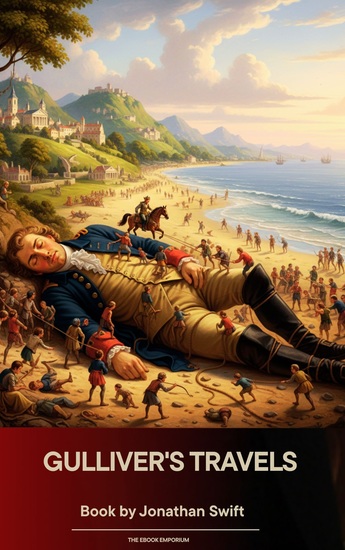
    "I told him that should he happen to see a man who was extremely tall, he would be very much mistaken if he thought him a giant."
    
    Shipwrecked physician Lemuel Gulliver embarks on four extraordinary journeys that challenge his—and the reader's—perception of reality. From the tiny, war-mongering citizens of Lilliput to the towering, moral giants of Brobdingnag, and from the floating pseudo-intellectual city of Laputa to the noble, rational horses known as Houyhnhnms, Gulliver encounters civilizations that mirror the best and worst of humanity. What begins as a quest for discovery turns into a devastating critique of British society, religious conflict, and the very definition of being "human."
    
    The Scale of Perspective: In the first two books, Swift uses physical size as a metaphor for moral stature. In Lilliput, Gulliver is a giant among petty, small-minded politicians who fight over which end of an egg to crack. In Brobdingnag, he becomes a literal "toy," forced to defend the "grandeur" of Europe to a King who views humans as "the most pernicious race of little odious vermin."
    
    The Critique of Reason: The voyage to the flying island of Laputa serves as a hilarious yet biting attack on theoretical science and useless "intellectualism." Here, Swift mocks the Royal Society with "Projectors" who try to extract sunbeams from cucumbers while their people starve in the ruins of neglected farms.
    
    The Final Epiphany: Man vs. Beast: The novel reaches its peak in the land of the Houyhnhnms, where rational horses rule over the filthy, impulsive Yahoos—creatures that Gulliver realizes, with horror, are actually human beings. This final encounter forces Gulliver into a state of misanthropy, forever changing how he views his own family and kind.
    
    Experience the world through a different lens. Purchase "Gulliver's Travels" today and discover why it remains the most dangerous comedy ever written.
    Voir livre
  • War and Peace (Book Four: 1806) - cover

    War and Peace (Book Four: 1806)

    Leo Tolstoy

    • 0
    • 0
    • 0
    War and Peace is a literary work mixed with chapters on history and philosophy by the Russian author Leo Tolstoy. It was first published serially, then published in its entirety in 1869. It is regarded as one of Tolstoy's finest literary achievements and remains an internationally praised classic of world literature.
    Book 4: 1806: Early in the year 1806 Nicholas Rostóv returned home on leave. Denísov was going home to Vorónezh and Rostóv persuaded him to travel with him as far as Moscow and to stay with him there. Meeting a comrade at the last post station but one before Moscow, Denísov had drunk three bottles of wine with him and, despite the jolting ruts across the snow-covered road, did not once wake up on the way to Moscow, but lay at the bottom of the sleigh beside Rostóv, who grew more and more impatient the nearer they got to Moscow.
    Voir livre
  • Crime and Punishment - cover

    Crime and Punishment

    Fyodor Dostoevsky

    • 0
    • 0
    • 0
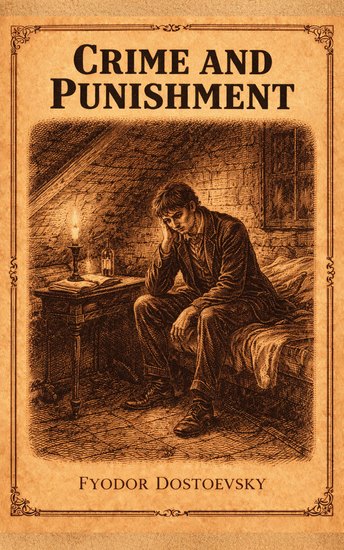
    Crime and Punishment is a towering masterpiece of psychological fiction that delves into guilt, morality, redemption, and the turbulent depths of the human conscience. In this profound and gripping novel, Fyodor Dostoevsky explores the devastating consequences of a single, irreversible act and the spiritual struggle that follows.
    
    The story centers on Rodion Raskolnikov, a destitute former student living in St. Petersburg. Intelligent, proud, and isolated, he develops a dangerous theory: that certain extraordinary individuals possess the moral right to transgress laws for a higher purpose. Driven by desperation and intellectual arrogance, he commits a brutal murder, believing himself justified and immune to remorse.
    
    Yet the true punishment is not delivered by the courts—it unfolds within his own mind. Tormented by guilt, paranoia, and feverish confusion, Raskolnikov spirals into psychological torment. His interactions with a cast of vividly drawn characters—among them the compassionate and self-sacrificing Sonia, the relentless investigator Porfiry Petrovich, and his devoted mother and sister—intensify his inner conflict. Each encounter forces him to confront the moral implications of his philosophy and the emotional cost of his actions.
    
    Dostoevsky masterfully portrays the suffocating atmosphere of poverty-stricken urban life, using the crowded streets and claustrophobic rooms of the city to mirror the protagonist's mental anguish. The novel probes profound questions: What defines justice? Can intellectual reasoning justify immoral acts? Is redemption possible after grave wrongdoing? Through Raskolnikov's suffering, the narrative examines the limits of rationalism and the necessity of compassion, humility, and faith.
    
    Dark, suspenseful, and deeply philosophical, Crime and Punishment is more than a tale of murder—it is an exploration of conscience and the human capacity for both destruction and spiritual renewal. Dostoevsky's insight into the complexities of guilt and redemption has ensured the novel's enduring place as one of the greatest achievements in world literature.
    Voir livre