Join us on a literary world trip!
Add this book to bookshelf
Grey
Write a new comment Default profile 50px
Grey
Subscribe to read the full book or read the first pages for free!
All characters reduced
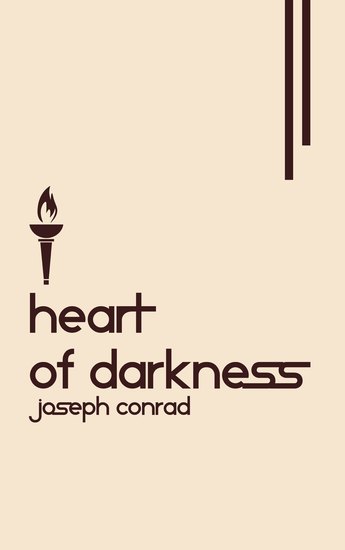
Heart of Darkness - cover

Heart of Darkness

Joseph Conrad

Publisher: CLXBX

  • 0
  • 0
  • 0

Summary

Heart of Darkness is Joseph Conrad's haunting and profoundly influential novella, a powerful exploration of imperialism, moral ambiguity, and the darkness that lies within the human soul. Framed as a seafaring tale yet unfolding as a psychological journey, the novel remains one of the most enduring works of modern literature.

The story follows Charles Marlow, a seasoned sailor who recounts his voyage up the Congo River while working for a Belgian trading company. Tasked with transporting supplies and eventually meeting the enigmatic agent Kurtz, Marlow travels deeper into the African interior, where the trappings of European "civilization" gradually dissolve. As the jungle closes in, so too does a sense of unease, revealing the brutal realities of colonial exploitation and unchecked power.

Kurtz, once celebrated as a man of exceptional promise and ideals, becomes the embodiment of moral collapse. His descent into tyranny and madness exposes the hypocrisy of imperial ambitions and challenges the belief that progress and enlightenment accompany empire. Through Marlow's reflections, Conrad interrogates the fragile boundaries between civilization and savagery, reason and obsession.

Written in Conrad's dense, evocative prose, Heart of Darkness is as much an inward journey as a physical one. The novella confronts readers with unsettling questions about human nature, greed, and responsibility, suggesting that the true "darkness" resides not in distant lands but within the hearts of men themselves.

Provocative, unsettling, and timeless, Heart of Darkness continues to inspire debate and interpretation, influencing countless writers, filmmakers, and thinkers. It is an essential work for readers seeking a profound meditation on power, conscience, and the complexities of the modern world.
Available since: 02/07/2026.
Print length: 131 pages.

Other books that might interest you

  • Dream of the Red Chamber - A Tale Of Betrayal - cover

    Dream of the Red Chamber - A...

    Cao Xueqin

    • 0
    • 0
    • 0
    The Dream of the Red Chamber (also known as The Story of the Stone) is one of the Four Great Classical Novels of China, and considered the greatest of them all. Almost 40 main characters and some 500 minor characters tell the fortunes of the Chia family; the book details mainly the life of Chia Pao-yü, the heir apparent, who is described as very intelligent, but also as carefree and self-indulging. The already wealthy Chia family rises to new heights when Pao-yü's elder sister becomes an imperial consort. On her first visit home, a lush garden is built, where much of the rest of the story takes place. The intrigues surrounding Pao-yü and his cousins, especially Lin Tai-yü who he loves, and Hsüeh Pao-ch'ai who he is finally tricked into marrying, make up a large part of the story. The decline of the Chia family begins with the death of the imperial consort, and when they fall into disfavour with the emperor, their mansions and the garden are eventually destroyed. 
     
    The whole book has 120 chapters, only 80 of which were written by Cao Xueqin before his death in 1764. Cheng Weiyuan and Gao E claimed to have access to Cao's papers, and published what is now known as the Cheng-Gao version in 1791. Henry Bencraft Joly translated only part of the book written by Cao. Book I contains the first 24 chapters, Book II ends abruptly with chapter 56; a Book III was never published.
    Show book
  • Emma - cover

    Emma

    Jane Austen

    • 0
    • 0
    • 0
    Emma Woodhouse is a twenty-year-old, wealthy lady living with her father near the provincial town of Highbury. Despite believing that she herself will never marry, she perceives a talent for matchmaking. After the wedding of her governess and a local widower, Mr. Weston, which she treats as her personal success, she decides to find a worthy husband for her new friend, Harriet Smith. Although Harriet's parents are unknown, Emma is convinced that the girl deserves a relationship with a gentleman and makes her not follow her own heart, but submit to her patronage. Unfortunately, the young lady's imaginings do not entirely align with the desires of those around her. Matters become complicated, and Emma must look into her own heart. 
    The novel is a social comedy that explores the social and romantic relationships of the era and is considered one of the most important works of English literature. Literary critics praise Emma for its elegant style, detailed character portrayal, and subtle humor. The novel has been adapted multiple times for cinema, television, and theater.
    Show book
  • Pride and Prejudice - cover

    Pride and Prejudice

    Jane Austen

    • 0
    • 4
    • 0
    Pride and Prejudice is a novel of manners by Jane Austen, first published in 1813. The story follows the main character Elizabeth Bennet as she deals with issues of manners, upbringing, morality, education, and marriage in the society of the landed gentry of early 19th-century England. Elizabeth is the second of five daughters of a country gentleman living near the fictional town of Meryton in Hertfordshire, near London. Page 2 of a letter from Jane Austen to her sister Cassandra (11 June 1799) in which she first mentions Pride and Prejudice, using its working title First Impressions. (NLA) Though the story is set at the turn of the 19th century, it retains a fascination for modern readers, continuing near the top of lists of "most loved books" such as The Big Read.[1] It has become one of the most popular novels in English literature and receives considerable attention from literary scholars. Modern interest in the book has resulted in a number of dramatic adaptations and an abundance of novels and stories imitating Austen's memorable characters or themes. To date, the book has sold some 20 million copies Worldwide
    Show book
  • White Fang - cover

    White Fang

    Jack London

    • 0
    • 0
    • 0
    Born in the wild. Shaped by fear. Changed forever by a single act of kindness.
    In the frozen North, White Fang—a fierce wolf-dog—learns early that survival depends on strength, instinct, and relentless will. But when he is torn from the wilderness and thrust into the world of men, cruelty hardens him… until a compassionate human offers him the chance to become something more than a creature of fear.
    
    Praised as "one of the greatest wilderness novels ever written," Jack London's classic explores brutality, loyalty, transformation, and the healing power of trust. Its vivid landscapes and emotional depth continue to captivate readers of all ages.
    
    If you love powerful animal stories, rugged adventure, and journeys that reveal the heart beneath the wild, this timeless masterpiece will move you deeply.
    
    Open the book—and follow White Fang's extraordinary fight for life, freedom, and love.
    Show book
  • Thoughts On Art and Life - cover

    Thoughts On Art and Life

    Leonardo da Vinci

    • 0
    • 0
    • 0
    'Thoughts On Art and Life' by Leonardo Da Vinci is a fascinating collection of writings from the great polymath of the Italian Renaissance. There are sections covering the great man's thoughts on life, art, and science. The translator, Maurice Baring trawled the available manuscripts to distil da Vinci's writings on these subjects into a single, accessible tome, which will be of interest to students of da Vinci, the Renaissance, and the history of both art and science. Leonardo di ser Piero da Vinci (1452-1519) was an Italian Renaissance polymath: painter, sculptor, architect, musician, scientist, mathematician, engineer, inventor, anatomist, geologist, cartographer, botanist, and writer. His genius, perhaps more than that of any other figure, epitomized the Renaissance humanist ideal
    Show book
  • The New Utopia - cover

    The New Utopia

    Jerome K.

    • 0
    • 0
    • 0
    'The human race must press onward to its destiny… an ordered army, marching side by side over the level plain of equity and equality.'
    
    One of Jerome's more accomplished essays, The New Utopia unveils a fascinating insight into contemporary opinion on socialism.
    
    Published at the height of the second industrial revolution, and the consequent backlash surrounding labourer's wages and poor working conditions, The New Utopia recounts a dream of the author's in which the world is transformed into a socialist wonderland. But what begins as a utopia soon descends into a warped vision of collective good, as egalitarianism is taken to extreme lengths: men and women are clothed in identical grey uniforms, donning the same short, black hair, wiped clean of individuality and merit. Gripping, pacey and a clever political commentary, Jerome creates a nightmarish landscape of distorted equality and unravels its consequences.
    Jerome K. Jerome (1859 – 1927) was an English author and actor. Renowned for his comic works, he is best known for the hilarious travelogue, Three Men in a Boat. A prolific writer and admirer of the theatre, he penned several novels, essays and plays throughout his life.
    Show book