Unisciti a noi in un viaggio nel mondo dei libri!
Aggiungi questo libro allo scaffale
Grey
Scrivi un nuovo commento Default profile 50px
Grey
Iscriviti per leggere l'intero libro o leggi le prime pagine gratuitamente!
All characters reduced
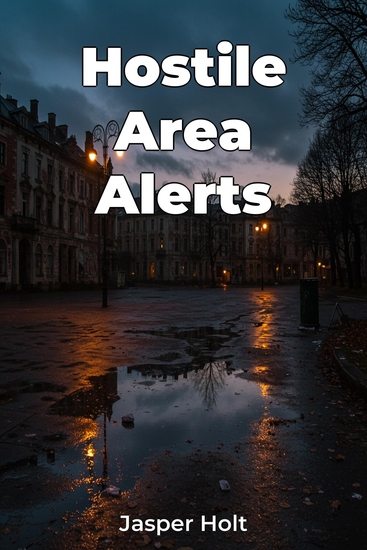
Hostile Area Alerts - cover

Hostile Area Alerts

Jasper Holt

Traduttore A AI

Casa editrice: Publifye

  • 0
  • 0
  • 0

Sinossi

"Hostile Area Alerts" addresses the critical need for LGBTQ travel safety information in a world where acceptance varies drastically. It identifies countries where LGBTQ individuals face heightened risks due to discriminatory laws, social hostility, and surveillance. The book highlights the disturbing reality that a lack of awareness about LGBTQ-specific dangers can lead to harassment, imprisonment, or violence.

 
For example, many nations still criminalize same-sex relationships, with penalties ranging from fines to imprisonment.

 
The book progresses from a global overview of LGBTQ rights to detailed examinations of social and cultural contexts that fuel hostility. A dedicated section explores surveillance practices targeting LGBTQ individuals, offering practical advice on digital privacy. Drawing on reports from human rights organizations and firsthand accounts, "Hostile Area Alerts" employs a mixed-methods approach, combining data with personal narratives.

 
The book provides strategies for risk assessment and mitigation, empowering LGBTQ travelers to make informed decisions and advocate for a more inclusive world.
Disponibile da: 07/04/2025.
Lunghezza di stampa: 89 pagine.

Altri libri che potrebbero interessarti

  • Shirley Chisholm in Her Own Words - Speeches and Writings - cover

    Shirley Chisholm in Her Own...

    Zinga A. Fraser

    • 0
    • 0
    • 0
    LOOKING BEYOND HER POLITICAL SYMBOLISM TO CELEBRATE NOT ONLY WHO SHIRLEY CHISHOLM WAS BUT WHO SHE IS—A REVOLUTIONARY THINKER WITH MUCH TO TEACH US TODAY 
     
    In the midst of her groundbreaking twenty-year career in the U.S. House of Representatives, Congresswoman Shirley Chisholm once declared, “Everyone—with the exception of the black woman herself—has been interpreting the black woman.” Edited and introduced by Zinga A. Fraser, Shirley Chisholm in Her Own Words gives readers a rare opportunity to engage with the congresswoman’s powerful ideas in her own voice. 
     
    Many Americans are familiar with Chisholm’s importance as the first Black woman in Congress and the first woman and African American to run for president with either major party. This long-overdue treatment of her work establishes Chisholm as an unparalleled public intellectual, powerful orator, and Black feminist both in her time and now. It introduces a new generation to one of the most impactful proponents of democracy in America. 
     
    “A timely, detailed, and inspiring book that helps maintain the intellectual legacy of Shirley Chisholm. The book reveals new dimensions of the congresswoman’s politics, activism, and spirit.”—Regina King, Academy Award–winning actor, and producer and star of Shirley
    Mostra libro
  • Benin Empire - Art Warfare and the Kingdom of Bronze - cover

    Benin Empire - Art Warfare and...

    Rolf Hedger

    • 0
    • 0
    • 0
    The Benin Empire, one of the most powerful and influential kingdoms in West Africa, flourished for over 1,000 years. Its capital, Benin City, located in present-day southern Nigeria, was an epicenter of art, culture, and political power. The empire’s historical significance extends beyond its impressive architectural feats, remarkable artistry, and military prowess, as it was also a hub of trade and diplomacy. 
    The origins of the Benin Empire can be traced back to the early 11th century, with a history deeply intertwined with the Kingdom of Ife, from which the Benin people are believed to have descended. The development of the kingdom was largely shaped by its early rulers, the Obas, whose leadership and vision helped lay the foundation for the Benin Empire. The Benin monarchy, a vital institution in the kingdom, solidified the rule of the Obas and their divine connection to the people. 
    At its peak, the Benin Empire extended its influence over a vast region in West Africa, establishing a complex political and social structure. The monarchy not only commanded political and military power but also served as a central force in religious and cultural life. The empire was renowned for its rich heritage in art, including the world-famous Benin Bronzes, which showcased the advanced craftsmanship and symbolic significance of Benin artisans. These bronzes, intricate sculptures, and plaques, which depicted scenes of royalty, warriors, and historical events, remain symbols of the empire’s grandeur.
    Mostra libro
  • Black Panther Woman - The Political and Spiritual Life of Ericka Huggins - cover

    Black Panther Woman - The...

    Mary Frances Phillips, Charlene...

    • 0
    • 0
    • 0
    The first biography of Ericka Huggins, a queer Black woman who brought spiritual self-care practices to the Black Panther Party. 


    In this groundbreaking biography, Mary Frances Phillips immerses listeners in the life and legacy of Ericka Huggins, a revered Black Panther Party member, as well as a mother, widow, educator, poet, and former political prisoner. In 1969, the police arrested Ericka Huggins along with Bobby Seale and fellow Black Panther Party members, who were accused of murdering Alex Rackley. This marked the beginning of her ordeal, as she became the subject of political persecution and a well-planned FBI COINTELPRO plot. 


    Drawing on never-before-seen archival sources, including prison records, unpublished letters, FBI records, and oral histories, Phillips foregrounds the paramount role of self-care and community care in Huggins's political journey, shedding light on Ericka's use of spiritual wellness practices she developed during her incarceration. In prison, Huggins was able to survive the repression and terror she faced while navigating motherhood through her unwavering commitment to spiritual practices. In showcasing this history, Phillips reveals the significance of spiritual wellness in the Black Panther Party and Black Power movement.
    Mostra libro
  • Mughal Empire - The Early Modern Islamic Empire in South Asia - cover

    Mughal Empire - The Early Modern...

    Kelly Mass

    • 0
    • 0
    • 0
    The Mughal Empire, also referred to as the Mogul or Moghul Empire, was one of the most powerful and influential early modern Islamic empires in South Asia. Established in the 16th century, it controlled vast regions for over two centuries, encompassing territories from the peripheries of the Indus basin in the west, extending to northern Afghanistan, Kashmir in the north, present-day Bangladesh in the east, and stretching as far south as the Deccan Plateau's uplands.The origins of the Mughal Empire trace back to 1526 when Babur, a warrior chieftain from what is now Uzbekistan, founded the empire. Babur's military strategy combined traditional cavalry tactics with the latest artillery techniques, using matchlock guns and cast cannons acquired with Ottoman assistance. These advancements, alongside his strategic acumen, led him to a decisive victory against the Sultan of Delhi, Ibrahim Lodhi, at the First Battle of Panipat. This battle marked a turning point, allowing Babur to establish his dominance over northern India and subdue rival Rajput and Afghan forces.While Babur laid the foundation of the empire, the true structure of the Mughal state is often attributed to his grandson, Akbar the Great. By the late 16th century, under Akbar's rule, the empire expanded its reach and established a well-organized imperial administration that laid the groundwork for political stability, cultural integration, and economic prosperity. Akbar's reign is particularly noted for promoting a policy of religious tolerance, encouraging a synthesis of Hindu and Muslim cultures, and setting up an efficient centralized bureaucracy.
    Mostra libro
  • Battle of Ravenna The: The History of the Most Famous Battle of the Italian Wars - cover

    Battle of Ravenna The: The...

    Editors Charles River

    • 0
    • 0
    • 0
    In 1494, there were five sovereign regional powers in Italy: Milan, Venice, Florence, the Papal States and Naples. In 1536, only one remained: Venice. These decades of conflict precipitated great anxiety among Western thinkers, and Italians responded to the fragmentation of Latin Christendom, the end of self-governance for Italians, and the beginning of the early modern era in various ways. They were always heavily influenced by the lived experience of warfare between large Christian armies on the peninsula. The diplomatic and military history of this 30-year period is a complex one that one eminent Renaissance historian, Lauro Martines, has described as "best told by a computer, so many and tangled are the treatises, negotiations and battles." At the same time, the fighting went in tandem with the Renaissance and was influenced by it.  
    	Before 1494, death tolls were counted in hundreds rather than thousands, but that would change over the next generation, and among the many battles fought, few stood out like the Battle of Ravenna in 1512. Ravenna is an ancient city in northern Italy on the Adriatic Coast that replaced Rome as capital of the Western Roman Empire for much of the 5th century and continued to serve as a regional center for its successor states, including the Ostrogoths, Byzantines, and Papal States. On April 11 of that year, two great armies met near Ravenna, which had been the site of conflict at least six times before on account of its strategic importance. It was a well-protected city with connections to rich Mediterranean ports, and it guarded the routes to central and southern Italy. Over 44,000 troops gathered, a vast number for the time, to fight over Italy’s destiny, which had become important to France, Austria, and Spain, the great powers of the time.
    Mostra libro
  • Food Allergy Advocacy - Parenting and the Politics of Care - cover

    Food Allergy Advocacy -...

    Danya Glabau

    • 0
    • 0
    • 0
    A detailed exploration of parents' fight for a safe environment for their kids, interrogating how race, class, and gender shape health advocacy 


    The success of food allergy activism in highlighting the dangers of foodborne allergens shows how illness communities can effectively advocate for the needs of their members. In Food Allergy Advocacy, Danya Glabau follows parents and activists as they fight for allergen-free environments, accurate labeling, the fair application of disability law, and access to life-saving medications for food-allergic children in the United States. At the same time, she shows how this activism also reproduces the culturally dominant politics of personhood and responsibility, based on an idealized version of the American family, centered around white, middle-class, and heteronormative motherhood. 


    By holding up the threat of food allergens to the white nuclear family to galvanize political and scientific action, Glabau shows, the movement excludes many, including Black women and disabled adults, whose families and health have too often been marginalized from public health and social safety net programs. Further, its strategies are founded on the assumption that market-based solutions will address issues of social exclusion and equal access to healthcare.
    Mostra libro