Begleiten Sie uns auf eine literarische Weltreise!
Buch zum Bücherregal hinzufügen
Grey
Einen neuen Kommentar schreiben Default profile 50px
Grey
Jetzt das ganze Buch im Abo oder die ersten Seiten gratis lesen!
All characters reduced
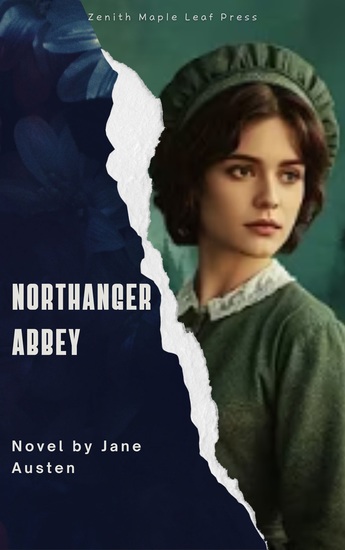
Northanger Abbey - Jane Austen's Witty Tale of Romance Satire and Imagination - cover

Northanger Abbey - Jane Austen's Witty Tale of Romance Satire and Imagination

Jane Austen, Zenith Maple Leaf Press

Verlag: Zenith Maple Leaf Press

  • 0
  • 0
  • 0

Beschreibung

A charming satire of gothic novels wrapped in romance and wit.

Jane Austen's Northanger Abbey, her first completed novel though published posthumously in 1817, is a delightful blend of romantic comedy and literary parody. It follows the spirited and imaginative Catherine Morland, a young woman whose love of gothic novels colors her view of the world. When she visits the grand but mysterious Northanger Abbey, Catherine's overactive imagination leads her to misinterpret the ordinary as sinister—until real lessons in love and life emerge.

💡 Why readers adore this classic:

A brilliant satire of gothic fiction and its melodramatic tropes.

A heroine who is refreshingly naïve, relatable, and endearing.

Sharp Austenian wit in exploring themes of romance, social class, and perception vs. reality.

A playful and accessible introduction to Austen's world for new readers.

🌟 Perfect for:

Fans of Jane Austen's witty social commentary and romantic plots.

Readers who love literary humor and satire.

Those looking for a lighthearted yet thought-provoking classic.

🚀 Step into Jane Austen's witty world of love, laughter, and gothic satire—Click "Buy Now" to add this gem to your collection!
Verfügbar seit: 19.08.2025.
Drucklänge: 143 Seiten.
Weitere Bücher, die Sie mögen werden

  • The Scarlet Pimpernel - cover

    The Scarlet Pimpernel

    Baroness Emmuska Orczy

    • 0
    • 0
    • 0
    "The Scarlet Pimpernel" is a historical adventure novel first published in 1905. Written by Baroness Emmuska Orczy, the story is set during the early phase of the French Revolution and introduces the character of Sir Percy Blakeney, a daring English nobleman who disguises himself as the mysterious Scarlet Pimpernel. Under this alter ego, he daringly rescues French aristocrats from the guillotine. The novel also explores the tension and romance between Sir Percy and his French wife, Marguerite, who is initially unaware of her husband's secret identity. The book has been adapted into numerous stage and film productions and has spawned sequels and a whole series of Pimpernel books.
    Zum Buch
  • Northanger Abbey - Full Cast Drama - cover

    Northanger Abbey - Full Cast Drama

    Jane Austen

    • 0
    • 0
    • 0
    Jane Austen's "Northanger Abbey" stands as a unique gem among her body of work. Published posthumously in 1817, the novel offers a delightful departure from Austen's more conventional romantic tales, instead serving as a sharp satire of the gothic novel genre that was popular in her time. 
     
    The story revolves around Catherine Morland, an earnest and imaginative young woman who is introduced to the world of society and courtship during her stay in Bath, England. As Catherine embarks on her own romantic adventures, Austen uses her character to playfully deconstruct the conventions of gothic literature, which was characterized by eerie castles, mysterious secrets, and dark, brooding heroes. 
    Through Catherine's vivid imagination and penchant for reading gothic novels, Austen takes the opportunity to mock the sensationalism and melodrama of the genre. Catherine's expectations of intrigue and danger are repeatedly thwarted by the mundane realities of everyday life. Her tendency to view her surroundings through the lens of her favorite novels leads to humorous misunderstandings and serves as a commentary on the dangers of allowing fiction to overly influence one's perception of reality. 
     
    Austen employs irony and humor throughout "Northanger Abbey" to highlight the contrast between Catherine's fanciful expectations and the ordinary events she encounters. The novel's satirical tone gently pokes fun at the excesses and absurdities of gothic literature while simultaneously celebrating the power of imagination and the importance of distinguishing between fiction and reality.
    Zum Buch
  • The Treasure of the Lake - cover

    The Treasure of the Lake

    H. Rider Haggard

    • 0
    • 1
    • 0
    Gentleman adventurer Allan Quartermain discovers a strange African village in this 1926 novel by the author of King Solomon’s Mines.An Englishman living in South Africa, Allan Quartermain has spent his life exploring the mysteries of the Dark Continent. When he hears the legend of a lost tribe ruled by a magical priestess, he goes in search of a remote holy lake surrounded by tall cliffs. Together with his companion Hans, Allan discovers a land and a people even more peculiar than the legend describes. Published posthumously in 1926, The Treasure of the Lake is one of the last Allan Quartermain novels written by H. Rider Haggard. Set in the Victorian era, it is a quintessential tale of colonial adventure.
    Zum Buch
  • A Successful Rehearsal - From their pens to your ears genius in every story - cover

    A Successful Rehearsal - From...

    Anthony Hope

    • 0
    • 0
    • 0
    Sir Anthony Hope Hawkins was born on 9th February 1863 in Clapton, London.  
    He was educated at St John's School, Leatherhead, Marlborough College and Balliol College, Oxford.  Hope trained as a lawyer and barrister and was called to the Bar by the Middle Temple in 1887. Despite what was thought to be a promising legal career he had literary ambitions and wrote in his spare time. 
    His early works appeared in various periodicals of the day but for his first book ‘A Man of Mark’ (1890), with no publisher interested, he published with his own resources.  
    More novels and short stories followed, including the mildly successful ‘Mr Witt's Widow’ in 1892. Hope even found time to run as the Liberal candidate for Wycombe in the election that same year but was unsuccessful. 
    His first major literary success came with ‘The Dolly Dialogues’, a collection of previously published magazine pieces followed very quickly by his instant classic, ‘The Prisoner of Zenda’. He now gave up the vestiges of his legal career to pursue writing full-time. 
    Despite never again reaching the same pinnacle of success he was popular and wrote prolifically across novels, plays and of course, short stories though his writing output rapidly diminished after the war. 
    In 1918 he was knighted for his contribution to propaganda efforts during World War I.  
    His short stories are delicate, mannered and often surprising with their wit, humour and interplay of characters who say one thing and usually mean another.  He was very definitely a writer of escapist rather than serious fare but they are no less enjoyable for that. 
    Anthony Hope died of throat cancer on 8th July 1933 at his country home, Heath Farm at Walton-on-the-Hill in Surrey. He was 70.
    Zum Buch
  • The Doll - The Lost Short Stories - cover

    The Doll - The Lost Short Stories

    Daphne du Maurier

    • 0
    • 1
    • 0
    “Early stories [that] vividly portrays with humor, candidness, and detail du Maurier’s fascination with the problems of human connection.” —Publishers Weekly 
     
    Perhaps best known for her immortal gothic masterwork Rebecca—the basis for the Academy Award–winning motion picture directed by Alfred Hitchcock—Daphne de Maurier began her illustrious writing career penning short stories. In The Doll, thirteen of du Maurier’s early shorter fictional works have been collected—each story written before the author’s twenty-third birthday and some in print for the first time since the 1930s. Compelling tales of human foibles and tragic romance, the stories in The Doll represent the emergence of a remarkable literary talent who later went on to create Jamaica Inn, The Birds, and other classic works. This breathtaking collection of short fiction belongs on the bookshelf of every Daphne du Maurier fan. 
     
    “[D]electably florid.” —New York Times Book Review 
     
    “[Du Maurier’s] storytelling gifts are formidable.” —Kirkus Reviews
    Zum Buch
  • Cloak The (Unabridged) - cover

    Cloak The (Unabridged)

    Nikolai Gogol

    • 0
    • 0
    • 0
    Nikolai Gogol was one of the first to use the technique of the grotesque. According to Viktor Shklovsky, Gogol's strange style of writing resembles the "ostranenie" technique of defamiliarization. His early works, such as Evenings on a Farm Near Dikanka, were influenced by his Ukrainian upbringing, Ukrainian culture and folklore.
    THE CLOAK: In the department of-but it is better not to mention the department. There is nothing more irritable than departments, regiments, courts of justice, and, in a word, every branch of public service. Each individual attached to them nowadays thinks all society insulted in his person.
    Zum Buch