Begleiten Sie uns auf eine literarische Weltreise!
Buch zum Bücherregal hinzufügen
Grey
Einen neuen Kommentar schreiben Default profile 50px
Grey
Jetzt das ganze Buch im Abo oder die ersten Seiten gratis lesen!
All characters reduced
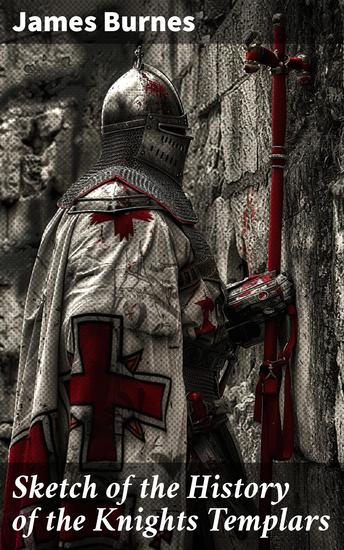
Sketch of the History of the Knights Templars - Unveiling the Mysteries of Medieval Warrior Monks - cover

Sketch of the History of the Knights Templars - Unveiling the Mysteries of Medieval Warrior Monks

James Burns

Verlag: Good Press

  • 0
  • 0
  • 0

Beschreibung

In "Sketch of the History of the Knights Templars," James Burnes embarks on a profound exploration of the enigmatic medieval order that has captivated historians and enthusiasts alike. This meticulously researched work combines scholarly rigor with a narrative flair, painting a vivid portrait of the Templars' origins, their ascension during the Crusades, and their dramatic downfall. Through a detailed examination of primary sources and contemporaneous accounts, Burnes elucidates the Templars' role in feudal society and their complex relationship with both the Church and state, framing their history within the larger context of European socio-political struggles of the time. James Burnes, a noted historian with a fervent interest in the intersection of religion and politics, penned this book amid a burgeoning fascination with chivalric orders and their legacy in contemporary culture. His extensive travels through Europe, combined with academic study, provided him with a unique perspective on the Templars, marrying profound historical insight with a passion for storytelling. Burnes'Äô dedication to uncovering lesser-known facts about these knights reflects a broader scholarly trend of revisiting and reinterpreting historical narratives. This work is a must-read for anyone intrigued by medieval history, the Crusades, or the enduring myths surrounding the Knights Templars. It invites readers to transcend simple legend and better understand the real impact of these historical figures, making it an essential addition to the library of both devoted scholars and casual history enthusiasts.
Verfügbar seit: 12.10.2023.
Drucklänge: 112 Seiten.


Weitere Bücher, die Sie mögen werden

  • Traitor's Odyssey - The Untold Story of Martha Dodd and a Strange Saga of Soviet Espionage - cover

    Traitor's Odyssey - The Untold...

    Brendan McNally

    • 0
    • 0
    • 0
    'A delicious, gossipy and thoroughly engaging romp ... heartily recommended.' Tim Tate, author of Hitler's British Traitors and The Spy Who Was Left Out in the Cold
    'A captivating page-turner ...' Helen Fry, author of Women in Intelligence
    
    
    Ambassador's daughter, Nazi love interest, Soviet spy, FBI most wanted.
    
    Accompanying her parents to Berlin in the 1930s, Martha Dodd knew almost nothing about Adolf Hitler or the Nazis. Yet almost overnight, she stepped into the spotlight, and found herself at the over-heated centre of Hitler's 'New Germany', befriending and dating several high-ranking Nazis, including the head of the Gestapo.
    
    An affair with a dashing Russian diplomat saw her recruited as a spy, and so began a long and tumultuous career in both Berlin and America, including attempts to infiltrate First Lady Eleanor Roosevelt's inner circle and playing a key role in Henry Wallace's disastrous 1948 presidential campaign.
    
    Betrayed by a Hollywood-hustler-turned-double-agent, Martha spent years under deep FBI surveillance - escaping twice - and went to ground in Cold War Prague, sad, lonely, rich and bored, living out her final decades in a Communist Sunset Boulevard.
    
    Largely forgotten, Martha Dodd began to emerge as an iconic historical figure in the early 2000s. While her scandalous behaviour and pro-Soviet leanings were never much in dispute, the actual matter of her guilt remained unresolved. Now, using recently released KGB archived information and FBI files, author and journalist Brendan McNally sets the record straight in Traitor's Odyssey, telling the full epic tale of Martha Dodd's life for the first time, casting her in a new and bright light.
    Zum Buch
  • Portals - Energetic Doorways to Mystical Experiences Between Worlds - cover

    Portals - Energetic Doorways to...

    Freddy Silva

    • 0
    • 0
    • 0
    A portal is a point of possibility, a step into a thousand journeys. Join leading researcher Freddy Silva as he takes you on a magical tour around the world to places on the land where the laws of physics behave differently and the perception of overlapping realities is both apparent and immediate. Experience Cadair Idris in Wales, Tintagel in England, the west coast of Scotland, Kura Tawhiti in New Zealand, Tsé Bit'a'í in New Mexico, the plateau of Giza, and power places high in the Andes. Learn the meaning and origins of the green man, serpents, dragons, and the Shining Ones, and identify the markers for the earth's telluric currents to find your own places of power. 


    The experience of two worlds makes you present in both but bound to neither. Step out of the cocoon and dabble in a parallel reality as Freddy Silva and our sacred storytellers share their mystical interactions with portals. Enhance your personal mystical experiences as Freddy shares how to interact directly with portals. Understand how to properly approach a portal and the importance of your expectations, timing, respect, and sympathetic resonance. Utilize this knowledge to access these powerful energetic doorways between worlds. 


    Portals is your opening in space and time to multiple levels of reality.
    Zum Buch
  • The History of the Peloponnesian War Volume 1 - cover

    The History of the Peloponnesian...

    Anonym

    • 0
    • 0
    • 0
    The History of the Peloponnesian War by Thucydides is a foundational work of historical and political writing, chronicling the 5th-century BCE conflict between Athens and Sparta. Renowned for its objectivity, analytical depth, and realism, Thucydides examines the causes, events, and consequences of the war, emphasizing human nature, power dynamics, and the fragility of democracy. He dissects pivotal moments like the Plague of Athens, the Sicilian Expedition, and the Melian Dialogue, revealing how fear, honor, and interest drive nations to war. A timeless exploration of politics, ethics, and the costs of imperial ambition.
    Zum Buch
  • Temporalities of Modernism - cover

    Temporalities of Modernism

    Carmen Borbély, Erika Mihálycsa,...

    • 0
    • 0
    • 0
    Temporalities of Modernism gathers fourteen scholars whose contributions readdress the very tenets of modernism by approaching its multifaceted relationship with time in a series of fresh and original essays. The contemporary energies behind the collection are rooted in the turbulence of the modernist age: relativity, irreversibility, duration, fragmentation, contingency, and the looming threat of the apocalyptic future. The collection includes geographical areas often neglected by the habitual reduction of modernist studies to English-speaking literary high modernism, or to the concentration of famous figures in the traditional capital of modernism—Paris. Thus it offers detailed presentations of Italian pre-WWI modernism, Czech Dadaism, or of Polish, Romanian, and Hungarian writers and artists. The borders also open in terms of genres and mediums, as the contributions are not limited to fiction, but examine the multi-faceted productions of modernist artists: poetry, theatre, painting, music, cinema, photography, etc. In addition, the limits are temporally stretched out as some contributions focus on more recent writers (such as Sylvia Plath) and their reactivation of modernist discoveries.
    Zum Buch
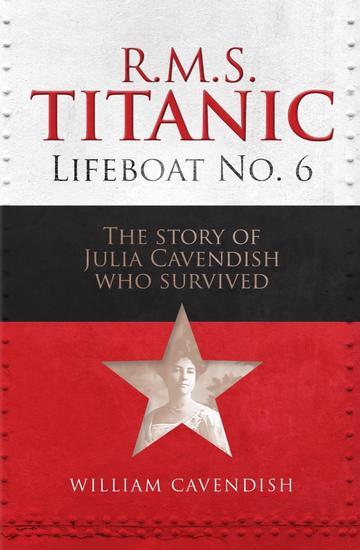
  • RMS Titanic Lifeboat No 6 - The Story of Julia Cavendish who Survived - cover

    RMS Titanic Lifeboat No 6 - The...

    William Cavendish

    • 0
    • 0
    • 0
    Tyrell and Julia booked to travel on the Titanic with their two sons to introduce them to their American grandfather, but the children were too ill to travel. Julia persisted in going without them. The fatal and tragic decision not only led to the unnecessary loss of her husband, it was to haunt her for the next fifty years. Why was she so determined to go? In a letter written to her sons, as her death approached, she claimed the purpose of the visit was 'to gain her wealthy father's support for his son-in-law's ambition to stand as a Member of Parliament.' Yet Tyrell had shown no enthusiasm for making the journey, as Julia had already made the trip alone, the previous year quite safely. From the Carpathia Julia cabled her father, Henry Siegel, to have clothes from his department stores ready for the Titanic's survivors. In 1992 and 2002 her son and grandson learnt from chance encounters with New Yorkers of Julia's father's shocking fall from grace, the grandfather who owned a famous department store with a 'soda fountain meeting place'. Now can be revealed the true reason for her mission.
    Zum Buch
  • Economic Landscape of Puerto Rico - Historical Perspectives - cover

    Economic Landscape of Puerto...

    Anya Solace

    • 0
    • 0
    • 0
    Puerto Rico’s economic landscape has been shaped by centuries of historical, political, and social transformations. From the indigenous societies that first inhabited the island to its complex relationship with Spain and the United States, the economy has evolved in response to shifting global and regional forces. Understanding Puerto Rico’s economic foundations requires an examination of its early economic structures, the colonial period’s trade policies, and the profound effects of U.S. annexation. These key moments set the stage for the challenges and opportunities that have defined the island’s development.  
    Before European colonization, the indigenous Taíno people sustained themselves through subsistence agriculture, fishing, and trade with neighboring Caribbean islands. Their economy, though not based on large-scale commerce, was well-adapted to the island’s resources. With the arrival of the Spanish in 1493, Puerto Rico was integrated into Spain’s mercantilist system, marking the beginning of an economic transformation that would prioritize colonial extraction over local prosperity. The Spanish introduced new crops such as sugarcane and coffee, which would later become vital to the island’s economy. However, strict trade regulations limited Puerto Rico’s ability to develop independently, as it was required to conduct commerce exclusively with Spain.  
    During the 18th and 19th centuries, Puerto Rico transitioned into a plantation-based economy, with sugar and coffee emerging as dominant industries. Enslaved Africans and later immigrant laborers contributed to the agricultural boom, making the island a key supplier to European and American markets. Despite periods of growth, the economy remained vulnerable to global price fluctuations, natural disasters, and restrictive colonial policies. By the time of the Spanish-American War in 1898, Puerto Rico’s economy was still largely agrarian, with limited industrial development.
    Zum Buch