Begleiten Sie uns auf eine literarische Weltreise!
Buch zum Bücherregal hinzufügen
Grey
Einen neuen Kommentar schreiben Default profile 50px
Grey
Jetzt das ganze Buch im Abo oder die ersten Seiten gratis lesen!
All characters reduced
The Grand Old Opera House Hotel - cover

The Grand Old Opera House Hotel

Isobel McArthur

Verlag: Nick Hern Books

  • 0
  • 0
  • 0

Beschreibung

It used to be a magnificent opera house, its stage graced by the leading sopranos and tenors of the age. Now the only divas at the Grand Old Opera House Hotel are the ones checking-in, there are fist fights in the lobby, and there's scarcely a romantic hero to be found.
When shy Aaron joins the hotel's inharmonious team, he's faced with emotionally volatile guests, apathetic staff and management that doesn't have a clue. Not to mention the rumour of singing ghosts haunting the corridors.
But through all the madness, one voice stands out, capturing his ears and his heart – and Aaron must go into battle with the hotel's magical chaos to find out the truth.
An uplifting ensemble comedy, Isobel McArthur's The Grand Old Opera House Hotel is a story of art bringing us together in hopeless circumstances, to the tune of some of the most popular opera songs ever written. It premiered at the Traverse Theatre, Edinburgh, during the Festival in August 2023, with Dundee Rep Theatre, directed by Gareth Nicholls. It was the recipient of an Edinburgh Fringe First Award.
Verfügbar seit: 10.08.2023.
Drucklänge: 112 Seiten.

Weitere Bücher, die Sie mögen werden

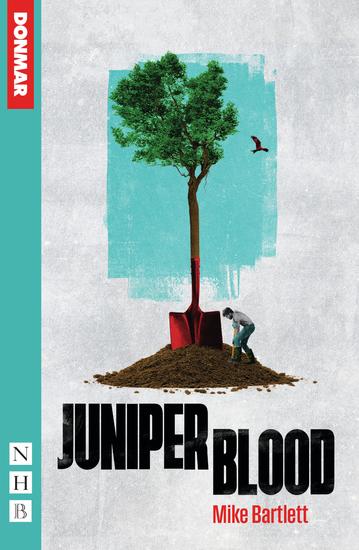
  • Juniper Blood - cover

    Juniper Blood

    Mike Bartlett

    • 0
    • 0
    • 0
    'Dreams.
    You don't compromise on those.'
    Lip and Ruth have left the city behind for a new life on a farm; trying to live differently, live better. But when Ruth's stepdaughter and her incendiary best friend arrive, this quiet rural project is thrown into chaos, as conflicting visions of the future come crashing into the present.
    Poignant and powerful, Mike Bartlett's play Juniper Blood explores the true cost of pursuing our ideals in an imperfect world. It premiered at the Donmar Warehouse, London, in 2025, directed by James Macdonald.
    Zum Buch
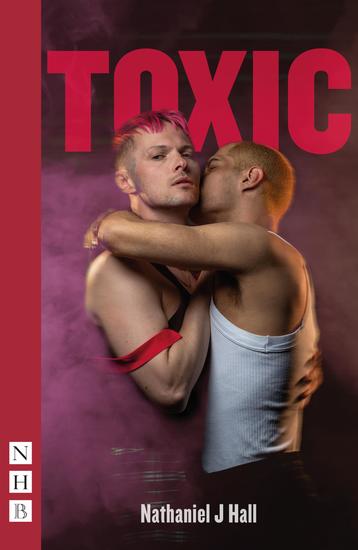
  • Toxic - cover

    Toxic

    Nathaniel J Hall

    • 0
    • 0
    • 0
    'This is the story of how we met, fell in love, and fucked it up. But it's not just our story. It's his, and his and theirs. Maybe it's yours…'
    Manchester, 2017. During a hot and sweaty queer warehouse party, two damaged hearts collide. He is HIV+ and drowning in shame. They are one microaggression away from a full-on meltdown. Together, they form a bond so tight, they might just survive it all. But sometimes survival means knowing when to leave.
    Pulling back the glittery curtain of pride to reveal the devastating impact of generational HIV stigma, racism, homophobia and repressive gender norms, Nathaniel J Hall's Toxic is a powerful, passionate play celebrating survival and the resilience of the queer spirit.
    Inspired by true events, it was first performed at HOME, Manchester, in 2023, before touring the UK in 2025, directed by Scott Le Crass, and performed by the playwright alongside Josh-Susan Enright.
    'An intimate portrayal of queer love, aching with authenticity, pain and joy' Russell T Davies
    Zum Buch
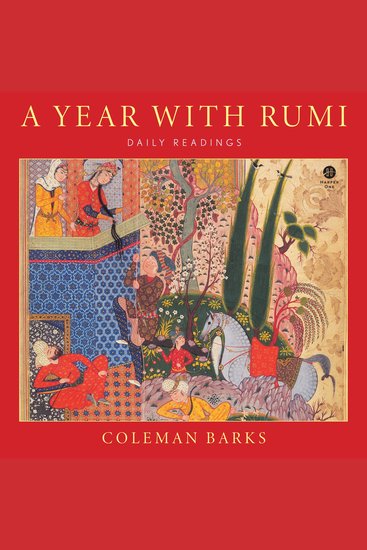
  • A Year with Rumi - Daily Readings - cover

    A Year with Rumi - Daily Readings

    Coleman Barks

    • 0
    • 0
    • 0
    A year with the sensual, mysterious, and deeply spiritual poetry of Rumi, in a translation featuring 15 debut poems—365 poems for your daily dose of inspiration, spiritual healing, and deep self-reflection 
    This stunning collection is a divine journey across each month of the year, offering 365 daily poetry reflections that with leave you both breathless and hopeful. Poet Coleman Barks has played a central role in making the Sufi mystic Rumi the most popular poet in the world, and in this volume, he brings Rumi’s words to life, allowing their beacon of light to allow us to reconnect with ourselves, and others, by recognizing the divine in the sublime, in the ordinary, and in us all. 
    Full of contemplation and deeply moving and profound prose, these poems allow readers to start each day fully present and aware of all the beauty around us, and the innate power and strength we each hold—in every moment of every day. Take a moment for yourself with this daily dose of innate wisdom and positive affirmations for self-love, compassion, and trust in the divine power of the universe and our place in it. 
    “The poetry feels like it belongs to all. When Rumi died in 1273, members of all religions came to the funeral. Wherever you stand, his words deepen your connection to the mystery of being alive.” – Coleman Barks 
    Zum Buch
  • The Poetry of Edith Wharton - Pulitzer prize winning author Wharton known for novels such as Age Of Innocence and Ethan Frome was a woman of many talents an expert poet aswell we explore a wonderful selection here - cover

    The Poetry of Edith Wharton -...

    Edith Wharton

    • 0
    • 0
    • 0
    Edith Newbold Jones was born in New York on 24th January 1862.   Born into wealth, this background of privilege gave her a wealth of experience to eventually, after several false starts, produce many works based on it culminating in her 1921 Pulitzer Prize winning novel ‘The Age of Innocence’ 
     
    Marriage to Edward Robbins Wharton, who was 12 years her senior in 1885 seemed to offer much and for some years they travelled extensively.  After some years it was apparent that her husband suffered from acute depression and so the travelling ceased and they retired to ‘The Mount’, their estate designed by Edith.  By 1908 his condition was said to be incurable and prior to divorcing Edward in 1913 she began an affair, in 1908, with Morton Fullerton, a Times journalist, who was her intellectual equal and allowed her writing talents to push forward and write the novels for which she is so well known.  
     
    Acknowledged as one of the great American writers Wharton was also a dazzling though largely unrecognised poet.  Her talents allowed her to create poems that both capture and explore many situations of life and society.  
     
    Edith Wharton died of a stroke in 1937 at the Domaine Le Pavillon Colombe, her 18th-century house on Rue de Montmorency in Saint-Brice-sous-Forêt, in France. 
     
    1 - The Poetry of Edith Wharton - An Introduction 
    2 - Terminus by Edith Wharton 
    3 - Some Busy Hands by Edith Wharton 
    4 - A Failure by Edith Wharton 
    5 - A Hunting Song by Edith Wharton 
    6 - Happiness by Edith Wharton 
    7 - Mould and Vase by Edith Wharton 
    8 - Jade by Edith Wharton 
    9 - Aeropagus by Edith Wharton 
    10 - Non Dolet by Edith Wharton 
    11 - Botticlelli’s Madonna in the Louvre by Edith Wharton 
    12 - Patience by Edith Wharton 
    13 - The Comrade by Edith Wharton 
    14 - Mona Lisa by Edith Wharton 
    15 - Life by Edith Wharton 
    16 - The Bread of Angels by Edith Wharton 
    17 - Chartres by Edith Wharton 
    18 - Survival by Edith Wharton 
    19 - All Saints by Edith Wharton 
    20 - All Souls by Edith Wharton 
    21 - The Young Dead by Edith Wharton 
    22 - Belgium by Edith Wharton 
    23 - Battle Sleep by Edith Wharton 
    24 - Experience by Edith Wharton 
    25 - A Torchbearer by Edith Wharton 
    26 - A Grave by Edith Wharton 
    27 - An Autumn Sunset by Edith Wharton 
    28 - Grief by Edith Wharton
    Zum Buch
  • Patricia Gets Ready (for a date with the man that used to hit her) (NHB Modern Plays) - cover

    Patricia Gets Ready (for a date...

    Martha Watson Allpress

    • 0
    • 0
    • 0
    Patricia has spent a year recovering from an abusive relationship. But when she bumps into her ex on the street, she accidentally agrees to go to dinner with him that night.
    Now she's got some big decisions to make. What to wear? What to say? And... whether or not to go?
    Martha Watson Allpress's Patricia Gets Ready (for a date with the man that used to hit her) is a play for one actor that was first seen at VAULT Festival 2020, directed by Kaleya Baxe and performed by Angelina Chudi, then at the Edinburgh Festival Fringe 2021, winning numerous awards and receiving rave reviews. It was revived on a UK tour in 2022, performed by Yasmin Dawes, including a run at Brixton House, London.
    'The standout production of this EdFringe' - The Stage
    'Brilliant... A script that refuses to simplify, to be neat and tidy, to apologise, to paint Patricia as just a victim. Rather, she is bold, funny (very funny) and sexually confident' - Guardian
    Zum Buch
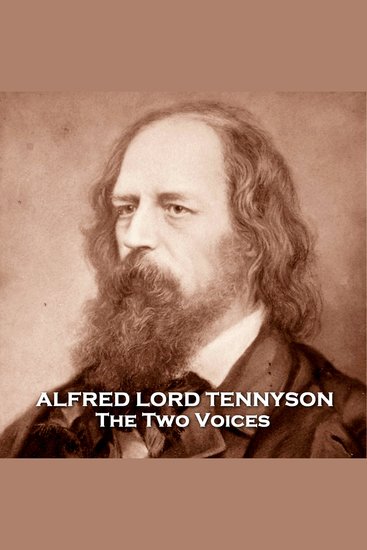
  • The Two Voices - An autobiographical poem written by Tennyson after his friend committed suicide - cover

    The Two Voices - An...

    Alfred Lord Tennyson

    • 0
    • 0
    • 0
    Alfred Tennyson was born on August 6th, 1809, in Somersby, Lincolnshire, the fourth of twelve children. 
    Most of Tennyson's early education was under the direction of his father, although he did spend four unhappy years at a nearby grammar school.  He also showed an early and burgeoning talent for writing; by the age of twelve he had written a 6,000-line epic poem.  
    In the 1820s, however, Tennyson’s father began to suffer frequent mental breakdowns exacerbated by his alcoholism. One brother had frequent violent quarrels with his father, a second would be confined to an insane asylum, and another was later an opium addict. 
    Tennyson left home in 1827 to join his brothers at Trinity College, Cambridge and with it escape from Somersby. At Trinity he was those who knew little of the problems that clouded his life. Although shy he was keen to make new friends; he was handsome, intelligent, humorous, and a gifted impersonator. 
    That same year, he and his brother Charles published Poems by Two Brothers. It attracted the attention of the “Apostles," a select undergraduate literary club led by Arthur Hallam. They provided friendship and confidence. Hallam and Tennyson became the best of friends. 
    The pair, in the summer of 1830, were involved in a ridiculous jaunt to take money and secret messages to revolutionaries plotting to overthrow the Spanish king. Tennyson's political enthusiasm was marginal compared to Hallam's, but he was glad to make his first trip abroad.  
    The landscape and atmosphere of the Pyrenees generated such wonderful poems as "Oenone," "The Lotus-Eaters;" inspired by a waterfall in the mountains; and "The Eagle;" invoked from the sight of the great hunters circling above them. The small village of Cauteretz and the surrounding valley became a location Tennyson would return to many times over the next sixty years. 
    In 1830, he published Poems, ‘Chiefly Lyrical’ and in 1832 a volume entitled ‘Poems’.  Tennyson, stung by the harshness of several reviews, would not publish again for nine years.  
    In the autumn of 1833, in what was meant as a gesture of gratitude and reconciliation to his father, Hallam accompanied him to the Continent. In Vienna Hallam died suddenly of apoplexy as a result of a congenital malformation of the brain.  
    Hallam’s death, together with that of his father and a myriad of anxieties, stem-ming mainly from the belief that his family were grimly attached to poverty, and fears that he might become a victim of epilepsy, madness, alcohol, and drugs, as others in his family had, or that he might die like Hallam, conspired to upset the delicate balance of Tennyson's emotions.  
    In 1836, he became engaged to Emily Sellwood. From their correspondence it is clear that she was very much in love with him. He seems to excessively worry about not having the financial means to marry.  He was also falling into trances, which he thought were connected with the epilepsy from which other family members suffered. To marry, he thought, would mean passing on the disease to any children he might father. He broke off the engagement. 
    During these years he used the dark feelings and events to write many of his finest works; "Ulysses," "Morte d'Arthur," "Tithonus," "Tiresias," and "Break, break, break."  
    In 1842 Tennyson’s Poems (in two volumes) was a tremendous critical and popular success.  
    In 1845 he was granted a government pension of £200 a year in recognition of his poetic achievements and his financial need.  Despite this financial support his doubts persisted.  
    Life for Tennyson was becoming increasingly productive and more lucrative.  By 1849 ‘The Princess’ had been published. He was now offered a large advance if he would assemble his elegies on Hallam into one complete poem.  
    Tennyson had now also resumed his relationship with Emily Sellwood and by the following year was talking again of marrying her. 
    In the Spring of 1850 the Poet Laureate William Wordsworth died and a new Laureate was
    Zum Buch