Join us on a literary world trip!
Add this book to bookshelf
Grey
Write a new comment Default profile 50px
Grey
Subscribe to read the full book or read the first pages for free!
All characters reduced
Walden - cover

Walden

Henry David Thoreau

Publisher: The Ebook Emporium

  • 0
  • 0
  • 0

Summary

"I went to the woods because I wished to live deliberately..."

In 1845, Henry David Thoreau moved into a small cabin he built himself on the shores of Walden Pond in Concord, Massachusetts. His goal was simple: to strip away the "superfluities" of modern life and discover what is essential. Walden is the extraordinary record of those two years, two months, and two days. Part memoir, part philosophical treatise, and part natural history, it serves as a powerful call to awaken from the "quiet desperation" of a consumer-driven society and reconnect with the rhythms of the natural world.

The Economy of the Soul: Thoreau begins his journey with a radical audit of human needs. He meticulously tracks his expenses—down to the last cent spent on beans and nails—to prove that true freedom comes not from wealth, but from the reduction of one's requirements. By minimizing labor, he maximizes his "leisure" for thinking, reading, and observing the changing seasons.

A Blueprint for Modern Mindfuless: Though written over 170 years ago, Walden's critique of a life spent working just to pay for "modern improvements" resonates more than ever. Thoreau's insights on the value of solitude, the beauty of the wild, and the necessity of individual conscience have inspired generations of environmentalists, social reformers, and seekers of a simpler path.

Step away from the noise. Purchase "Walden" today and learn to live deep.
Available since: 01/08/2026.
Print length: 302 pages.

Other books that might interest you

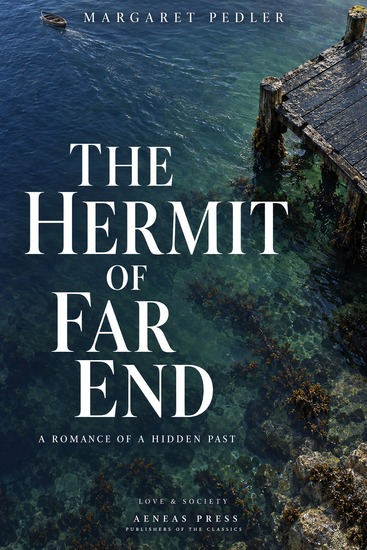
  • The Hermit of Far End - A Romance of a Hidden Past - cover

    The Hermit of Far End - A...

    Margaret Pedler

    • 0
    • 0
    • 0
    A young woman with no money is left to a guardian and finds a recluse living at the end of the coast road with a reputation nobody will explain. Pedler was a trained musician who wrote some thirty romances between the wars; the formula is exact — a heroine with nothing, a man with a past, and the Cornish weather doing the work — and it sold in tens of thousands. Fifty-eight plates of garden painting by Edvard Munch, Spencer Gore and others, from 1792 to 1928, give the hidden past its own quiet weather.
    Show book
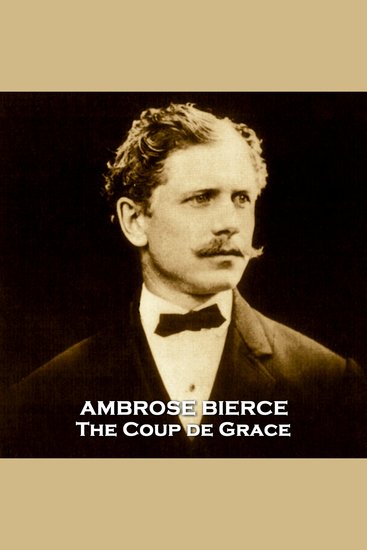
  • The Coup de Grace - From their pens to your ears genius in every story - cover

    The Coup de Grace - From their...

    Ambrose Bierce

    • 0
    • 0
    • 0
    Ambrose Gwinnett Bierce was born on 24th June 1842 at Horse Cave Creek in Meigs County, Ohio. His parents were poor but they introduced him to literature at an early age, instilling in him a deep appreciation of books, the written word and the elegance of language.  
    Growing up in Koscuisko County, Indiana poverty and religion were defining features of his childhood, and he would later describe his parents as “unwashed savages” and fanatically religious, showing him little affection but always quick to punish. He came to resent religion, and his introduction to literature appears to be their only positive effect. 
    At age 15 Bierce left home to become a printer’s devil, mixing ink and fetching type at The Northern Indian, a small Ohio paper. Falsely accused of theft he returned to his farm and spent time sending out work in the hopes of being published. 
    His Uncle Lucius advised he be sent to the Kentucky Military Institute. A year later he was commissioned as an Officer.  As the Civil War started Bierce enlisted in the 9th Indiana Infantry Regiment.  
    In April 1862 Bierce fought at the Battle of Shiloh, an experience which, though terrifying, became the source of several short stories. Two years later he sustained a serious head wound and was off duty for several months. He was discharged in early 1865.  
    A later expedition to inspect military outposts across the Great Plains took him all the way to San Francisco. He remained there to become involved with publishing and editing and to marry, Mary Ellen on Christmas Day 1871.  They had a child, Day, the following year.  
    In 1872 the family moved to England for 3 years where he wrote for Fun magazine. His son, Leigh, was born, and first book, ‘The Fiend’s Delight’, was published.  
    They returned to San Francisco and to work for a number of papers where he gained admiration for his crime reporting. In 1887 he began a column at the William Randolph Hearst’s San Francisco Examiner.  
    Bierce’s marriage fell apart when he discovered compromising letters to his wife from a secret admirer. The following year, 1889 his son Day committed suicide, depressed by romantic rejection. 
    In 1891 Bierce wrote and published the collection of 26 short stories which included ‘An Occurrence at Owl Creek Bridge’.  Success and further works including poetry followed.  
    Bierce with Hearst’s resources helped uncover a financial plot by a railroad to turn 130 million dollars of loans into a handout. Confronted by the railroad and asked to name his price Bierce answered “my price is $130 million dollars. If, when you are ready to pay, I happen to be out of town, you may hand it over to my friend, the Treasurer of the United States”.  
    He now began his first foray as a fabulist, publishing ‘Fantastic Fables’ in 1899.  But tragedy again struck two years later when his second son Leigh died of pneumonia relating to his alcoholism.  
    He continued to write short stories and poetry and also published ‘The Devil’s Dictionary’.  
    At the age of 71, in 1913 Bierce departed from Washington, D.C., for a tour of the battlefields where he had fought during the civil war. At the city of Chihuahua he wrote his last known communication, a letter to a friend. It’s closing words were “as to me, I leave here tomorrow for an unknown destination,” Ambrose Bierce then vanished without trace.
    Show book

  • The Tale of Timmy Tiptoes - cover

    The Tale of Timmy Tiptoes

    Beatrix Potter

    • 0
    • 0
    • 0
    The Tale of Timmy Tiptoes is written by the popular children's author Beatrix Potter. Timmy and his wife Goody are collecting nuts for winter. But Timmy falls into a hole and can't get out! Goody searches for him everywhere. The moral of the story is: concentrate on your own life and don't mind others. Recommended for age 3+.
    Show book
  • The Diary - cover

    The Diary

    Samuel Pepys

    • 0
    • 1
    • 0
    The Diary of Samuel Pepys is the famous personal diary of Samuel Pepys, written between 1660 and 1669. It is one of the most important eyewitness records of 17th-century England. Pepys wrote the diary in shorthand, recording his daily life with remarkable honesty and detail. It covers both major historical events and intimate personal experiences, making it valuable for both historians and general readers. A major historical feature of the diary is its coverage of key events such as the Restoration of King Charles II, the Great Plague of London (1665), and the Great Fire of London (1666). Pepys describes these events as someone living through them in real time, giving vivid, ground-level perspectives on national crises. Alongside history, the diary also records his professional life in the English Navy Office, where he worked as an administrator. His entries reveal corruption, bureaucracy, and the development of England's naval power during a crucial period.
    Show book
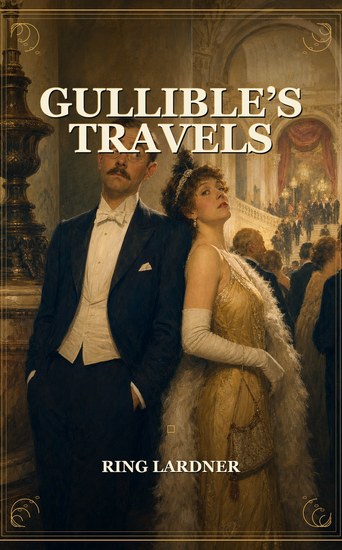
  • Gullibles Travels - cover

    Gullibles Travels

    Ring Lardner

    • 0
    • 0
    • 0
    Published in The Saturday Evening Post between 1916 and 1917, the stories that make up Gullible's Travels follow the comical misadventures of a long-suffering husband and his aspiring socialite wife. The unnamed protagonists and their hapless attempts to climb the social ladder serve as a canvas for Ring Lardner to satirize marriage, social dynamics, and the newly emerging middle class of the late 1910s. In 1917, the first five stories about the unnamed narrator and his "Missus" were compiled in book form as Gullible's Travels, Etc.
    Show book
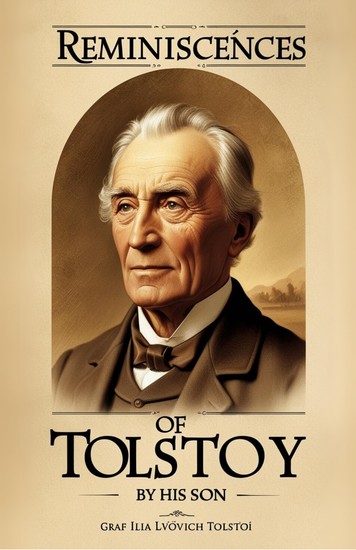
  • Reminiscences of Tolstoy - cover

    Reminiscences of Tolstoy

    graf Ilia Lvovich Tolstoi

    • 0
    • 0
    • 0
    Reminiscences of Tolstoy, by His Son offers an intimate and personal account of the life of one of the world's greatest literary giants, Leo Tolstoy, from the perspective of his own son, Graf Ilia Lvovich Tolstoi. This heartfelt memoir provides a rare and insightful look into the private life of the Russian author, best known for his masterpieces War and Peace and Anna Karenina. Through the eyes of his son, readers gain a deeper understanding of Tolstoys character, his philosophy, and the complex relationships he maintained with family, friends, and society. Graf Ilia Lvovich Tolstoi recounts his experiences growing up in the household of his illustrious father, offering personal anecdotes that reveal the warmth, wisdom, and struggles that defined Tolstoys later years. The memoir delves into Tolstoy's profound spiritual transformation, his renunciation of wealth and social status, and his quest for truth and simplicity. It also explores the challenges that came with being the child of such a famous and complex figure, providing a unique perspective on the impact of Tolstoy's personal choices on his family and those around him.
    Show book