Begleiten Sie uns auf eine literarische Weltreise!
Buch zum Bücherregal hinzufügen
Grey
Einen neuen Kommentar schreiben Default profile 50px
Grey
Jetzt das ganze Buch im Abo oder die ersten Seiten gratis lesen!
All characters reduced
Excursions - cover

Excursions

Henry David Thoreau

Verlag: E-BOOKARAMA

  • 0
  • 0
  • 0

Beschreibung

First published in 1863, "Excursions" is an anthology of several essays by American transcendentalist Henry David Thoreau. The anthology was published posthumously and contains an introduction entitled "Biographical Sketch" in which fellow transcendentalist Ralph Waldo Emerson provides a description of Thoreau.

The collection, other than R. W. Emerson's biography of Thoreau, contains nine of Thoreau's essays: Natural History of Massachusetts, A Walk to Wachusett, The Landlord, A Winter Walk, The Succession of Forest Trees, Walking, Autumnal Tints, Wild Apples, and Night and Moonlight.
Verfügbar seit: 14.01.2022.
Weitere Bücher, die Sie mögen werden

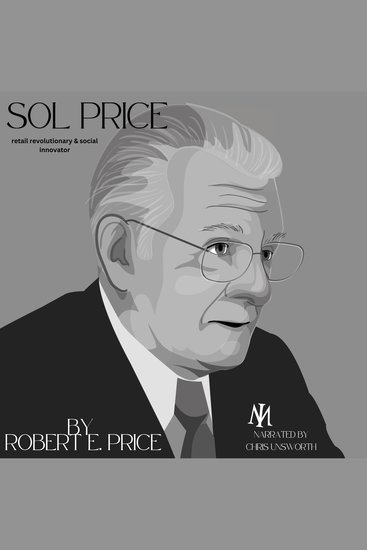
  • Sol Price - retail revolutionary and social innovator - cover

    Sol Price - retail revolutionary...

    Waterbear, Robert E Price

    • 0
    • 0
    • 0
    "Sol Price: Retail Revolutionary and Social Innovator, recounts the extraordinary life of a man who profoundly impacted the shopping habits of consumers in the United States and throughout much of the world. Written by Sol's son Robert Price, this narrative--part biography and part memoir--provides a unique insight into his father's life ... As a retail revolutionary, Sol's creative brilliance changed the way we shop, first with FedMart in 1954, the retail format copied by Walmart, Kmart, and Target in 1962, and then, with the Price Club, the warehouse club format adopted by Costco and Sam's Club in 1983. Self-service shopping in large florescent-lit buildings has become part of the American culture and is now the predominant mode of shopping thought most of the world"--Jacket
    Zum Buch
  • The Lad Called Rate - cover

    The Lad Called Rate

    Donna Gene Stankey, Ramona Hammel

    • 0
    • 0
    • 0
    As a young lad, Rate realized how content he was living on a farm. Why there were intriguing places to explore, several animals to tend to and chores to be done. His favorite animals were: Mikey, the driving horse and Grip, the family dog. His chores consisted of: churning butter, hauling kindling for the woodstove, turning the crank on the wringer washer and going to the corner, to fetch the mail. He knew it was only a matter of time till his pa would let him drive the buggy or a team of horses for field work by himself. This was much more appealing to him than allthose "wimmen chores" as he called them. However, one thing Rate never understood, was the reason why his folks and grandparents favored his sister, Blanche, over him. Guessed they mostly didn't care for boys. 'Peared to him to be the "Setterington way", whether he liked it or not. The characters' origins are constituted well in conversation, wherein inflections are present and included authentically. With candor andfirm precision, the Southern turns of phrases and slang result in additional background. Occasions of dithering and heavy pauses further enhance the dialogue, as when Milly constantly pauses as his wife shares her fazed view of their son's antics.
    Zum Buch
  • Robespierre - The Architect of the French Reign of Terror - cover

    Robespierre - The Architect of...

    Kelly Mass

    • 0
    • 0
    • 0
    Imagine you are sick of the government. Bureaucrats and aristocrats are constantly telling you what to do, basically enforcing a totalitarian regime. Maybe this is not so hard to imagine after what has been happening in recent years. And then imagine you protest. But the government has come up with a new method to kill people: The guillotine. Way more efficient than simple beheading, some jerk at the top then decides that anyone who is suspicious of rebellion needs their head chopped off, like the crazy lady in Alice in Wonderland. 
    This is Robespierre’s legacy. The evil French guy knew hardly any boundaries. He was vicious, murderous, and not to be taken lightly. 
    One of the most widely known figures of the Reign of terror was Maximilien François Marie Isidore de Robespierre, a French attorney and statesman. He promoted universal manhood suffrage and the removal of both clergy celibacy and oppression as a member of the Constituent Assembly and the Jacobin Club. In 1791, Robespierre ended up being a singing advocate of male residents without a political voice, promoting for their limitless entry to the National Guard, public workplaces, and the right to bear arms in self-defense. Robespierre was a key figure in the agitation that led to the deposition of the French monarchy on August tenth, 1792, and the assembling of a National Convention. His purpose was to establish a single, indivisible France, equality before the law, the abolition of authorities, and the defense of direct democratic ideal visions. 
    Read or listen to the book to learn more!
    Zum Buch
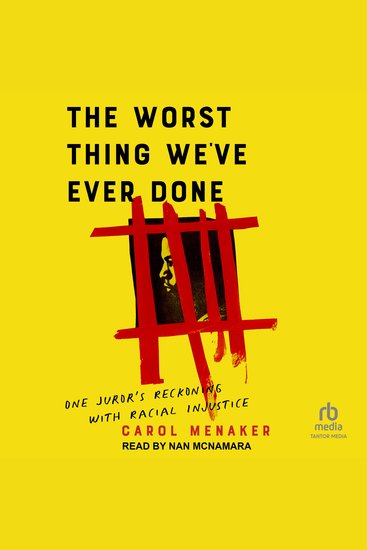
  • The Worst Thing We've Ever Done - One Juror's Reckoning With Racial Injustice - cover

    The Worst Thing We've Ever Done...

    Carol Menaker

    • 0
    • 0
    • 0
    In May of 1976, twenty-four-year-old Carol Menaker was impaneled with eleven others on a jury in the trial of Freddy Burton, a young Black prison inmate charged with the grisly murders of two white wardens inside Philadelphia's Holmesburg Prison. After being sequestered for twenty-one days, the jury voted to convict Mr. Burton, who was then sentenced to life in prison without parole. 


    For more than forty years, Menaker did what she could to put the intensely emotional experience of the sequestration and trial behind her, rarely speaking of it to others and avoiding jury service when at all possible. But the arrival of a jury summons at her home in Northern California in 2017 set her on a path to unravel the painful experience of sequestration and finally ask the question: What ever happened to Freddy Burton—and is it possible that my youth and white privilege were what led me to convict him of murder? 


    The Worst Thing We've Ever Done is Menaker's inspirational account of journeying back in time to uncover the personal bias that may have led her to judge someone whose shoes she never could have walked in.
    Zum Buch
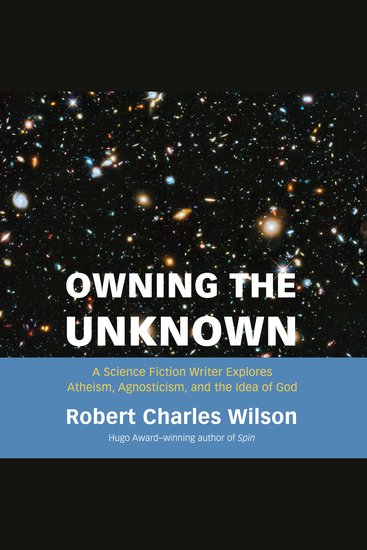
  • Owning the Unknown - A Science Fiction Writer Explores Atheism Agnosticism and the Idea of God - cover

    Owning the Unknown - A Science...

    Robert Charles Wilson

    • 0
    • 0
    • 0
    Although humankind today can peer far deeper into the universe than ever before, we still find ourselves surrounded by the unknown and perhaps the unknowable. All great science fiction has used the human imagination to explore that realm beyond the known, just as theistic religions have done since long before the genre existed. As Hugo Award-winning author Robert Charles Wilson argues in Owning the Unknown, the genre’s freewheeling speculation and systematic world-building make it a unique lens for understanding, examining, and assessing the truth claims of religions in general and Christianity in particular. Drawing on his personal experience, his work as a science-fiction writer, and his deep knowledge of the classics of the genre, he makes the case for what he calls intuitive atheism—an atheism drawn from everyday personal knowledge that doesn’t depend on familiarity with the scholarly debate about theology and metaphysics, any more than a robust personal Christianity does. And as he reminds us, the secrets that remain hidden beyond the borders of the known universe—should we ever discover them—will probably not resemble anything currently found in our most prized philosophies, our most sacred texts, or our most imaginative science fiction.
    Zum Buch
  • Voices from the Hills - Pioneering women fell and mountain runners - cover

    Voices from the Hills -...

    Steve Chilton

    • 0
    • 0
    • 0
    'A must read for anyone with a passion for women's equality and sport.' -Sue Anstiss
    Voices from the Hills is the story of the barriers encountered by the first female fell runners who fought to participate in the early days of this male-dominated sport. Despite experiencing discouragement and resistance, these women responded with personal courage and self-confidence. Thanks to them, women now compete at traditional fell races, international mountain races and endurance challenges such as the Bob Graham Round in increasing numbers.
    Told predominantly through interviews with pioneering female athletes who recount their lives and running careers, this is the story of a fight for equality of opportunity and reward.
    Zum Buch