Junte-se a nós em uma viagem ao mundo dos livros!
Adicionar este livro à prateleira
Grey
Deixe um novo comentário Default profile 50px
Grey
Assine para ler o livro completo ou leia as primeiras páginas de graça!
All characters reduced
A Clergyman's Daughter - cover
LER

A Clergyman's Daughter

George Orwell

Editora: E-Kitap Projesi & Cheapest Books

  • 0
  • 0
  • 0

Sinopse

Clergyman's Daughter is a 1935 novel by English author George Orwell. It tells the story of Dorothy Hare, the clergyman's daughter of the title, whose life is turned upside down when she suffers an attack of amnesia. It is Orwell's most formally experimental novel, featuring a chapter written entirely in dramatic form, but he was never satisfied with it and he left instructions that after his death it was not to be reprinted. Despite these instructions, Orwell did consent that to cheap editions "of any book which may bring in a few pounds for my heirs" following his death.

Book Summary:

The story is told in five distinct chapters:

Chapter 1

A day in the life of Dorothy Hare, the weak-willed daughter of a disagreeable widowed clergyman. Her father is Rector of Knype Hill, a small town in East Anglia. She keeps house for him, fends off creditors, visits parishioners and makes costumes for fund-raising events. Throughout she practises mortification of flesh to be true to her faith. In the evening she is invited to dinner by Mr Warburton, Knype Hill's most disreputable resident, a middle-aged bachelor who is an unashamed lecher and atheist.

Chapter 2

Dorothy is transposed to the Old Kent Road with amnesia. Eight days of her life are unaccounted for. She joins a group of vagrants, comprising a young man named Nobby and his two friends, who relieve her of her remaining half-crown and take her with them on a hop-picking expedition in Kent.

Chapter 3

Dorothy spends the night sleeping rough in Trafalgar Square in a chapter presented entirely as dramatic dialogue. After spending ten days on the streets, she is arrested for vagrancy and ends up in a police cell for twelve hours for failure to pay the fine.

Chapter 4

Dorothy believes that her father, distraught at the rumours of her running away with Mr Warburton, has ignored her letters for help. In fact he has contacted his cousin Sir Thomas Hare, whose servant locates her at the police station. Hare's solicitor procures a job for her as a "schoolmistress" in a small "fourth-rate" private girls' "academy" run by the grasping Mrs Creevy. Dorothy's attempts to introduce a more liberal and varied education to her students clash with the expectations of the parents, who want a strictly "practical" focus on handwriting and basic mathematics.

Chapter 5

Shortly after Dorothy steps out of the door of the school Mr Warburton turns up in a taxi to say that Mrs Semprill has been charged with slander, and that her malicious gossip has been discredited. He has come, therefore, to take her back to Knype Hill. On the trip home he proposes marriage. Dorothy rejects him, recognising but disregarding his argument that, with her loss of religious faith, her existence as a hard-working clergyman's daughter will be meaningless and dull, and that marriage while she is still young is her only escape.
Disponível desde: 26/11/2023.
Comprimento de impressão: 400 páginas.

Outros livros que poderiam interessá-lo

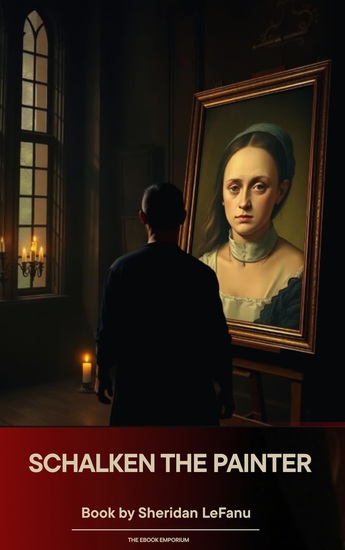
  • Schalken the Painter - cover

    Schalken the Painter

    Joseph Sheridan Le Fanu

    • 0
    • 0
    • 0
    "He was not a man of this world, and the gold he paid with had a cold, ancient gleam."
    
    In the workshops of 17th-century Leyden, the young and talented artist Godfried Schalken falls in love with Rose, the beautiful niece of his master, Gerard Douw. But their romance is shattered by the arrival of a mysterious suitor: Minheer Vanderhausen. Blue-skinned, breathless, and draped in magnificent but outdated finery, Vanderhausen offers a chest of gold so immense that Douw cannot refuse. Rose is bartered away to this living corpse, disappearing into a nightmare from which there is no return. Years later, Schalken is granted one final, terrifying glimpse of his lost love—and the horrific entity she now serves in the shadows.
    
    The Horror of the Visual: Le Fanu, himself an admirer of art, uses the techniques of the Dutch masters to tell his story. He describes scenes as if they were paintings, utilizing chiaroscuro—the intense contrast between deep shadows and bright light—to hide the grotesque features of the supernatural antagonist. The result is a story that feels as textured and atmospheric as an oil painting come to life.
    
    A Tale of Moral Decay: At its heart, the story is a critique of avarice. Gerard Douw's willingness to sell his niece for a chest of gold is the "true" horror that invites the supernatural in. Le Fanu explores the idea that human greed can be more monstrous than any phantom, leading to a tragedy that haunts the protagonist until his dying day.
    
    The Legacy of the "Demon Lover": Schalken the Painter is a foundational text in the "demon lover" tradition of Gothic fiction. It avoids the typical "clanking chains" of 18th-century ghosts, opting instead for a quiet, physical, and deeply uncanny presence. The final image of the story—the "living" painting—remains one of the most famous and frightening endings in horror literature.
    
    Don't look too closely at the shadows. Purchase this masterpiece of the macabre today.
    Ver livro
  • Fireside Christmas Short Stories - cover

    Fireside Christmas Short Stories

    Various Authors

    • 0
    • 0
    • 0
    A collection of Christmas-themed short stories intended to warm the heart and share with the family. Each story or poem in this collection is unique: some make us pause to consider the meaning of Christmas, others entertain and make us smile. So curl up before a blazing fire and be transported back to Christmases past, including Christmas At Red Butte by Lucy Maud Montgomery, The Heavenly Christmas Tree by Fyodor Dostoyevsky and The Gift Of The Magi by O. Henry among many other wonderful classics.
    Ver livro
  • The Lady's Maid - cover

    The Lady's Maid

    Katherine Mansfield

    • 0
    • 0
    • 0
    "The Lady’s Maid" is a story by Katherine Mansfield: Eleven o’clock. A knock at the door... I hope I haven’t disturbed you, madam. You weren’t asleep - were you? But I’ve just given my lady her tea, and there was such a nice cup over, I thought, perhaps...
    Ver livro
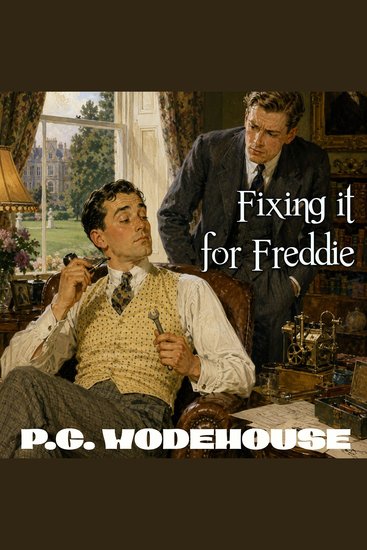
  • Fixing it for Freddie - cover

    Fixing it for Freddie

    P. G. Wodehouse

    • 0
    • 0
    • 0
    Some problems announce themselves loudly. Others arrive quietly with tea, civility, and a completely ruined afternoon.
    In Fixing it for Freddie, P. G. Wodehouse demonstrates that helping a friend is rarely a straightforward moral gesture—it is more often a carefully staged descent into social confusion.
    Freddie, suffering from a bruised heart and a spectacular lack of judgment, requires assistance of the delicate kind. What follows is a quintessentially Wodehouse entanglement involving well-meaning interference, a misunderstood kidnapping, and the terrifying prospect of a piano performance that no one actually invited.
    The result is a perfectly calibrated complication: harmless plans behaving like unruly children, and reality politely stepping aside to allow chaos to take its place. A refined dose of classic British comedy where every solution arrives slightly too late—and still confidently insists it is correct.
    Ver livro
  • The Terror - cover

    The Terror

    Arthur Machen

    • 0
    • 0
    • 0
    It is 1915, the war wages in mainland europe... but death also stalks the lanes and farms of a lonely england. A death that nobody can explain, that the papers are not allowed to speak of. Who or what is responsible for these mysterious killings? Are they the result of human agency, or something more sinister? Just what is the truth behind... The Terror!  
    Written by Arthur Machen in 1917, narrated by Michael Ward.
    Ver livro
  • The Island of the Fay - cover

    The Island of the Fay

    Sampi Books, Edgar Allan Poe

    • 0
    • 0
    • 0
    In "The Island of the Fay", Edgar Allan Poe describes the narrator's contemplation on the inaudible music of nature, observing a fairy on a mystical island. The tale explores themes of isolation, natural beauty and the permeability between the seen and the hidden.
    Ver livro