Begleiten Sie uns auf eine literarische Weltreise!
Buch zum Bücherregal hinzufügen
Grey
Einen neuen Kommentar schreiben Default profile 50px
Grey
Jetzt das ganze Buch im Abo oder die ersten Seiten gratis lesen!
All characters reduced
The Failure of Scientific Materialism - cover

The Failure of Scientific Materialism

Friedrich Wilhelm Ostwald

Verlag: Edizioni Aurora Boreale

  • 0
  • 0
  • 0

Beschreibung

Friedrich Wilhelm Ostwald (1853-1932) was a Baltic German chemist and philosopher, credited with being one of the founders of the field of Physical Chemistry, with Jacobus Henricus Van 't Hoff, Walther Nernst, and Svante Arrhenius. He received the Nobel Prize in Chemistry in 1909 for his scientific contributions to the fields of catalysis, chemical equilibria and reaction velocities.Following his 1906 retirement, Ostwald became active in philosophy, politics, and other humanities. During the course of his academic career, he published more than 500 original research papers for the scientific literature and approximately 45 books.Ostwald’s essay The Failure of Scientific Materialism was published in March 1896 in the magazine Popular Science Monthly.
Verfügbar seit: 28.12.2023.
Weitere Bücher, die Sie mögen werden

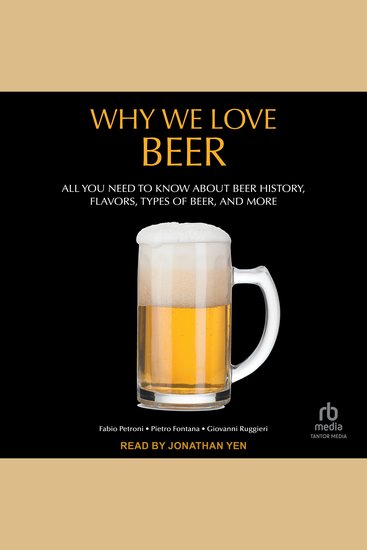
  • Why We Love Beer - All You Need to Know About Beer History Flavors Types of Beer and More - cover

    Why We Love Beer - All You Need...

    Pietro Fontana, Fabio Petroni,...

    • 0
    • 0
    • 0
    A beer-making book for hop lovers everywhere. So many people enjoy beer, but little do they know about the beer ingredients that go into their favorite drink. But what if you could understand how to make the types of beer that have influenced millions all over the world? Featuring recipes from beer capitals such as Belgium, Ireland, and the United States, Why We Love Beer explores the art of beer and brewing for you to try at home. With easy-to-follow instructions and exciting recommendations, you'll be able to make and taste hops like you've never experienced before. 


    Learn how to be a professional brewmaster. Everything you need to recreate iconic beer recipes is available in this impactful beer-making book, including facts to enhance your new skills. Dive into the brewing culture that has shaped the drink that we know and love today through informative beer history facts to take inspiration from. From the first hop garden to modern advances, you'll not only find a new appreciation for international beer, but also enjoy a glass of delicious history. 


    If you enjoyed books like Doctors and Distillers, Clanlands, or The Beer Lover's Guide to Cider, then you'll want to listen to Why We Love Beer.
    Zum Buch
  • The Environmental Unconscious - Ecological Poetics from Spenser to Milton - cover

    The Environmental Unconscious -...

    Steven Swarbrick

    • 0
    • 0
    • 0
    Why has psychoanalysis long been kept at the margins of environmental criticism despite the theories of eco-Marxism, queer ecology, and eco-deconstruction available today? What is unique, possibly even traumatic, about eco-psychoanalysis? The Environmental Unconscious addresses these questions as it provides an innovative and theoretical account of environmental loss focused on the counterintuitive forms of enjoyment that early modern poetry and psychoanalysis jointly theorize. 


    Steven Swarbrick urges literary critics and environmental scholars to rethink notions of entanglement, animacy, and consciousness raising. Through close readings of Edmund Spenser, Walter Ralegh, Andrew Marvell, and John Milton, he reveals a world of matter that is not merely hyperconnected, as in the new materialism, but porous and off-kilter. And yet the loss these poets reveal is central to the enjoyment their works offer—and that nature offers. 


    The Environmental Unconscious offers a provocative challenge to ecocriticism that a new theory of disconnection is desperately needed. Tracing the propulsive force of the environmental unconscious from the early modern period to Freudian and post-Freudian theories of desire, Swarbrick not only puts nature on the couch in this book but also renews the psychoanalytic toolkit in light of environmental collapse.
    Zum Buch
  • The Power of Citizenship - Why John F Kennedy Matters to a New Generation - cover

    The Power of Citizenship - Why...

    Scott D. Reich

    • 0
    • 0
    • 0
    Fifty years after John F. Kennedy's death, we find ourselves enmeshed in an era of political division and cynicism, where politicians talk past one another and the spirit of “Ask not what your country can do for you—ask what you can do for your country"" is less visible than it should be. We seem to have forgotten that we're all on the same team. Fortunately, Scott D. Reich has given us The Power of Citizenship, a timely book to bring us back on track. 
    Reich asserts that the most powerful element of Kennedy's legacy is his emphasis on the theme of citizenship, and that a rededication to the values Kennedy promoted will shine a bright path forward for our country. Evoking the hopes and aspirations of the 1960s, Reich recaptures the excitement of the Kennedy era. But what truly sets this book apart is the unique way it blends the romance of Camelot with the new frontiers of today—not only identifying modern challenges, but also offering a tangible blueprint for how we can improve our public discourse, be good citizens, and lift our nation to new heights of greatness. 
    Part history and part call to action, The Power of Citizenship hones in on the very essence of what made JFK so inspirational and timeless, reminding us once again that we must ask what we can do for our country. This is a must-read for Americans of all generations.
    Zum Buch
  • The Golden Sayings - cover

    The Golden Sayings

    Epictetus

    • 0
    • 0
    • 0
    "The Golden Sayings" is a collection of practical teachings and advice by Epictetus, a Stoic philosopher who lived in the first century AD. The book emphasizes the importance of self-mastery, rationality, and living a virtuous life according to Stoic principles. Epictetus emphasizes that true wealth comes from having few wants, and that one must be in control of oneself to truly be free. He also emphasizes the importance of responding to events in a rational manner, focusing on what one can control rather than what one cannot. The book encourages humility, the practice of self-reflection, and an attitude of gratitude towards what one has rather than lamenting what one lacks. Read in English, unabridged.
    Zum Buch
  • Trauma Bonding - How to Stop Feeling Stuck Overcome Heartache Anxiety and PTSD - Includes Q&A and Case Studies - cover

    Trauma Bonding - How to Stop...

    Dr. Annely Alexander

    • 0
    • 0
    • 0
    Still struggling from the effects of an abusive relationship? 
    - If you're feeling heartbroken over one particular individual and this heartache has been going on for a weirdly long time 
    - If you are “stuck” on one person in your life, if you feel you are trauma-bonded to an individual and can’t move past feeling heartbroken over them, then this book is for you. 
    Does any of this sound familiar? 
    - You continue to be fixated on people who hurt you and who are no longer in your life. 
    - You crave contact with someone who has hurt you and who you know will cause you more pain. 
    - You continue to revolve around people who you know are taking advantage of you or exploiting you. 
    - You are committed to remaining loyal to someone who has betrayed you, even though their actions indicate few signs of change. 
    - You are desperate to be understood, validated, or needed by those who have indicated they do not care about you. 
    Here's a little sneak preview of what you’ll get: 
    - 4 Ways to know if you have been trauma bonded 
    - 10 Healing questions to ask yourself 
    - The most dangerous effect of trauma bonding on your brain and how to fix it 
    - The first step you need to know before starting your healing journey 
    - The brutal truth you don’t want to hear to break the trauma bond 
    - How to understand if you are in love or you are in trauma 
    - How to start feeling safe with yourself 
    - How to resolve Heartache and Obsession and move on 
    - How to overcome negative emotions ( Anger, hate, fear, anxiety .. ) 
    I can’t promise you that reading to this book is going to be a “total cure”, but I can promise that if you APPLY YOURSELF DILIGENTLY, take notes, read and re-read the chapters, you will feel an instant decrease in anxiety within the first couple of days and should see huge improvements within the first week or two.
    Zum Buch
  • Ending the World Wars: The History of the Events and Battles that Finished World War I and World War II - cover

    Ending the World Wars: The...

    Charles River Editors

    • 0
    • 0
    • 0
    For much of 1917, things went the Germans’ way. With the Bolshevik Revolution underway, the Germans were able to move soldiers to the Western front as the Russians quit the war. Moreover, the Allied powers had failed badly in its Nivelle Offensive in May 1917 and suffered a defeat in November against at the Battle of Caporetto in Slovenia. Unbelievably, the French and British had not bothered to coordinate their commands until after those defeats: they finally formed a Supreme Council to coordinate their armies’ movements and strategies. However, the Allied Powers began a counteroffensive known as the Hundred Days Offensive in August 1918 that was highly successful in pushing the Germans backward. In September, Bulgaria reached a separate armistice with the Allied powers, ceding control of the Balkans and cutting off German supplies. The defeated Ottoman Empire surrendered in late October. As the fortunes of the Central Powers waned, several lands in Austria-Hungary’s empire began declaring independence. Finally, in November, Germany’s Kaiser Wilhelm II was forced into exile, and the Germans reached an armistice with the Allied powers at 11:00 a.m. on November 11, 1918. World War I had finally ended. 
    	After the successful amphibious invasion on D-Day in June 1944, the Allies began racing east toward Germany and liberating France along the way. The Allies had landed along a 50 mile stretch of French coast, and despite suffering 8,000 casualties on D-Day, over 100,000 still began the march across the western portion of the continent. By the end of August 1944, the German Army in France was shattered, with 200,000 killed or wounded and a further 200,000 captured. However, Adolf Hitler reacted to the news of invasion with glee, figuring it would give the Germans a chance to destroy the Allied armies that had water to their backs.
    Zum Buch