¡Acompáñanos a viajar por el mundo de los libros!
Añadir este libro a la estantería
Grey
Escribe un nuevo comentario Default profile 50px
Grey
Suscríbete para leer el libro completo o lee las primeras páginas gratis.
All characters reduced
The Story of the Cotton Plant - cover

The Story of the Cotton Plant

Frederick Wilkinson

Editorial: DigiCat

  • 0
  • 0
  • 0

Sinopsis

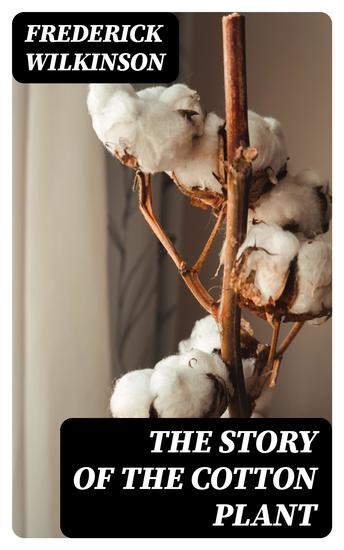
In "The Story of the Cotton Plant," Frederick Wilkinson intricately weaves an exploration of one of the world's most significant agricultural commodities. The book combines scientific inquiry with historical narrative, offering readers a rich tapestry of cotton's journey from cultivation to global impact. Wilkinson employs a descriptive literary style, vividly illustrating the life cycle of the cotton plant and its socio-economic implications across different cultures and eras, thus situating the narrative within the broader context of agricultural and industrial revolutions. Wilkinson, a noted historian and agronomist, draws from his extensive research in botany and agricultural history. His academic background and personal experiences in cotton-producing regions provide him with unique insights into the complexities of cotton cultivation and trade. Moreover, his passion for environmental sustainability and historical ecological studies influences his critical examination of cotton's impact on society and the environment, compelling readers to confront the consequences of agricultural practices. This book is an essential read for anyone interested in agricultural history, sustainability, or the socio-economic impacts of natural resources. Wilkinson's engaging prose not only educates but also provokes thought about the future of agriculture in a rapidly changing world.
Disponible desde: 01/08/2022.
Longitud de impresión: 130 páginas.

Otros libros que te pueden interesar

  • How to Stop a Conspiracy - An Ancient Guide to Saving a Republic - cover

    How to Stop a Conspiracy - An...

    Sallust, Josiah Osgood

    • 0
    • 0
    • 0
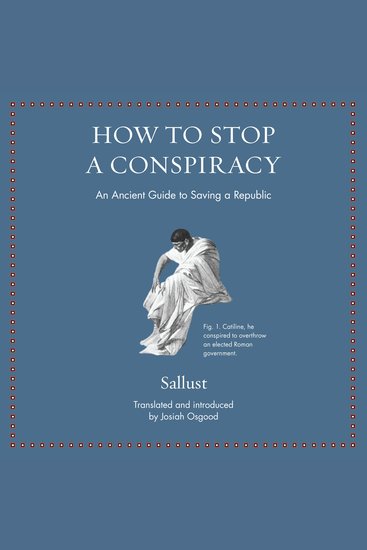
    In 63 BC, frustrated by his failure to be elected leader of the Roman Republic, the aristocrat Catiline tried to topple its elected government. Backed by corrupt elites and poor, alienated Romans, he fled Rome while his associates plotted to burn the city and murder its leading politicians. The attempted coup culminated with the unmasking of the conspirators in the Senate, a stormy debate that led to their execution, and the defeat of Catiline and his legions in battle. In How to Stop a Conspiracy, Josiah Osgood presents a brisk, modern new translation of the definitive account of these events, Sallust's The War with Catiline. 


    In a taut, jaw-dropping narrative, Sallust combines juicy details about Catiline and his louche associates with highly quotable moral judgments and a wrenching description of the widespread social misery they exploited. Along the way, we get unforgettable portraits of the bitter and haunted Catiline, who was sympathetic to the plight of Romans yet willing to destroy Rome; his archenemy Cicero, who thwarts the conspiracy; and Julius Caesar, who defends the conspirators and is accused of being one of them. Complete with an introduction that discusses how The War with Catiline has shaped and continues to shape our understanding of how republics live and die, this volume makes Sallust's gripping history more accessible than ever before.
    Ver libro
  • Prudence - The Wise Decision-Maker - cover

    Prudence - The Wise Decision-Maker

    Esther Jameson

    • 0
    • 0
    • 0
    Prudence is more than just caution; it is the ability to make thoughtful, well-reasoned decisions that lead to the best possible outcomes. It is a virtue that balances wisdom, foresight, and practicality, guiding individuals to act with both intelligence and responsibility. Unlike impulsiveness, which often results in short-term satisfaction but long-term regret, prudence encourages patience and careful consideration before taking action. 
    Throughout history, great thinkers have recognized prudence as a cornerstone of wisdom. Aristotle considered it one of the cardinal virtues, essential for leading a virtuous life. In his view, prudence allows individuals to weigh their choices carefully, taking into account both moral and practical consequences. Similarly, in many religious and philosophical traditions, prudence is seen as a guiding principle that helps people navigate the complexities of life with clarity and integrity. 
    The importance of prudence becomes evident in everyday decision-making. Whether managing finances, handling relationships, or planning for the future, the ability to make wise choices is crucial. A prudent person does not simply react to circumstances but instead evaluates potential risks and benefits before making a move. This deliberate approach leads to stability and success, allowing individuals to avoid unnecessary mistakes and setbacks.
    Ver libro
  • Little Universe - cover

    Little Universe

    Natalie Ann Holborow

    • 0
    • 0
    • 0
    The poems in Natalie Ann Holborow's third collection, Little Universe, are an exploration of tumultuous human emotions and nature's ever-present rhythms.
    
    Lives bustle within a busy hospital's walls, humming against the Gower landscape that stretches beyond its windows. The tiny worlds of a wide cast unfold as they deal with their own emergencies, losses, recoveries, hopes and histories.
    
    Medical students stride along the corridors in rubber shoes, scars running the lengths of their lives. A janitor is crying in the Gents, watching the flowers at the hospital entrance shrug themselves back into earth. The biblical Lilith offers knowledge from one woman to the other. And somewhere in the distance, a bunker dissolves into gold upon Pennard's shoulder, dusk folding to sleep on Rhossili.
    
    The characters in this book are all bound by the undying pulse of existence – yet their stories serve as a reminder that despite these stark contrasts, life persists.
    Ver libro
  • Populism Vs Liberalism - A Comparative Analysis of Political Ideologies - cover

    Populism Vs Liberalism - A...

    Arlo Holders

    • 0
    • 0
    • 0
    Political ideologies form the foundation of how societies organize governance, economics, and social structures. They are systems of ideas and beliefs that provide a framework for political thought and action, influencing policies, institutions, and the behavior of individuals and groups. Among the diverse range of ideologies, populism and liberalism have emerged as two of the most significant and often opposing forces in modern political discourse. This chapter introduces the concepts of populism and liberalism, highlights their importance, and sets the stage for the comparative analysis that follows. 
    Populism is a political approach that champions the rights and concerns of the common people against an established elite. It is often characterized by a rhetoric that emphasizes “the people” as a unified and virtuous entity, contrasted with a corrupt and self-serving elite. While populism can manifest across the political spectrum, its appeal lies in its simplicity and directness, offering solutions that often resonate with those who feel excluded or marginalized by traditional institutions. Populist movements frequently arise in periods of social upheaval or economic insecurity, presenting themselves as corrective forces against perceived injustices. 
    In contrast, liberalism is a political ideology rooted in the principles of individual rights, equality, and the rule of law. It advocates for democratic governance, free markets, and the protection of civil liberties. Liberalism’s historical development is closely linked with movements such as the Enlightenment and the rise of constitutional democracies. As a flexible and adaptive ideology, liberalism has evolved to address modern issues such as social justice, environmental concerns, and global cooperation while maintaining its foundational emphasis on freedom and equality.
    Ver libro
  • Asking Better Questions of the Bible - A Guide for the Wounded Wary and Longing for More - cover

    Asking Better Questions of the...

    Marty Solomon

    • 0
    • 0
    • 0
    Too often when we come to the Bible, we settle for easy answers. We move quickly toward the allure of resolution. But when we ask the questions the Bible is asking, we will do these things instead:understand the Eastern perspective of words, numbers, and core principles like eternal life, truth, sin, and faithrecognize the literary devices and the reclamation of stories used in the Torahread the historical books both as inspiration and as cautionary talesinterpret the distinct genres in Wisdom Literature, such as psalms and proverbsdecipher the unique elements of prophetic literatureperceive the often tongue-in-cheek nature of the Gospel accountsview the New Testament letters as inspired, authoritative interpretation of the story of God
    Ver libro
  • On the Purpose of Hating - cover

    On the Purpose of Hating

    William Hazlitt

    • 0
    • 0
    • 0
    'I like solitude, when I give myself up to it, for the sake of solitude.'
    
    A deeply insightful take on how hate and insecurity can be intertwined, and an endearing love letter to the natural world, 'On the Purpose of Hating' is one of the most renowned essays from the brilliant mind of William Hazlitt.
    
    In 'On the Purpose of Hating', Hazlitt explores the complexities of hatred. He compellingly argues that hatred can have a self-destructive edge, and can do just as much harm to the person who harbours it as the subject of it. At its heart, hatred is merely a coping mechanism to manage our own shortcomings.
    William Hazlitt (1778 – 1830) was an English essayist, social commentator and literary critic. Largely considered one of the best essayists of his time, and having befriended other literary giants such as Samuel Taylor Coleridge, John Keats and Charles Lamb, Hazlitt was a prolific writer, penning articles and periodicals until his death.
    Ver libro