Rejoignez-nous pour un voyage dans le monde des livres!
Ajouter ce livre à l'électronique
Grey
Ecrivez un nouveau commentaire Default profile 50px
Grey
Abonnez-vous pour lire le livre complet ou lisez les premières pages gratuitement!
All characters reduced
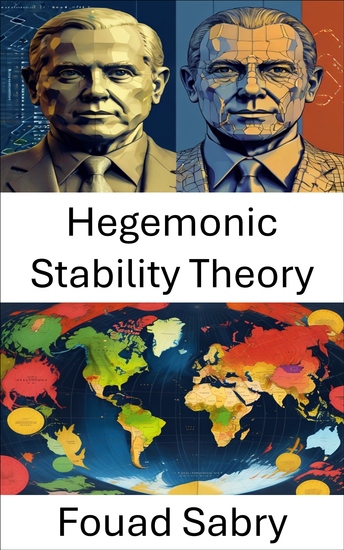
Hegemonic Stability Theory - Power Dynamics and Global Order - cover

Hegemonic Stability Theory - Power Dynamics and Global Order

Fouad Sabry

Maison d'édition: One Billion Knowledgeable

  • 0
  • 0
  • 0

Synopsis

Hegemonic Stability Theory is a crucial read for those interested in global power dynamics and stability. It explores how a dominant power can maintain global stability through political science, economics, and history. Readers will gain insights into the mechanisms of hegemonic influence and its impact on international relations.
 
Chapters Overview:
 
1-Introduces hegemonic stability theory's core concepts and historical context.
 
2-Examines the role of empires in maintaining hegemonic stability.
 
3-Discusses the significance of hegemony in the international system.
 
4-Explores hegemonic stability within international relations.
 
5-Analyzes the liberal international order's reliance on hegemonic stability.
 
6-Investigates strategies used by dominant powers to maintain hegemony.
 
7-Examines how states balance against hegemonic powers.
 
8-Connects social cycle theory with hegemonic stability.
 
9-Highlights Stephen Brooks's contributions to hegemonic stability.
 
10-Discusses realism's perspective on hegemonic stability.
 
11-Explores the concept of polarity and its relationship with hegemonic stability.
 
12-Analyzes John Ikenberry's work on liberal internationalism and hegemonic stability.
 
13-Examines offensive realism's critique of hegemonic stability theory.
 
14-Highlights Robert Gilpin's contributions to hegemonic stability theory.
 
15-Investigates balance of power theory in relation to hegemonic stability.
 
16-Discusses William Wohlforth's insights into hegemonic stability.
 
17-Reviews key arguments from "The Tragedy of Great Power Politics."
 
18-Provides comparative studies of the Roman and Han empires.
 
19-Examines international order's dependence on hegemonic stability.
 
20-Explores triangular diplomacy's role in maintaining hegemonic stability.
 
21-Highlights Carla Norrlöf's contributions to understanding hegemonic stability.
 
This book is essential for professionals, students, and enthusiasts seeking to deepen their knowledge of hegemonic stability theory and its global political implications. The comprehensive analysis it offers makes it a valuable addition to any political science library.
Disponible depuis: 30/08/2024.
Longueur d'impression: 222 pages.

D'autres livres qui pourraient vous intéresser

  • Nationalized Politics - Evaluating Electoral Politics Across Time - cover

    Nationalized Politics -...

    Joel Sievert, Jamie L. Carson,...

    • 0
    • 0
    • 0
    In the United States, politics has become increasingly nationalized in recent years as voter decision-making is now driven by partisan or national political forces rather than the attributes of individual candidates. Indeed, voters now seem more concerned with which of the two national parties will be in power across all levels of government as opposed to which candidate will represent them individually. 


    Nationalized Politics asks and answers the question, "how has nationalization influenced elections across different political eras?" Jamie L. Carson, Joel Sievert, and Ryan D. Williamson look at historical variation in nationalization through an analysis of congressional elections from 1840 to 2020. By examining roughly 180 years of elections, the authors leverage considerable differences in electoral competition, electoral rules, nationalization, polarization, and partisan advantage via the incumbency advantage. Moreover, Carson, Sievert, and Williamson employ a unique survey design to capture citizen attitudes toward the nationalization of politics to further consider the question of how nationalization is currently shaping politics. Providing a comprehensive history of US congressional elections, Nationalized Politics illustrates the roots of the current electoral landscape in the US.
    Voir livre
  • Fear Tactics - Using Fear to Control or Manipulate Others - cover

    Fear Tactics - Using Fear to...

    Cito Harder

    • 0
    • 0
    • 0
    Fear is one of the most primal human emotions, deeply embedded in the survival instincts of individuals and societies. Throughout history, it has been harnessed as a tool of control, allowing those in positions of power to manipulate others for personal, political, or financial gain. Fear tactics involve the deliberate use of intimidation, threats, and uncertainty to shape perceptions, influence decisions, and suppress opposition. Whether used in personal relationships, corporate environments, or large-scale governance, these tactics exploit an individual’s natural aversion to danger and discomfort.  
    At its core, a fear tactic works by triggering the instinctive fight-or-flight response. When people perceive a threat—whether real or fabricated—they become more susceptible to external influence. Logical reasoning often takes a backseat to emotional reactions, making individuals more likely to comply with demands, accept misleading information, or make decisions that they otherwise would not consider. Fear-based influence operates on the principle that an individual will do whatever is necessary to avoid the perceived threat, even if it means relinquishing personal freedoms, adopting extreme beliefs, or placing trust in an unworthy authority.
    Voir livre
  • Secret Agenda - Watergate Deep Throat and the CIA - cover

    Secret Agenda - Watergate Deep...

    Jim Hougan

    • 0
    • 0
    • 0
    The exposé that reveals “a prostitution ring, heavy CIA involvement, spying on the White House as well as on the Democrats, and plots within plots” (The Washington Post) Ten years after the infamous Watergate scandal that brought down the Nixon presidency, Jim Hougan—then the Washington editor of Harper’s Magazine—set out to write a profile of Lou Russell, a boozy private-eye who plied his trade in the vice-driven underbelly of the nation’s capital. Hougan soon discovered that Russell was “the sixth man, the one who got away” when his boss, veteran CIA officer Jim McCord, led a break-in team into a trap at the Watergate. Using the Freedom of Information Act to win the release of the FBI’s Watergate investigation—some thirty-thousand pages of documents that neither the Washington Post nor the Senate had seen—Hougan refuted the orthodox narrative of the affair. Armed with evidence hidden from the public for more than a decade, Hougan proves that McCord deliberately sabotaged the June 17, 1972, burglary. None of the Democrats’ phones had been bugged, and the spy-team’s ostensible leader, Gordon Liddy, was himself a pawn—at once, guilty and oblivious. The power struggle that unfolded saw E. Howard Hunt and Jim McCord using the White House as a cover for an illicit domestic intelligence operation involving call-girls at the nearby Columbia Plaza Apartments. A New York Times Notable Book, Secret Agenda “present[s] some valuable new evidence and explored many murky corners of our recent past . . . The questions [Hougan] has posed here—and some he hasn’t—certainly deserve an answer” (The New York Times Book Review). Kirkus Reviews declared the book “a fascinating series of puzzles—with all the detective work laid out.”
    Voir livre
  • Democracy Under Fire - Donald Trump and the Breaking of American History - cover

    Democracy Under Fire - Donald...

    Lawrence R. Jacobs

    • 0
    • 0
    • 0
    Before Trump even ran for President, his disdain for the rules, procedures, and norms of American democracy and the US Constitution was well-known and led prominent Republicans to repudiate him as "unfit" for the GOP nomination. Given the clear-eyed assessment of candidate Trump, why did the Republican Party nominate him as its presidential candidate in 2016 and then stand by him during the next four years? 


    Much of the attention paid to Trump's rise to power has focused on his corrosive personality and divisive style of governing. But he alone is not the problem. The vulnerability is much broader and deeper. The ascendance of Trump is the culmination of nearly 250 years of political reforms that gradually ceded party nominations to small cliques of ideologically-motivated party activists, interest groups, and donors. 


    In Democracy under Fire, Lawrence Jacobs provides a highly engaging history of political reforms since the late-eighteenth century that over time dangerously weakened democracy, widened political inequality as well as racial disparities, and rewarded toxic political polarization. Jacobs's searing indictment of political reformers concludes with recommendations to restrain the unbridled ambition of politicians who thrive on division and instead generate broad citizen engagement with tangible policy making.
    Voir livre
  • Against Massacre - Humanitarian Interventions in The Ottoman Empire 1815–1914 - cover

    Against Massacre - Humanitarian...

    Davide Rodogno

    • 0
    • 0
    • 0
    Against Massacre looks at the rise of humanitarian intervention in the nineteenth century, from the fall of Napoleon to the First World War. Examining the concept from a historical perspective, Davide Rodogno explores the understudied cases of European interventions and noninterventions in the Ottoman Empire and brings a new view to this international practice for the contemporary era.  While it is commonly believed that humanitarian interventions are a fairly recent development, Rodogno demonstrates that almost two centuries ago an international community, under the aegis of certain European powers, claimed a moral and political right to intervene in other states' affairs to save strangers from massacre, atrocity, or extermination. On some occasions, these powers acted to protect fellow Christians when allegedly "uncivilized" states, like the Ottoman Empire, violated a "right to life." Exploring the political, legal, and moral status, as well as European perceptions, of the Ottoman Empire, Rodogno investigates the reasons that were put forward to exclude the Ottomans from the so-called Family of Nations. He considers the claims and mixed motives of intervening states for aiding humanity, the relationship between public outcry and state action or inaction, and the bias and selectiveness of governments and campaigners.  An original account of humanitarian interventions some two centuries ago, Against Massacre investigates the varied consequences of European involvement in the Ottoman Empire and the lessons that can be learned for similar actions today.
    Voir livre
  • Social Conservatism for the Common Good - A Protestant Engagement with Robert P George - cover

    Social Conservatism for the...

    Andrew Walker

    • 0
    • 0
    • 0
    Carl R. Trueman and Other Christian Evangelical Scholars Examine the Life and Work of Renowned Catholic, Social Conservative Thinker Robert P. George
    Robert P. George, McCormick Professor of Jurisprudence at Princeton University, is one of the most influential conservative intellectuals of his generation. Among many honors and accolades, George received the US Presidential Citizens Medal from President George W. Bush and served as chairman of the United States Commission on International Religious Freedom (USCIRF). Though a Catholic himself, George's influence has transcended traditional religious categories to shape evangelical discourse on politics, ethics, and political philosophy throughout his career. 
    In this thorough introduction and careful analysis of George's work for Protestant audiences, editor Andrew T. Walker gathers essays from high profile evangelical writers and academics—including Carl R. Trueman, Hunter Baker, Jennifer Marshall Patterson, and Scott Klusendorf—to explore subjects such as faith and reason, George's New Natural Law theory, and how to collaborate across ideological lines. Social Conservatism for the Common Good helps Christian evangelicals understand George's philosophy and apply it to their own cultural engagement and public witness.
    
    - Biography of Influential Conservative Scholar Robert P. George: Explores the breadth of his political philosophy and activism, as well as his relevance to the evangelical community
    - Engaging Political Analysis from a Biblical Perspective: With a foreword by US Senator Ben Sasse, this book covers important cultural and academic topics including human rights, social and public ethics, and pro-life issues
    - Ideal Resource for Evangelical Scholars and Thinkers: Written for pastors, students, and those interested in politics, this robust book appeals to readers of Carl R. Trueman's The Rise and Triumph of the Modern Self
    Voir livre