Begleiten Sie uns auf eine literarische Weltreise!
Buch zum Bücherregal hinzufügen
Grey
Einen neuen Kommentar schreiben Default profile 50px
Grey
Jetzt das ganze Buch im Abo oder die ersten Seiten gratis lesen!
All characters reduced
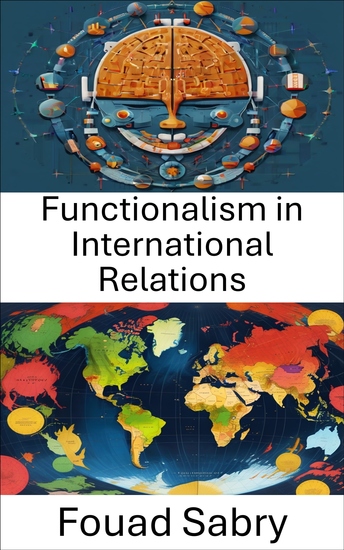
Functionalism in International Relations - Global Cooperation Beyond Borders - cover

Functionalism in International Relations - Global Cooperation Beyond Borders

Fouad Sabry

Verlag: One Billion Knowledgeable

  • 0
  • 0
  • 0

Beschreibung

In the evolving field of international relations, Functionalism is more than a theoretical concept; it's a guide to a more stable and peaceful world. My book, Functionalism in International Relations, explores this influential theory within Political Science, offering insights into its relevance and application.
 
1. Functionalism (International Relations): Explore Functionalism’s origins in the interwar period and its relevance today. This chapter lays the groundwork for understanding how Functionalism provides a perspective on global issues.
 
2. International Relations Theory: Examine the theoretical framework of international relations and how Functionalism serves as a practical tool for diplomats and policymakers, bridging theory with real-world application.
 
3. Neofunctionalism: Delve into Neofunctionalism, an evolution of Functionalism that enhances our understanding of regional integration and international cooperation beyond state boundaries.
 
4. European Integration: Discover the impact of Functionalism on European integration, from the Common Market to the European Union, and its role as a model for international collaboration.
 
5. David Mitrany: Learn about David Mitrany, the pioneer of Functionalism. His focus on functional cooperation remains influential and inspirational today.
 
6. Ernst B. Haas: Explore Haas's contributions to supranational governance and international organizations, which continue to inform our understanding of global politics.
 
7. Ralf Dahrendorf: Dahrendorf’s critiques of Functionalism provoke debate on power dynamics within the theory, encouraging intellectual growth.
 
8. State Cartel Theory: Investigate how State Cartel Theory reveals the complexities of state interests and cooperation, offering practical insights into international relations.
 
9. Functional Linguistics: Understand the role of language in shaping international diplomacy and relations, demonstrating that communication is crucial to global interactions.
 
10. Transnationalism: Examine how transnational networks, NGOs, and global citizens represent our interconnected world and challenge traditional state-centric views.
 
11. World Government: Consider the concept of a world government and Functionalism’s implications for this vision, pushing us to think beyond nation-states.
 
12. Functionalism (Philosophy of Mind): Explore the connections between Functionalism in international relations and cognitive science, highlighting interdisciplinary curiosity.
 
13. Structural Functionalism: See how Functionalism parallels structural functionalism in sociology, reflecting on how societal functions interlock to maintain harmony.
 
14. Globalism: Assess how globalism influences Functionalism, shaping our understanding of interconnectedness and shared global destinies.
 
15. Cultural System: Analyze the impact of culture on diplomacy and international cooperation, demonstrating how cultural factors drive global interactions.
 
16. Neofunctionalism (Sociology): Investigate how Neofunctionalism applies to sociology and regional integration, bridging gaps between different disciplines.
 
17. Regional Integration: Explore how Functionalism is evident in regional blocs like ASEAN and Mercosur, emphasizing the importance of regional cooperation.
 
18. Sociological Theory: Consider Functionalism’s relevance in sociological theory, showing how it connects with broader social insights.
 
19. Functional Psychology: Examine how psychological principles inform international relations, influencing strategies and behaviors.
 
20. Sociology: Understand Functionalism’s role in sociology and its impact on global politics, revealing its broader societal implications.
 
21. Outline of Globalization: Map out the interconnected world through Functionalism’s lens, enhancing our understanding of globalization.
Verfügbar seit: 13.08.2024.
Drucklänge: 281 Seiten.

Weitere Bücher, die Sie mögen werden

  • The Wannabe Fascists - A Guide to Understanding the Greatest Threat to Democracy - cover

    The Wannabe Fascists - A Guide...

    Federico Finchelstein

    • 0
    • 0
    • 0
    Meet today's almost fascists and learn the warning signs to intercept them on the road from populism to dictatorship. 


    With The Wannabe Fascists, historian Federico Finchelstein offers a precise explanation of why Trumpism and similar movements across the world belong to a new political breed, the last outcome of the combined histories of fascism and populism: the wannabe fascists. This new type of populist politician is typically a legally elected leader who, unlike previous populists who were eager to distance themselves from fascism, turns to totalitarian lies, racism, and illegal means to destroy democracy from within. 


    Drawing on almost three decades of research on the histories of fascism and populism around the world, this book lays out in clear language what the author calls the "four pillars of fascism"—xenophobia, propaganda, political violence, and ultimately dictatorship. Finchelstein carefully explains how and why wannabe fascists like Trump, Bolsonaro, and Modi embrace the first three pillars but don't quite succeed in dictatorship and total suppression of the popular vote. The Wannabe Fascists stresses the importance of preventing despots from reaching this tipping point and offers a clear warning for what's at stake.
    Zum Buch
  • We Are the Leaders We Have Been Looking For - cover

    We Are the Leaders We Have Been...

    Eddie S. Glaude Jr.

    • 0
    • 0
    • 0
    In We Are the Leaders We Have Been Looking For, one of the nation's preeminent scholars and a New York Times bestselling author, Eddie S. Glaude Jr., makes the case that the hard work of becoming a better person should be a critical feature of Black politics. Through virtuoso interpretations of Martin Luther King, Jr., Malcolm X, and Ella Baker, Glaude shows how we have the power to be the heroes that our democracy so desperately requires. 


    Based on the Du Bois Lectures delivered at Harvard University, the book begins with Glaude's unease with the Obama years. He felt then, and does even more urgently now, that the excitement around the Obama presidency constrained our politics as we turned to yet another prophet-like figure. He examines his personal history and the traditions that both shape and overwhelm his own voice. Glaude weaves anecdotes about his evolving views on Black politics together with the writings of Ralph Waldo Emerson, John Dewey, Toni Morrison, James Baldwin, and Ralph Ellison, encouraging us to reflect on the lessons of these great thinkers. 


    Narrated with passion and philosophical intensity, this book is a powerful reminder that if American democracy is to survive, we must step out from under the shadows of past giants to build a better society—one that derives its strength from the pew, not the pulpit.
    Zum Buch
  • Negotiating in Civil Conflict - Constitutional Construction and Imperfect Bargaining in Iraq - cover

    Negotiating in Civil Conflict -...

    Haider Ala Hamoudi

    • 0
    • 0
    • 0
    In 2005, Iraq drafted its first constitution and held the country’s first democratic election in more than fifty years. Even under ideal conditions, drafting a constitution can be a prolonged process marked by contentious debate, and conditions in Iraq are far from ideal: Iraq has long been racked by ethnic and sectarian conflict, which intensified following the American invasion and continues today. This severe division, which often erupted into violence, would not seem to bode well for the fate of democracy. So how is it that Iraq was able to surmount its sectarianism to draft a constitution that speaks to the conflicting and largely incompatible ideological view of the Sunnis, Shi’ah, and Kurds? Haider Ala Hamoudi served in 2009 as an adviser to Iraq’s Constitutional Review Committee, and he argues here that the terms of the Iraqi Constitution are sufficiently capacious to be interpreted in a variety of ways, allowing it to appeal to the country’s three main sects despite their deep disagreements. While some say that this ambiguity avoids the challenging compromises that ultimately must be made if the state is to survive, Hamoudi maintains that to force these compromises on issues of central importance to ethnic and sectarian identity would almost certainly result in the imposition of one group’s views on the others. Drawing on the original negotiating documents, he shows that this feature of the Constitution was not an act of evasion, as is sometimes thought, but a mark of its drafters’ awareness in recognizing the need to permit the groups the time necessary to develop their own methods of working with one another over time.
    Zum Buch
  • The Hidden History of American Democracy - Rediscovering Humanity’s Ancient Way of Living - cover

    The Hidden History of American...

    Thom Hartmann

    • 0
    • 0
    • 0
    America's most popular progressive radio host and New York Times bestselling author Thom Hartmann paves the way to saving our democracy. 
     
    In this powerful, sweeping history and analysis of American democracy, Thom Hartmann shows how democracy is the one form of governance most likely to produce peace and happiness among people. 
     
    With the violent exception of the Civil War, American democracy resisted the pressure to disintegrate into factionalism for nearly two centuries, and now our very system of democratic elections is at stake. So how do we save our democracy? 
     
    Hartmann's newest book in the celebrated Hidden History Series offers a clear call to action and a set of solutions with road maps for individuals and communities to follow to create a safer, more just society and a more equitable and prosperous economy.
    Zum Buch
  • Wake Up and Reclaim Your Humanity - Essays on the Tragedy of Israel-Palestine - cover

    Wake Up and Reclaim Your...

    Richard Forer

    • 0
    • 0
    • 0
    Wake Up and Reclaim Your Humanity: Essays on the Tragedy of Israel-Palestine 
    Written and Narrated by Richard Forer 
    Published by Audiobook Publishing Services 
    Explore the heart of the Israel-Palestine conflict through a powerful lens of transformation and truth. In Wake Up and Reclaim Your Humanity, author and narrator Richard Forer—once a passionate supporter of Israel—shares his remarkable spiritual awakening that redefined his identity and opened his eyes to the shared humanity between Israelis and Palestinians. 
    Through deeply personal essays, Forer challenges long-held narratives and confronts the existential fears and divisions that fuel the ongoing tragedy in the Middle East. This audiobook takes listeners on a journey from division to compassion, from confusion to clarity—revealing the deeper causes of suffering and offering a bold path toward justice, equality, and inner peace. 
    Whether you're searching for books on the Israel-Palestine conflict, interfaith understanding, or human rights advocacy, this groundbreaking commentary offers a unique perspective rooted in compassion, history, and truth. Perfect for listeners seeking clarity in a world of polarized narratives, Wake Up and Reclaim Your Humanity is a timely and transformative guide to healing one of the world’s most enduring struggles.
    Zum Buch
  • Politics of Disinformation - cover

    Politics of Disinformation

    Bella Palomo, Eve Campos...

    • 0
    • 0
    • 0
    Discover a comprehensive exploration of the underlying theories of disinformation, and their impact, from leading voices in the field 


    Politics of Disinformation delivers a thorough discussion of the overwhelming problem of modern fake news in the political arena. The book reviews fundamental theoretical concepts of disinformation and analyzes the impact of new techniques of misinformation and the dissemination of false information in the public space. A group of distinguished authors provide case studies to illustrate the effect of disinformation all around the world; including, but not limited to Europe, the Middle East, and South America. 


    The chapters include examination of topics such as the rise of populism, the increasing political influence of social networks, the use of fact checking to combat fake news and echo chambers, and comparative analyses of how disinformation affects conservatives and liberals. A final case study examines all of these factors as they relate to the recent Spanish election of 2019 and how they affected the results.
    Zum Buch