Begleiten Sie uns auf eine literarische Weltreise!
Buch zum Bücherregal hinzufügen
Grey
Einen neuen Kommentar schreiben Default profile 50px
Grey
Jetzt das ganze Buch im Abo oder die ersten Seiten gratis lesen!
All characters reduced
Child Anxiety & Screen Time - A 5-Step Plan to Support Kids with Anxiety and Create a Calmer Daily Rhythm - cover

Child Anxiety & Screen Time - A 5-Step Plan to Support Kids with Anxiety and Create a Calmer Daily Rhythm

Felicity Paulman

Verlag: mindplusfood

  • 0
  • 0
  • 0

Beschreibung

Parenting is a beautiful journey filled with love, laughter, and unforgettable moments. Yet, it also comes with its share of challenges, especially when it comes to navigating the emotional well-being of your child. Today’s world presents unique pressures for children. From the constant pull of digital devices and overstimulating environments to academic demands and social complexities, it’s no wonder so many young minds feel overwhelmed.
 
For parents, managing these stressors while creating a peaceful family rhythm can feel daunting. The pervasive influence of screens, combined with packed schedules and rising expectations, often leaves families feeling rushed, disconnected, and uncertain about how best to help their kids. Yet, hope lies in intentional, actionable steps.
 
In this guide, we will talk about the following:
 
Home What Anxiety Looks Like in Kids Today
 
Root Causes of Anxiety in Children
 
Five-Step Plan 
 
30-Day Family Calm Plan
 
Keep reading to learn more about creating a peaceful family rhythm and helping your child manage anxiety. By the end of this guide, you will have the tools and resources to support your child's emotional well-being and create a more harmonious family dynamic.
Verfügbar seit: 27.07.2025.
Drucklänge: 87 Seiten.
Weitere Bücher, die Sie mögen werden

  • Medieval Europe’s Mercenaries: The History of Hired Soldiers across Europe and the Byzantine Empire in the Middle Ages - cover

    Medieval Europe’s Mercenaries:...

    Editors Charles River

    • 0
    • 0
    • 0
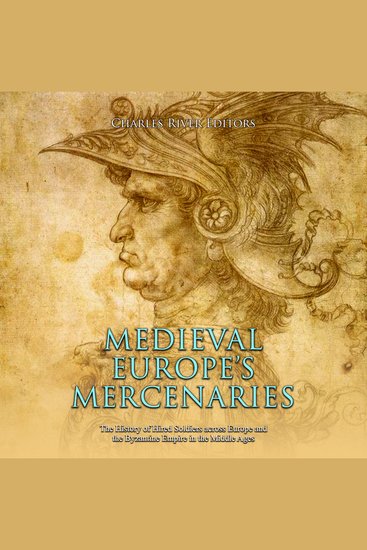
    The Middle Ages have long been remembered for armored knights battling on horseback and armies of men trying to breach the walls of formidable castles, but what is generally forgotten is that medieval warfare was constantly adapting to the times as leaders adopted new techniques and technology, and common infantry became increasingly important throughout the period. Meanwhile, political and technological progress led to continuous change of tactics and equipment. Cavalry became ascendant, only to be later replaced by infantry as their weapons improved, and by the end of the period, warfare was radically changing thanks to the rise of gunpowder weapons such as the handgonne and the bombard. 
    The Middle Ages witnessed almost constant warfare in Europe, so mercenaries were a constant on the battlefield, but the 15th century also saw the rise of mercenary usage by the increasingly wealthy aristocracy. At the time, England and France existed in smaller versions than in the modern age, while the Spanish had unified into a few large kingdoms and were slowly pushing the Moors off the Iberian Peninsula. Norway and Hungary were larger than they are now, but otherwise, most of Europe was a patchwork quilt of small, constantly warring states. This was especially true in Germany and Italy, where innumerable city-states and little fiefdoms struggled to gain more territory and defend themselves against their neighbors.
    Zum Buch
  • Red Dawn - What If the Soviets Had Prevailed in the Cold War? - cover

    Red Dawn - What If the Soviets...

    Marcus Draysun

    • 0
    • 0
    • 0
    The Cold War, which dominated much of the 20th century, was a clash of ideologies, political ambitions, and global power struggles. It was a battle between two superpowers, the United States and the Soviet Union, each determined to impose its vision of the future upon the world. The Cold War never boiled over into full-scale war, but the fear of nuclear annihilation and the constant threat of conflict shaped the political landscape. But what if the Soviet Union had won this prolonged battle, and the world as we know it had unfolded differently? 
    In the original timeline, the collapse of the Soviet Union in 1991 marked the end of the Cold War, leaving the United States as the undisputed global superpower. However, in this alternate reality, the Soviets have triumphed, their system of governance and ideology proving resilient and successful. How did this shift happen? The end of the Cold War came not with the fall of the Berlin Wall, but with the extension of Soviet influence across Europe, Asia, and beyond, ushering in a new age of global communism. 
    The victory of the Soviets would have drastically altered the political and economic systems of the world. The capitalist model, so dominant in the West, would have been eclipsed by socialism, and Western governments would have been forced to adopt forms of governance that more closely resembled the Soviet model. The United States, long a symbol of free-market capitalism and democracy, would have seen its institutions transformed, as the Soviet Union’s ideals spread through every corner of the globe.
    Zum Buch
  • Time of My Life The: Dirty Dancing - cover

    Time of My Life The: Dirty Dancing

    Andrea Warner

    • 0
    • 0
    • 0
    An engaging exploration into the enduring popularity of Dirty Dancing and its lasting themes of feminism, activism, and reproductive rights 
     
    When Dirty Dancing was released in 1987, it had already been rejected by producers and distributors several times over, and expectations for the summer romance were low. But then the film, written by former dancer Eleanor Bergstein and starring Jennifer Grey and Patrick Swayze as a couple from two different worlds, exploded. Since then, Dirty Dancing’s popularity has never waned. The truth has always been that Dirty Dancing was never just a teen romance or a dance movie — it also explored abortion rights, class, and political activism, with a smattering of light crime-solving. 
     
    In The Time of My Life, celebrated music journalist Andrea Warner excavates the layers of Dirty Dancing, from its anachronistic, chart-topping soundtrack, to Baby and Johnny’s chemistry, to Bergstein’s political intentions, to the abortion subplot that is more relevant today than ever. The film’s remarkable longevity would never have been possible if it was just a throwaway summer fling story. It is precisely because of its themes — deeply feminist, sensitively written — that we, over 30 years later, are still holding our breath during that last, exhilarating lift.
    Zum Buch
  • A Rare Recording of Odell Rhodes Survivor of the 1978 Jonestown Massacre - cover

    A Rare Recording of Odell Rhodes...

    Odell Rhodes

    • 0
    • 0
    • 0
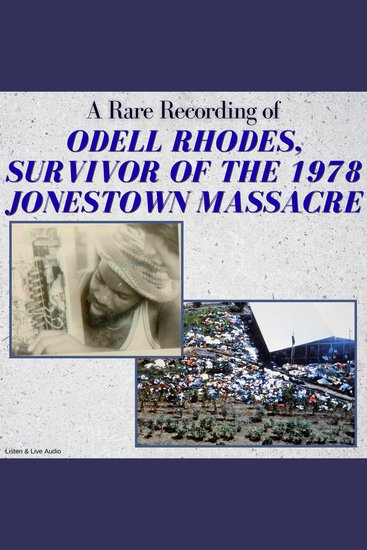
    The Peoples Temple Agricultural Project, better known by its informal name of Jonestown, was a remote settlement in the South American country of Guyana established by the Peoples Temple, an American religious cult under the leadership of Jim Jones. On November 18, 1978, a total of 918 people died at the settlement, at the nearby airstrip in Port Kaituma, and at a Temple-run building in Georgetown, Guyana's capital city. The tragedy is often called the Jonestown Massacre. The following is a tv interview with survivor Odell Rhodes at Guyana's Park Hotel on November 24, 1978.
    Zum Buch
  • A Farewell to Arms - cover

    A Farewell to Arms

    Ernest Hemingway

    • 0
    • 0
    • 0
    Can love survive when the world is falling apart?
    
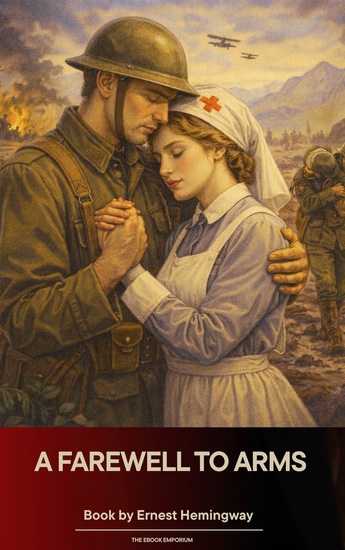
    First published in 1929, A Farewell to Arms is one of Ernest Hemingway's most powerful and enduring novels. Set against the brutal realities of World War I, the story follows Frederic Henry, an American ambulance driver serving in the Italian army, whose life is transformed by his love for Catherine Barkley.
    
    As war brings chaos, injury, and disillusionment, Hemingway explores the fragile hope of love in a world ruled by violence and chance. Written in his signature spare and direct style, the novel delivers deep emotional impact through restraint, honesty, and unforgettable moments of tenderness and loss.
    
    More than a war story, A Farewell to Arms is a meditation on courage, fate, and the human need for connection in the face of suffering.
    
    Inside this eBook, you'll experience:
    
    A classic World War I novel grounded in realism
    
    A tragic and deeply moving love story
    
    Hemingway's iconic minimalist prose style
    
    Themes of bravery, disillusionment, and endurance
    
    Widely studied and celebrated as a cornerstone of modern literature, A Farewell to Arms remains essential reading for anyone drawn to classic novels, war fiction, and timeless love stories.
    
    Say goodbye to illusions—and discover a novel that still speaks with quiet power. Buy now and experience one of Hemingway's greatest works.
    Zum Buch
  • The Martians - The True Story of an Alien Craze that Captured Turn-of-the-Century America - cover

    The Martians - The True Story of...

    David Baron

    • 0
    • 0
    • 0
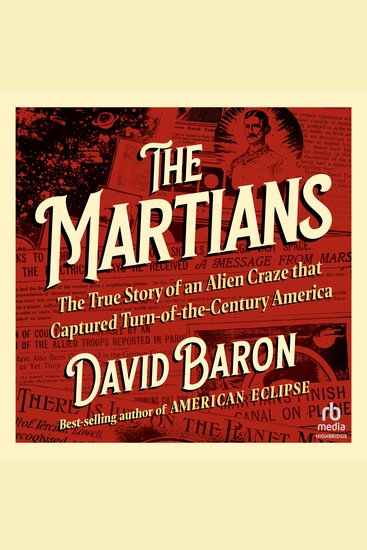
    In the early 1900s, many Americans actually believed we had discovered intelligent life on Mars, as bestselling science writer David Baron chronicles in The Martians, his truly bizarre tale of a nation swept up in Mars mania. 


    At the center of Baron's historical drama is Percival Lowell, the Boston Brahmin and Harvard scion, who observed "canals" etched into the surface of Mars. Lowell devised a grand theory that the red planet was home to a utopian society that had built gargantuan ditches to funnel precious meltwater from the polar icecaps to desert farms and oasis cities. The public fell in love with the ambitious amateur astronomer who shared his findings in speeches and wildly popular books. 


    While at first people treated the Martians whimsically―Martians headlining Broadway shows, biologists speculating whether they were winged or gilled―the discussion quickly became serious. Inventor Nikola Tesla announced he had received radio signals from Mars; Alexander Graham Bell agreed there was "no escape from the conviction" that intelligent beings inhabited the planet. Martian excitement reached its zenith when Lowell financed an expedition to photograph Mars from Chile's Atacama Desert, resulting in what newspapers hailed as proof of the Martian canals' existence.
    Zum Buch