Rejoignez-nous pour un voyage dans le monde des livres!
Ajouter ce livre à l'électronique
Grey
Ecrivez un nouveau commentaire Default profile 50px
Grey
Abonnez-vous pour lire le livre complet ou lisez les premières pages gratuitement!
All characters reduced
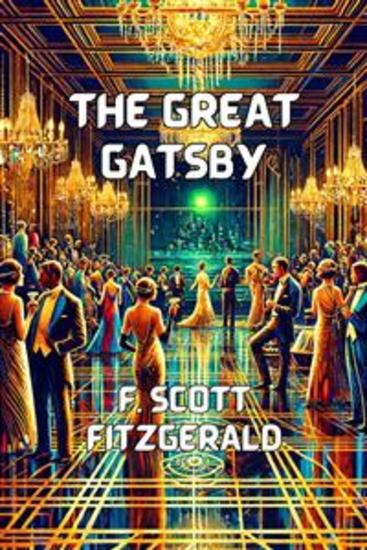
The Great Gatsby(Illustrated) - cover

The Great Gatsby(Illustrated)

F Scott itzgerald

Maison d'édition: Swish

  • 0
  • 0
  • 0

Synopsis

Illustrated edition featuring 20 stunning illustrations capturing key moments from the novel
	Includes a comprehensive summary of the book
	Features a detailed list of characters
	Contains an engaging biography of the author, F. Scott Fitzgerald

The Great Gatsby by F. Scott Fitzgerald is a timeless classic that delves into the glamour, excess, and moral decay of the Jazz Age. Set in the opulent world of 1920s New York, the novel follows the mysterious millionaire Jay Gatsby, whose lavish lifestyle and extravagant parties hide a deep obsession with the love of his life, Daisy Buchanan. Through the eyes of Nick Carraway, a newcomer to West Egg, we witness the tragic unraveling of Gatsby’s grand dream as he strives to rekindle a romance with Daisy that was lost to time and circumstance.
This illustrated edition brings Fitzgerald’s world to life with 20 beautifully crafted illustrations, immersing readers in the novel’s vibrant scenes—from the glittering parties at Gatsby’s mansion to the haunting valley of ashes. Alongside the stunning artwork, this edition also includes a comprehensive summary, a detailed character list, and a biography of F. Scott Fitzgerald, giving readers a deeper understanding of the novel and its historical context.
The Great Gatsby remains a poignant exploration of ambition, love, and the elusive American Dream, making it a must-read for every generation.
 
Disponible depuis: 02/11/2024.

D'autres livres qui pourraient vous intéresser

  • Pictures - cover

    Pictures

    Katherine Mansfield

    • 0
    • 0
    • 0
    "Pictures" is a 1917 short story by Katherine Mansfield. It was first published under the title of The Common Round in the New Age on 31 May 1917 and later as The Pictures in Art and Letters in Autumn 1919. It was then reprinted as Pictures in Bliss and Other Stories.
    Miss Moss wakes up in the morning and she is hungry because she didn't have dinner the night before, nor is she going to have breakfast: she cannot afford it. Then her landlady turns up and gives her a letter hoping that it would be the rent, but it is note from an employment agency, saying they will get back to her.
    Voir livre
  • The First Men in The Moon - The Lost Manuscript - cover

    The First Men in The Moon - The...

    H. G. Wells

    • 0
    • 0
    • 0
    Britain won the Moon Race! Decades before Neal Armstrong took his "giant leap for mankind" two intrepid adventurers from Lympne, England, journeyed there using not a rocket, but an antigravity coating. Mr. Bedford, who narrates the tale, tells of how he fell in with eccentric inventor Mr. Cavor, grew to believe in his research, helped him build a sphere for traveling in space, and then partnered with him in an expedition to the Moon. What they found was fantastic! There was not only air and water but the Moon was honeycombed with caverns and tunnels in which lived an advanced civilization of insect-like beings. While Bedford is frightened by them and bolts home, Cavor stays and is treated with great respect. So why didn't Armstrong and later astronauts find the evidence of all this? Well, according to broadcasts by Cavor over the newly-discovered radio technology, he told the Selenites too much about mankind, and apparently, they removed the welcome mat!  
     
    Herbert George Wells was an English writer. Prolific in many genres, he wrote more than fifty novels and dozens of short stories. His non-fiction output included works of social commentary, politics, history, popular science, satire, biography, and autobiography.
    Voir livre
  • A Chameleon - From their pens to your ears genius in every story - cover

    A Chameleon - From their pens to...

    Anton Chekhov

    • 0
    • 0
    • 0
    Anton Pavlovich Chekhov was born on 29th January 1860 in Taganrog, on the south coast of Russia.  
    His family life was difficult; his father was strict and over-bearing but his mother was a passionate story-teller, a subject Chekhov warmed to. As he later said; ‘our talents we got from our father, but our soul from our mother’.  
    At school Chekhov was distinctly average. At 16 his father mis-managed his finances and was declared bankrupt. His family fled to Moscow. Chekhov remained and eked out a living by various means, including writing and selling short sketches to newspapers, to finish his schooling. That completed and with a scholarship to Moscow University obtained he rejoined his family. 
    He was able to help support them by selling satirical sketches and vignettes of Russian lifestyles and gradually obtained further commissions. In 1884, he qualified as a physician and, although it earned him little, he often treated the poor for free, he was fond of saying ‘Medicine is my lawful wife, and literature is my mistress.’ 
    His own health was now an issue as he began to cough up blood, a symptom of tuberculosis.  Despite this his writing success enabled him to move the family into more comfortable accommodation.  
    Chekhov wrote over 500 short stories which included many, many classics including ‘The Kiss’ and ‘The Lady with a Dog’.  His collection ‘At Dusk’ won him the coveted Pushkin Prize when was only 26.  
    He was also a major playwright beginning with the huge success of ‘Ivanov’ in 1887.   
    In 1892 Chekhov bought a country estate north of Moscow. Here his medical skills and money helped the peasants tackle outbreaks of cholera and bouts of famine. He also built three schools, a fire station and a clinic.  It left him with less time for writing but the interactions with real people gained him detailed knowledge about the peasantry and their living conditions for his stories.  
    His most famous work, ‘The Seagull’ was received disastrously at its premiere in St Petersburg. It was later restaged in Moscow to highlight its psychological aspects and was a huge success. It led to ‘Uncle Vanya’, ‘The Three Sisters’ and ‘The Cherry Orchard’.  
    Chekhov suffered a major lung hemorrhage in 1897 while visiting Moscow. A formal diagnosis confirmed tuberculosis and the doctors ordered changes to his lifestyle.  
    Despite a dread of weddings the elusive literary bachelor quietly married the actress Olga Knipper, whom he had met at rehearsals for ‘The Seagull’, on 25th May 1901. 
    By May 1904 with his tuberculosis worsening and death imminent he set off for the German town of Badenweiler writing cheerful, witty letters to his family and assuring them his health was improving.  
    On 15th July 1904 Anton Chekhov died at Badenweiler.  He was 44.
    Voir livre
  • The Comedy of Errors - cover

    The Comedy of Errors

    William Shakespeare

    • 0
    • 0
    • 0
    The Comedy of Errors is one of Shakespeare's earliest and shortest plays. This comedy utilizes slapstick humor, word play, and mistaken identities to create a series of farcical accidents. Over time, the play's title has become an idiom used to describe "an event or series of events made ridiculous by the number of errors that were made throughout."
    In Ephesus, the law forbids entry to any merchants from Syracuse, and if they are discovered within the city, they must pay a thousand marks or be put to death. Aegeon, an old Syracusian merchant, is arrested and Solinus, the Duke of Ephesus, listens to his story of coming to the city. Long ago, Aegeon was on a sea voyage. Traveling with him was his wife, his twin sons, and their twin slaves. The family becomes separated during a tempest; Aegeon, one son, and one slave were rescued together, and the others were never to be seen again. Years later his son Antipholus and his slave Dromio left to search for their long lost siblings; after the boys didn't return, Aegeon set out to bring his son back home. Moved by this story, the duke allows Aegeon one day to get the money to pay his fine and to find his family.
    Voir livre
  • The Journey to the Center of the Earth - cover

    The Journey to the Center of the...

    Jules Verne

    • 0
    • 0
    • 0
    Journey to the Center of the Earth is a classic 1864 science fiction novel by Jules Verne. The story involves German professor Otto Lidenbrock who believes there are volcanic tubes going toward the center of the Earth. He, his nephew Axel, and their guide Hans descend into the Icelandic volcano Snæfellsjökull, encountering many adventures, including prehistoric animals and natural hazards, before eventually coming to the surface again in southern Italy, at the Stromboli volcano. From a scientific point of view, this story has not aged quite as well as other Verne stories, since most of his ideas about what the interior of the Earth contains have since been disproved, but it still manages to captivate audiences when regarded as a classic fantasy novel.
    Voir livre
  • Ugly Customer An - From their pens to your ears genius in every story - cover

    Ugly Customer An - From their...

    Bernard Capes

    • 0
    • 0
    • 0
    Bernard Edward Joseph Capes was born on the 30th August 1854 in London.  He was one of 11 children. 
    His early work was as a journalist and this developed into writing many short stories for the periodicals of the time including Blackwood's, Cassell's, Cornhill Magazine, Illustrated London News, Macmillan's Magazine, Mall Magazine, Pearson's Magazine, The Idler, and The Queen. 
    It took him many years to decide that writing full-time could be a sustainable career path.  His initial success came with ‘The Mill of Silence’.  As well as being published it garnered second prize at a competition sponsored by the Chicago Record.  He exceeded that by winning it the following year with ‘The Lake of Wine’.   
    Capes quickly became both prolific and popular.  As well as his stories and articles for the periodicals he wrote around 40 volumes across novels, poetry, history as well as romance and mystery novels. 
    Bernard Capes died on 2nd November 1918 in the flu epidemic.
    Voir livre