Begleiten Sie uns auf eine literarische Weltreise!
Buch zum Bücherregal hinzufügen
Grey
Einen neuen Kommentar schreiben Default profile 50px
Grey
Jetzt das ganze Buch im Abo oder die ersten Seiten gratis lesen!
All characters reduced
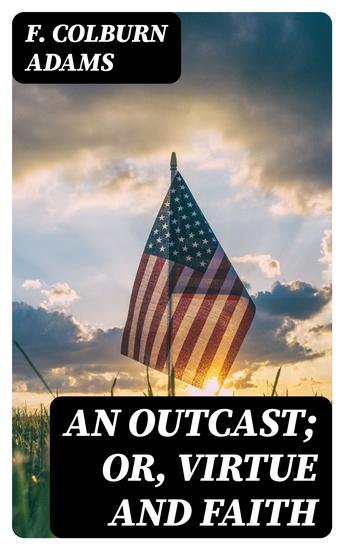
An Outcast; Or Virtue and Faith - cover

An Outcast; Or Virtue and Faith

F. Colburn Adams

Verlag: DigiCat

  • 0
  • 0
  • 0

Beschreibung

In "An Outcast; Or, Virtue and Faith," F. Colburn Adams crafts a poignant narrative exploring themes of isolation, morality, and the endurance of the human spirit. Set against a backdrop of 19th-century American society, the novel employs a vivid literary style rich in emotional depth and introspective characterizations. Adams intricately weaves the protagonist's internal struggles with societal expectations, presenting a compelling critique of social norms and the quest for personal redemption, inviting readers to examine the dichotomy between virtue and faith as guiding principles amidst adversity. F. Colburn Adams, an influential figure in American literature, draws from his own experiences with marginalization and societal scrutiny. His diverse background, including his work as an editor and journalist, informs the insightful perspectives found within his writings. Adams's deep understanding of human relationships and ethical dilemmas molds this heartfelt narrative, allowing readers to connect intimately with the characters' journeys and moral quandaries. This novel is a must-read for those interested in the complexities of the human condition and the societal constraints that can lead individuals to feel like outcasts. Adams's masterful storytelling not only captivates but also challenges readers to reflect on their own values and beliefs in an ever-changing world.
Verfügbar seit: 15.09.2022.
Drucklänge: 301 Seiten.

Weitere Bücher, die Sie mögen werden

  • The Poisoned Pen - cover

    The Poisoned Pen

    Arthur B. Reeve

    • 0
    • 0
    • 0
    "The Poisoned Pen" by Arthur B. Reeve is a detective novel that likely originated in the early 20th century. The story follows Craig Kennedy, a brilliant professor and detective, who is called to investigate a high-profile poisoning case involving a young actress named Vera Lytton. As he delves deeper into the mystery, Kennedy teams up with his companion, Walter Jameson, to uncover the intricate web of deceit and motives surrounding Lytton's tragic death, exploring themes of conspiracy and justice. 
    At the beginning of the novel, Kennedy and Jameson are hastily preparing to travel to the small town of Danbridge, which is currently embroiled in a scandal due to the poisoning of Vera Lytton. They discuss the shocking details of her case, including the involvement of various characters, such as the young doctor, Dr. Dixon, who is considered a suspect, and the potential conspiracy against him orchestrated by others. 
    As they gather information from local authorities and witnesses, Kennedy demonstrates his keen deductive skills while contemplating the implications of a mysterious note linked to Dr. Dixon that was found near the victim. The opening sets the stage for an intricate narrative full of twists, revealing the social dynamics and manipulative backgrounds that could lead to such a heinous crime.
    Zum Buch
  • The Time Machine - cover

    The Time Machine

    H. G. Wells

    • 0
    • 0
    • 0
    When the Time Traveller courageously stepped out of his machine for the first time, he found himself in the year 802,700—and everything had changed. In this unfamiliar, utopian age creatures seemed to dwell together in perfect harmony. The Time Traveller thought he could study these marvelous beings—unearth their secret and then return to his own time—until he discovered that his invention, his only avenue of escape, had been stolen. 
    H. G. Wells’ famous novel of one man’s astonishing journey beyond the conventional limits of the imagination first appeared in 1895. It won him immediate recognition and has been regarded ever since as one of the great masterpieces in the literature of science fiction.
    Zum Buch
  • Shoes of Fortune The - Story Time Episode 77 (Unabridged) - cover

    Shoes of Fortune The - Story...

    Hans Christian Andersen

    • 0
    • 0
    • 0
    Every author has some peculiarity in his descriptions or in his style of writing. Those who do not like him, magnify it, shrug up their shoulders, and exclaim--there he is again! I, for my part, know very well how I can bring about this movement and this exclamation. It would happen immediately if I were to begin here, as I intended to do, with: "Rome has its Corso, Naples its Toledo" - "Ah! that Andersen; there he is again!" they would cry; yet I must, to please my fancy, continue quite quietly, and add: "But Copenhagen has its East Street."
    Zum Buch
  • The Food of the Gods and How It Came to Earth - cover

    The Food of the Gods and How It...

    H. G. Wells

    • 0
    • 0
    • 0
    "In the world of the small, the large is always a monster."
    
    What happens when science outpaces morality? When two eccentric scientists, Mr. Bensington and Professor Redwood, develop "Herakleophorbia"—a substance that allows for continuous, limitless growth—they envision a world of giant livestock and abundant food. Instead, they unleash a biological revolution. From giant wasps and man-eating rats to a new generation of human "Giants" who stand forty feet tall, the world is irrevocably changed. Wells uses this fantastic premise to craft a biting satire of a society that fears progress and a moving epic about the struggle for a larger, more noble existence.
    
    The Chaos of the Small: The first half of the novel is a brilliant dark comedy. Due to the negligence of a pair of sloppy caretakers, the "Food" leaks into the English countryside, creating a nightmare of gargantuan pests. Wells meticulously describes the terror of a world where common insects and rodents become apex predators, forcing humanity to confront the dangers of its own tinkering.
    
    The War of the Worlds (Small vs. Large): As the human "Children of the Food" grow to adulthood, they find themselves outcasts in a world built for "little people." The novel shifts from science fiction to political allegory, as the "old" world, led by the populist politician Caterham (the "Jack the Giant-killer"), attempts to suppress and destroy the giants. It is a powerful meditation on the "growing pains" of civilization and the fear of the unknown.
    
    A Prophecy of the Future: Wells leaves the reader with a haunting question: Can humanity evolve fast enough to inhabit the world its science has created? The Food of the Gods is an essential read for anyone interested in the ethics of biotechnology and the eternal struggle between the status quo and the future.
    
    Witness the growth of a new world. Purchase "The Food of the Gods" today and see the world through the eyes of a giant.
    Zum Buch
  • The Kiss - cover

    The Kiss

    Kate Chopin

    • 0
    • 0
    • 0
    Kate Chopin's "The Kiss" was written on September 19, 1894, and first published in Vogue on January 17, 1895. It is a short story about a woman scheming to marry a wealthy man.
    Zum Buch
  • Middlemarch (Book 7: Two Temptations) - cover

    Middlemarch (Book 7: Two...

    George Eliot

    • 0
    • 0
    • 0
    Middlemarch (Book 7: Two Temptations), A Study of Provincial Life is a novel by English author George Eliot, the pen name of Mary Ann Evans. It appeared in eight installments (volumes) in 1871 and 1872. Set in Middlemarch, a fictional English Midlands town, from 1829 to 1832, it follows distinct, intersecting stories with many characters. Issues include the status of women, the nature of marriage, idealism, self-interest, religion, hypocrisy, political reform, and education. Leavened with comic elements, Middlemarch approaches significant historical events in a realist mode: the Reform Act 1832, early railways, and the accession of King William IV. It looks at medicine of the time and reactionary views in a settled community facing unwelcome change. Eliot began writing the two pieces that formed the novel in 1869–1870 and completed it in 1871. Initial reviews were mixed, but it is now seen widely as her best work and one of the great English novels.
    Zum Buch