

Begleiten Sie uns auf eine literarische Weltreise!
Buch zum Bücherregal hinzufügen
Grey
Einen neuen Kommentar schreiben Default profile 50px
Grey
Jetzt das ganze Buch im Abo oder die ersten Seiten gratis lesen!
All characters reduced
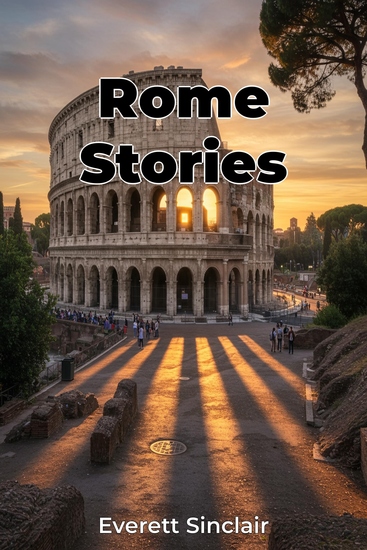
Rome Stories - cover

Rome Stories

Everett Sinclair

Übersetzer A AI

Verlag: Publifye

  • 0
  • 0
  • 0

Beschreibung

Rome Stories explores the fascinating history of Rome, detailing its transformation from a small republic to the dominant power of the ancient world. This book examines how Rome's political ambition, architectural innovation, artistic expression, and culinary traditions shaped its enduring influence. Discover how Roman law provides the basis for many legal systems across the world, and how Roman engineering allowed them to construct buildings that still stand today. The book unfolds systematically, starting with the origins of Rome and its transition to a republic, then examining the rise of figures like Julius Caesar and the subsequent empire under Augustus. Key chapters delve into architectural marvels like the Pantheon and Roman roads, showcasing Roman Architecture and engineering principles. The exploration of Roman culture includes discussions of mythology, literature, philosophy, and culinary innovations.
Verfügbar seit: 20.02.2025.
Drucklänge: 61 Seiten.

Weitere Bücher, die Sie mögen werden

  • Your Resilient Core - Building Strength From Within - cover

    Your Resilient Core - Building...

    Caleb David

    • 0
    • 0
    • 0
    Life will test you. Challenges will arise, failures will happen, and uncertainty will push you to your limits. But what if you had an unshakable foundation of inner strength to help you navigate every storm? 
    Your Resilient Core is a powerful guide to developing mental and emotional resilience—the kind that allows you to rise from setbacks, push through adversity, and come out stronger than ever. This book is not about avoiding challenges but about mastering the tools that will help you thrive in the face of them. 
    In these pages, you’ll discover: 
     🔥 How to reframe challenges as opportunities for growth 
     🔥 The science behind mental toughness and how to develop it 
     🔥 The key habits that build long-term resilience and emotional strength 
     🔥 How to manage stress, anxiety, and overwhelm effectively 
     🔥 Why failure is a stepping stone to success—and how to embrace it 
     🔥 Practical strategies to maintain focus, motivation, and confidence in tough times 
    Resilience isn’t something you’re born with—it’s a skill you can build. With the right mindset and tools, you can develop the inner fortitude to handle anything life throws your way. Your Resilient Core will help you become stronger, wiser, and unstoppable.
    Zum Buch
  • Teaching The Invisible Race - Embodying a Pro-Asian American Lens in Schools - cover

    Teaching The Invisible Race -...

    Tony DelaRosa, Liz Kleinrock

    • 0
    • 0
    • 0
    Transform How You Teach Asian American Narratives in your Schools! 


    In Teaching the Invisible Race, anti-bias and anti-racist educator and researcher Tony DelaRosa (he, siya) delivers an insightful and hands-on treatment of how to embody a pro-Asian American lens in your classroom while combating anti-Asian hate in your school. The author offers stories, case studies, research, and frameworks that will help you build the knowledge, mindset, and skills you need to teach Asian-American history and stories in your curriculum. 


    You'll learn to embrace Asian American joy and a pro-Asian American lens—as opposed to a deficit lens—that is inclusive of Brown and Southeast Asian American perspectives and disability narratives. You'll also find: 


    ● Self-interrogation exercises regarding major Asian American concepts and social movements 


    ● Ways to center Asian Americans in your classroom and your school 


    ● Information about how white supremacy and anti-Blackness manifest in relation to Asian America, both internally and externally 


    A must-listen for parents, families, and community members with an interest in advancing social justice in the Asian American context.
    Zum Buch
  • 101 Weird Moments in Human History - cover

    101 Weird Moments in Human History

    Ahoy Publications

    • 0
    • 0
    • 0
    Discover the weirdest moments in human history! 
    Are you ready to embark on a journey through the quirkiest, most bizarre, and utterly astonishing moments in human history? 
    Have you ever wondered what strange events and curious oddities have shaped our world? Are you curious to delve into the depths of the past, where the extraordinary meets the ordinary in ways you never imagined? 
    Welcome to “101 Weird Moments in Human History,” a remarkable journey through the annals of time that will leave you astounded, amused, and enlightened. 
    This journey will expose you to a number of facts, including:Stunts of the Stone AgeThe Enigmatic World of Ancient EgyptThe Roman Empire’s Bizarre StoriesStrange Beliefs of the Medieval AgePractices That Shaped the WorldBreakthroughs in Science and PhilosophyThe Eccentric Royals of Victorian EnglandShocking Events of the 20th CenturyThe Digital Modern Age 
    These are just a few of the bizarre and mind-boggling stories that await you in this audiobook. Whether it’s tales of historical blunders, unusual customs, or inexplicable phenomena, each story will leave you hungry for more knowledge and amazed by the diversity of human experiences. 
    So, what are you waiting for? Click the “Add to Cart” button and dive into the extraordinary world of “101 Weird Moments in Human History” today!
    Zum Buch
  • A Rare Recording of FA Hayek on Socialism - cover

    A Rare Recording of FA Hayek on...

    FA Hayek

    • 0
    • 0
    • 0
    The following two audio clips are from Friedrich August von Hayek (May 8, 1899 - March 23, 1992), who was an Austrian-British economist and political philosopher. Hayek shared the 1974 Nobel Memorial Prize in Economic Sciences with Gunnar Myrdal for work on money and economic fluctuations, and how prices communicate information. His seminal work, "The Road to Serfdom," has been republished many times over the eight decades since its original publication.
    Zum Buch
  • Lady Barker in New Zealand - cover

    Lady Barker in New Zealand

    Mary-Anne Barker, Amberley Ember

    • 0
    • 0
    • 0
    ***NEW ZEALAND’S LITTLE HOUSE ON THE PRAIRIE*** 
    Two New Zealand Classics—now available with an introduction by Amberley Ember. 
    The year is 1865. 34-year-old Annie, freshly married, sets sail for New Zealand where she will serve as a helpmeet for her second husband, Fred. They live in Christchurch until they can build their house in the sheep-farming Canterbury High Country. Soon, Lady Annie Barker is tending to dogs and chickens, learning how to boil potatoes and galloping side-saddle on her horse through the fresh, miasma-free air. Just when the newlyweds begin to feel settled, they are caught in a great snowstorm, and swindled in a land deal. 
    This is two books in one: Station Life in New Zealand (1870) and Station Amusements (1873).
    Zum Buch
  • Resistance to Imperialism - How Colonized Nations Fought for Independence and Sovereignty - cover

    Resistance to Imperialism - How...

    Arlo Holders

    • 0
    • 0
    • 0
    Imperialism, a system of domination and exploitation, has shaped the course of human history for centuries. At its core, imperialism refers to the policy of a nation extending its power and influence through diplomacy or military force. Colonization, often considered its most aggressive form, involves the establishment of control over a foreign territory, exploiting its resources, and subjugating its people. The roots of imperialism date back to ancient civilizations, but the most notable period of imperial expansion occurred between the 15th and early 20th centuries, driven by European powers such as Britain, France, Spain, and Portugal. 
    The Age of Exploration, beginning in the late 15th century, marked the beginning of a new era of European imperialism. With the development of advanced navigational technologies, European nations sought to expand their empires by discovering new trade routes and territories. Colonization became intertwined with economic ambition, as European countries sought access to valuable resources like gold, spices, and sugar. The discovery of the Americas by Christopher Columbus in 1492 marked the start of extensive European colonization in the Western Hemisphere, followed by the establishment of colonies in Asia and Africa. 
    The motivations for colonization were multifaceted. Economically, European nations sought to control trade routes and establish lucrative colonies that could supply raw materials, which would fuel the industrial revolutions in Europe. Politically, nations pursued imperialism as a way to enhance their power and prestige on the world stage. Colonization also provided a solution to domestic issues, such as overpopulation and unemployment, by offering new lands for settlement and economic opportunity.
    Zum Buch
