

Junte-se a nós em uma viagem ao mundo dos livros!
Adicionar este livro à prateleira
Grey
Deixe um novo comentário Default profile 50px
Grey
Assine para ler o livro completo ou leia as primeiras páginas de graça!
All characters reduced
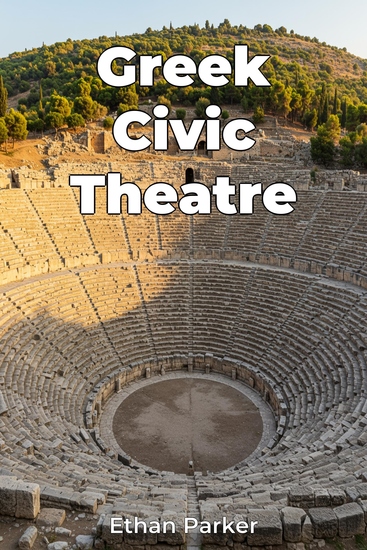
Greek Civic Theatre - cover
LER

Greek Civic Theatre

Ethan Parker

Tradutor A AI

Editora: Publifye

  • 0
  • 0
  • 0

Sinopse

"Greek Civic Theatre" explores the central role of theatre in ancient Greece, revealing it as far more than mere entertainment. The book argues that theatrical productions were integral to both civic life and religious practice, shaping Athenian identity and transmitting societal values. 

 
The study highlights the architectural ingenuity of Greek theatres, often built into hillsides to accommodate vast audiences, underscoring the importance of communal gatherings. Similarly, it examines the choregoi system, where wealthy citizens sponsored productions, illustrating the civic responsibility associated with theatrical patronage. 

 
The book details how theatre served as a vital institution for shaping Athenian identity and transmitting societal values. Beginning with the historical and social context of ancient Greece, the book progresses through the design of theatres, the economics of production, and the conventions of Greek drama, including the use of masks and the chorus. 

 
By exploring these interwoven elements, the book emphasizes the intersection of art, religion, and politics in the ancient world, and how understanding Greek drama can provide insights into contemporary society.
Disponível desde: 05/05/2025.
Comprimento de impressão: 60 páginas.

Outros livros que poderiam interessá-lo

  • Globo arte February 2023 edition - Special issue covering 5 different ways in which artist can make money - cover

    Globo arte February 2023 edition...

    Globo Arte team

    • 0
    • 0
    • 0
    This is our fisrt special edition where we are talking about different ways a creative an artist can make money 
    We are covering 4 different ways 
    1) Starting with youtube channel  
    2) Selling original art/art print 
    3) Selling art as NFT 
    4) Starting with patreon 
    And in depth tips pros and cons and also steps on how to get started  
    We are covering only 4 ways in this edition will cover rest in upcoming issues 
    So if you are looking to make money as  a creative person then thsi is for you. 
    Will see you in book
    Ver livro
  • Futurism - A Very Short Introduction - cover

    Futurism - A Very Short...

    Ara H. Merjian

    • 0
    • 0
    • 0
    Modern technology radically transformed urban life by the first decade of the twentieth century. As one of Western Europe's least industrialized countries, Italy appeared impervious to such developments. It was this state of affairs at which the Futurist movement took aim. With its founding in 1909, the poet and impresario F. T. Marinetti called for a revitalization of aesthetic expression by means of "movement and aggression." A growing cadre of Futurist painters, poets, authors, and musicians exchanged Italy's cultural patrimony for new technologies, media, and metaphors, championing machine-propelled speed and its salutary hazards.The movement's challenge to twentieth-century culture lay not in any specific set of images or objects, but a more comprehensive revolution of sensibility. By the mid-1910s there circulated several dozen Futurist proclamations on everything from men's clothing to set design, photography to film, dance to politics. That political impetus proved relentlessly paradoxical in origin and upshot. From its base in Milan, Futurist activity spread throughout the entire peninsula. Prefiguring and then propagandizing Fascist imperialism, Futurism also galvanized a range of progressive modernist phenomena. More than a century later, the "activist model" of the Futurist avant-garde remains deeply fraught in its historical implications.
    Ver livro
  • Way of Being: Indigenous Traditions for Canadian Youth - cover

    Way of Being: Indigenous...

    Corinne Isaacs

    • 0
    • 0
    • 0
    In a world where cultural values and traditions often fade with each generation, "Way of Being: Indigenous Traditions for Canadian Youth" stands as a beacon of preservation and education. This enlightening book delves into the core values, belief systems, and cultural practices of Indigenous Peoples in Canada, offering Indigenous cultural insights for Canadian youth. The book highlights the significance of Indigenous cultural heritage, emphasizing its vital role in shaping Canada's identity and history.
    Ver livro
  • Han Dynasty - Silk Roads Science and the Confucian Revival - cover

    Han Dynasty - Silk Roads Science...

    Rolf Hedger

    • 0
    • 0
    • 0
    The Han Dynasty, lasting from 206 BCE to 220 CE, is one of the most significant periods in Chinese history, shaping the culture, politics, and identity of China for centuries. It followed the brief but influential Qin Dynasty, which had laid the foundations for imperial rule but also faced internal strife and rebellion. The Han emerged as the new power, restoring stability and expanding China's borders, making significant contributions to science, technology, trade, and philosophy. 
    The dynasty's rise was primarily due to the leadership of Liu Bang, a former peasant who became Emperor Gaozu. He defeated his rival, Xiang Yu, and took control of the vast Qin Empire, establishing the Han Dynasty. Gaozu's leadership marked the beginning of a new era, one that would see the consolidation of power and the implementation of reforms that would shape the future of the empire. 
    The Han Dynasty’s political structure was deeply influenced by the collapse of the Qin Dynasty. Emperor Gaozu restored the decentralized feudal system of governance, but with modifications to ensure more central control. Over time, the emperors of the Han Dynasty would strengthen the centralized bureaucracy, establishing a model that would endure for centuries in imperial China. One of the key developments was the introduction of Confucianism as the state philosophy. Confucian ideals, emphasizing hierarchy, duty, and moral governance, became deeply embedded in the political and social structure of the Han Empire. Confucian scholars played an essential role in the administration, and the dynasty itself was viewed as a time when the state was governed by virtuous and learned rulers.
    Ver livro
  • Five Little Monkeys Jumping On The Bed - cover

    Five Little Monkeys Jumping On...

    Kim Mitzo Thompson, Karen Mitzo...

    • 0
    • 0
    • 0
    Kids will love this sweet story/song combination as they listen to “Five Little Monkeys Jumping On The Bed,” and follow along word-for-word in the adorably illustrated eBook. Five little monkeys brush their teeth, put their pj's on, and get ready for bed. But guess what happens then?  Bedtime turns into playtime as the silly monkeys take turns jumping on the bed and then falling off. As each monkey falls off of the bed, their mama calls the doctor and he says, “No more monkeys jumping on the bed!” This well-known repetitive rhyme will have little ones laughing, singing, and learning how to count from 1-5. And the original, happy ending to this story/song will entertain and surprise everyone! With this perfect combination of education and entertainment, kids and parents alike will enjoy singing and reading “Five Little Monkeys Jumping On The Bed” over and over again.
    Ver livro
  • Mysteries of Secret Societies - Uncover the mysteries of secret societies from ancient times to the modern era - cover

    Mysteries of Secret Societies -...

    Nora Arman

    • 0
    • 0
    • 0
    Have you ever wondered how secret societies have shaped our history? Their symbols and rituals continue to influence modern culture and inspire conspiracy theories. This guide explores the following topics: Origins and Early History: Discover the beginnings of secret societies.Rituals and Symbols: Decode the meanings of their symbols over time.Impact on History: Learn about their roles in significant events like the American Revolution.Key Figures: Explore the lives of influential members.Cultural Analysis: Compare secret societies from around the world.Myth Debunking: Separate fact from fiction regarding these organizations.Modern Relevance: Examine the secret societies that exist today.Psychological Insights: Understand the motivations behind joining these groups.Societal Influence: Assess the impact of secret societies on different demographics.Personal Accounts: Read narratives from members and historians
    Ver livro
