
Begleiten Sie uns auf eine literarische Weltreise!
Buch zum Bücherregal hinzufügen
Grey
Einen neuen Kommentar schreiben Default profile 50px
Grey
Jetzt das ganze Buch im Abo oder die ersten Seiten gratis lesen!
All characters reduced
Forgotten Theatrical Trends - cover

Forgotten Theatrical Trends

Ethan Parker

Übersetzer A AI

Verlag: Publifye

  • 0
  • 0
  • 0

Beschreibung

"Forgotten Theatrical Trends" unearths the captivating history of performance styles and stagecraft innovations that once dominated Western theatre traditions but have since faded. The book delves into theatrical conventions of the 18th, 19th, and early 20th centuries, revealing how forgotten techniques like direct address and elaborate stage machinery shaped dramatic presentation. It highlights the cyclical nature of theatre history, where trends rise, fall, and sometimes re-emerge, reflecting evolving social values and artistic priorities. For example, the once-popular "Pepper's Ghost" illusion captivated audiences, showcasing the era’s fascination with spectacle. Exploring the dominance of melodrama and the narrative power of direct address, the book analyzes digitized archives and historical documents to offer a fresh perspective on theatre history. Each chapter focuses on specific trends, building towards an overview of how their disappearance influences modern theatre. By examining these discarded techniques, "Forgotten Theatrical Trends" provides theatre students, scholars, and enthusiasts with a deeper understanding of the ever-changing theatrical landscape.
Verfügbar seit: 29.03.2025.
Drucklänge: 67 Seiten.
Weitere Bücher, die Sie mögen werden

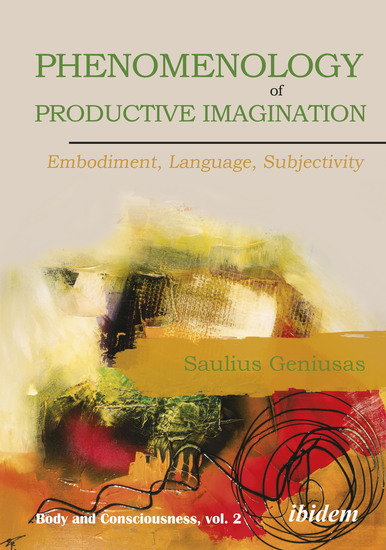
  • Phenomenology of Productive Imagination: Embodiment Language Subjectivity - cover

    Phenomenology of Productive...

    Saulius Geniusas

    • 0
    • 0
    • 0
    Although productive imagination has played a highly significant role in (post-) Kantian philosophy, there have been very few book-length studies explicitly dedicated to its analysis. 
    
    In his new book, Saulius Geniusas develops a phenomenology of productive imagination while relying on those resources that we come across in Edmund Husserl’s, Max Scheler’s, Martin Heidegger’s, Ernst Cassirer’s, Miki Kiyoshi’s, Jean-Paul Sartre’s, Maurice Merleau-Ponty’s, and Paul Ricoeur’s writings, while also engaging in present-day philosophical discussions of the imagination. Investigating the relation between imagination and embodiment, affectivity, perception, language, selfhood, and intersubjectivity, the book provides a phenomenological conception of productive imagination, which is committed to basic phenomenological principles and which is sensitive to how productive imagination has been conceptualized in the history of phenomenology. 
    
    Against such a background, Geniusas develops a new conception of productive imagination: It is a basic modality of intentionality that indirectly shapes the human experience of the world by forming the contours of action, intuition, knowledge, and understanding. It is not so much a blind and indispensable function of the soul, but an art concealed in the body, for it springs out of instincts, drives, desires, and needs. 
    
    The author demonstrates unexpected ways in which phenomenology of productive imagination enriches our understanding of embodied subjectivity.
    Zum Buch
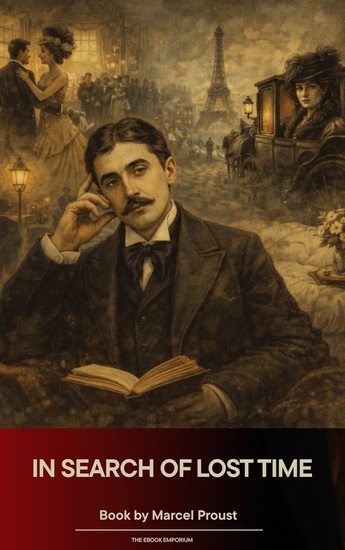
  • In Search of Lost Time - cover

    In Search of Lost Time

    Marcel Proust

    • 0
    • 0
    • 0
    What if memory could unlock an entire life?
    
    In Search of Lost Time is Marcel Proust's monumental novel sequence and one of the greatest achievements in world literature. Through a deeply introspective narrative, Proust explores how memory, sensation, love, jealousy, art, and time shape human experience.
    
    Beginning with a simple moment of remembrance, the novel unfolds into a vast portrait of French society and the inner life of its narrator. Proust's lyrical prose and psychological insight reveal how the past survives within us, waiting to be rediscovered through memory and reflection.
    
    This work is not a traditional plot-driven novel, but a profound meditation on consciousness and creativity—one that rewards patient readers with extraordinary emotional and intellectual richness.
    
    Inside this eBook, you'll explore:
    
    One of the most influential works of modernist literature
    
    Themes of memory, time, love, art, and identity
    
    A richly detailed portrait of society and inner experience
    
    A cornerstone text of twentieth-century literary innovation
    
    Studied worldwide and endlessly discussed, In Search of Lost Time remains essential reading for anyone seeking the deepest possibilities of the novel as an art form.
    
    Enter the world where time is remembered rather than lost. Buy now and experience Marcel Proust's timeless masterpiece.
    Zum Buch
  • The Art and Science of Small Talk - cover

    The Art and Science of Small Talk

    Nathan Quincy

    • 0
    • 0
    • 0
    The Art and Science of Small Talk: Learn How to Talk to Anyone with Grace and CharismaSmall talk is a powerful yet underutilized tool that can go a long way if done gracefully. The truth is, many dread this type of conversation and shy away from it as much as possible. If you are one of them, fret not, because you are about to learn the techniques to gracefully jumpstart a conversation with anyone in any situation. But whether we like it or not, there’s no way we can escape small talk because it is part of everyday interactions. Humans are social creatures and we use conversation as our way to emotionally connect with each other. In this audiobook, you will learn ways to improve not just your communication skills but also your social skills through the art and science of small talk. It will help you improve your communication and social skills through the art of small talk.This audiobook will cover the following topics- The What, Why, When, and How of Small Talk- The Science of Small Talk- Your Roadmap to Mastering Small Talk- “Small Talk Cheat-sheet” to Gracefully Navigate Every Situation- How to Talk to Anyone with Charisma- How to Gracefully Exit a Conversation- And many more!Small talk promotes trust, sincerity, and spontaneity from people to build great connections. To learn how you can improve your communication skills, download your copy of this audiobook today!
    Zum Buch
  • Brazil - A Historical and Economic Odyssey - cover

    Brazil - A Historical and...

    Anya Solace

    • 0
    • 0
    • 0
    Brazil is the fifth-largest country in the world, both in terms of land area and population. Its geographical diversity is staggering, stretching across the continent of South America and featuring a wide range of ecosystems, from the vast Amazon rainforest to the arid Sertão of the Northeast. The country’s geography is a crucial part of its identity, influencing the development of its people, culture, and economy. From the dense forests and sprawling wetlands to the mountainous regions and extensive coastline, Brazil’s landforms have played a significant role in shaping its history and societal structure. 
    The Amazon rainforest, often referred to as the "lungs of the Earth," is perhaps the most famous of Brazil’s natural wonders. Covering roughly 60% of Brazil’s territory, the Amazon Basin is home to an immense variety of plant and animal species, many of which are found nowhere else on Earth. The region is not only rich in biodiversity but also plays a pivotal role in regulating the global climate. However, the Amazon has also faced threats over the years, including deforestation, land conversion for agriculture, and illegal mining, leading to ongoing debates over conservation and development. 
    Brazil’s coastline, stretching over 7,000 kilometers, is another defining feature of its geography. Major cities like Rio de Janeiro and São Paulo sit along this coast, benefiting from access to international trade routes and abundant natural resources. The coastline also plays a crucial role in the cultural identity of the country, with Brazil’s famous beach culture, music, and cuisine often reflecting the coastal way of life. These cities and others in the coastal region became centers of economic activity during the colonial period and continue to be important hubs of commerce and industry.
    Zum Buch
  • The Aitareya Upanishad 101 - an original translation in modern language made plain and simple - cover

    The Aitareya Upanishad 101 - an...

    Matthew Barnes

    • 0
    • 0
    • 0
    Do you believe in evolution, but do not see this belief as necessarily negating the existence of an advanced Intelligence?  
    If so, you may find comfort, inspiration, and perhaps even proof for your beliefs within this ancient Hindu work.  
    The Aitareya Upanishad, which dates back to somewhere around 600-500 BCE, takes us through a journey … the journey of creation. It then leads us through the evolutionary changes that have brought us into this day and age and beyond, into the stage of existence that the ancient Hindus believed would come next. We were all created, the Hindus tell us, for a reason, and we are all evolving towards a particular state of beingness.  
    How can the Hindus be so sure that evolution is fact, and how can they be so sure that there is some sort of Intelligence behind it all? The Hindu religion is the oldest on earth. Their ancestors claim to have actually witnessed a small portion of evolution in action, and through their experiences, also claim to have discovered the underlying intent of life (both in the general and the individual sense). This work goes into these experiences and the insights the Hindus claim to have gained from them. 
    Also included in this narrative is an early Hindu concept of time and space that is extremely difficult to wrapt the human mind around. These concepts, however, coincide very closely with the findings of modern physics. 
    This work is my interpretation of the Aitareya Upanishad. I have endeavored to simplify its teachings, expand where needed, and include modern concepts, discoveries, and quotes to make the central concepts found within it more digestible to modern seekers, especially beginners.  
    Would you like to know more? 
    If so, scroll up and dive in now!
    Zum Buch
  • The Seventymile Kid - The Lost Legacy of Harry Karstens and the First Ascent of Mount McKinley - cover

    The Seventymile Kid - The Lost...

    Tom Walker

    • 0
    • 0
    • 0
    The Seventymile Kid tells the remarkable account of Harry Karstens, who was the actual—if unheralded—leader of the Hudson Stuck Expedition that was the first to summit Mount McKinley in Alaska. All but forgotten by history, a young Karstens arrived in the Yukon during the 1897 Gold Rush, gained fame as a dog musher hauling U.S. Mail in Alaska, and eventually became the first superintendent of Mount McKinley National Park (now known as Denali National Park and Preserve). Aided by Karstens's own journals, longtime Denali writer and photographer Tom Walker uncovered archival information about the Stuck climb, and reveals that the Stuck "triumph" was an expedition marred by significant conflict. Without Karstens's wilderness skills and Alaska-honed tenacity, it is quite possible Hudson Stuck would never have climbed anywhere near the summit of McKinley. Yet the two men had a falling out shortly after the climb and never spoke again. In this book, Walker attempts to set the record straight about the historic first ascent itself, as well as other pioneer attempts by Frederick Cook and Judge Wickersham. 


    Fans of Alaska literature, American history, and mountaineering lore will love this adventurous biography of the largerthan-life "sourdough" Karstens, in which Alaska—its wilderness, its iconic mountain, and its pioneer spirit—looms large.
    Zum Buch