Join us on a literary world trip!
Add this book to bookshelf
Grey
Write a new comment Default profile 50px
Grey
Subscribe to read the full book or read the first pages for free!
All characters reduced
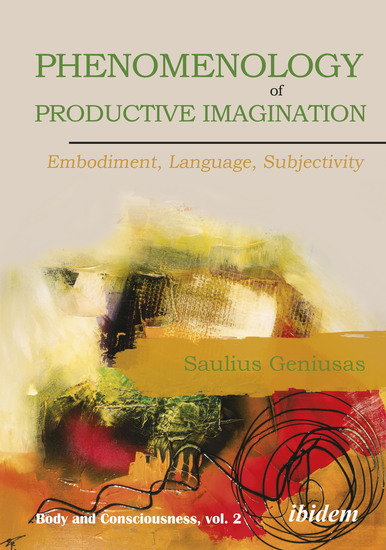
Phenomenology of Productive Imagination: Embodiment Language Subjectivity - cover

Phenomenology of Productive Imagination: Embodiment Language Subjectivity

Saulius Geniusas

Publisher: ibidem

  • 0
  • 0
  • 0

Summary

Although productive imagination has played a highly significant role in (post-) Kantian philosophy, there have been very few book-length studies explicitly dedicated to its analysis. 

In his new book, Saulius Geniusas develops a phenomenology of productive imagination while relying on those resources that we come across in Edmund Husserl’s, Max Scheler’s, Martin Heidegger’s, Ernst Cassirer’s, Miki Kiyoshi’s, Jean-Paul Sartre’s, Maurice Merleau-Ponty’s, and Paul Ricoeur’s writings, while also engaging in present-day philosophical discussions of the imagination. Investigating the relation between imagination and embodiment, affectivity, perception, language, selfhood, and intersubjectivity, the book provides a phenomenological conception of productive imagination, which is committed to basic phenomenological principles and which is sensitive to how productive imagination has been conceptualized in the history of phenomenology. 

Against such a background, Geniusas develops a new conception of productive imagination: It is a basic modality of intentionality that indirectly shapes the human experience of the world by forming the contours of action, intuition, knowledge, and understanding. It is not so much a blind and indispensable function of the soul, but an art concealed in the body, for it springs out of instincts, drives, desires, and needs. 

The author demonstrates unexpected ways in which phenomenology of productive imagination enriches our understanding of embodied subjectivity.
Available since: 03/07/2022.
Print length: 318 pages.

Other books that might interest you

  • For a Dollar and a Dream - State Lotteries in Modern America - cover

    For a Dollar and a Dream - State...

    Jonathan D. Cohen

    • 0
    • 0
    • 0
    Every week, one in eight Americans place a bet on the dream of a life-changing lottery jackpot. Americans spend more on lottery tickets annually than on video streaming services, concert tickets, books, and movie tickets combined. 


    The story of lotteries in the United States may seem straightforward: tickets are bought predominately by poor people driven by the wishful belief that they will overcome infinitesimal odds and secure lives of luxury. The reality is more complicated. For a Dollar and a Dream shows how, in an era of stagnant upward mobility, millions of Americans turned to the lottery as their only chance at achieving the American Dream. Gamblers were not the only ones who bet on betting. As voters revolted against higher taxes in the late twentieth century, states saw legalized gambling 
    as a panacea, a way of generating revenue without cutting public services or raising taxes. Alongside stories of lottery winners and losers, Jonathan Cohen shows how gamblers have used prayer to help them win a jackpot, how states tried to pay for schools with scratch-off tickets, and how lottery advertising has targeted lower income and nonwhite communities. 


    For a Dollar and a Dream charts the untold history of the nation's lottery system, revealing how players and policymakers alike got hooked on hopes for a gambling windfall.
    Show book
  • Discourses and Enchiridion - cover

    Discourses and Enchiridion

    Epictetus

    • 0
    • 0
    • 0
    For centuries, Stoicism was the unofficial religion of the Roman world.
    
    The stress on endurance, self-restraint, and power of the will to withstand calamity can often seem cold-hearted. It is Epictetus, a lame former slave exiled by Emperor Domitian, who offers the most precise and humane version of Stoic ideals. The Discourses, assembled by his pupil Arrian, catch him in action, publicly setting out his views on ethical dilemmas.
    
    Enchiridion, or Manual, is a distillation of his teachings and an essential manual for those seeking contentment.
    
    Committed to communicating with the broadest possible audience, Epictetus uses humour, imagery conversations and homely comparisons to put his message across. The results are perfect universal justice and calm indifference in the face of pain.
    Show book
  • The Elephant Man - cover

    The Elephant Man

    Frederick Treves

    • 0
    • 0
    • 0
    This is a story in Victorian England of how in 1884 Frederick Treves, Surgeon and Lecturer in Anatomy at the London Hospital arranged for the "Elephant Man" (whose distorted grotesque face and deformed body made him a "freak") to visit the medical college next to the hospital for the purpose of a lecture.  They would later become friends and Treves the savior of the man named John Merrick. This is Treves' memoir.
    Show book
  • Stand Up! A Message to the Black Man - A Message of Hope and a Call to Action! - cover

    Stand Up! A Message to the Black...

    Alan D. Benson

    • 0
    • 0
    • 0
    Stand Up! A Message to the Black Man" is a powerful and inspiring book by Alan D. Benson that serves as "A Message of Hope and a Call to Action" for Black men. Benson, who holds an MBA and MPA, draws upon his own life experiences and extensive research to address the unique challenges and opportunities Black men face in America. 
    Key themes and insights in "Stand Up! A Message to the Black Man" include: 
    ●      Manifesting Purpose and Action Planning: Benson introduces his "PLOT" system (Purpose, Limitations, Opportunities, and Traps) as a self-reflection tool to help individuals align with their purpose and develop actionable strategies for success in various aspects of life, including education, career, finance, and health. 
    ●      Building Economic Foundation: A significant portion of the book is dedicated to the critical need for Black men to create their own economic foundation through investing in stocks, assets, and businesses, highlighting historical Black entrepreneurs and discussing wealth-creating strategies. 
    ●      Resilience and Forward Movement: The book consistently emphasizes faith, perseverance, and the importance of learning from setbacks, urging readers to "Keep Going Forward at All Costs". It highlights successful Black figures who have overcome significant adversity as an inspiration. 
    "Stand Up! A Message to the Black Man" is an urgent and empowering message for Black men to take control of their narratives, build strong foundations for themselves and their communities, and strive for their God-given potential in a constantly evolving society.
    Show book
  • Human Freedom - The Struggle for Individual Rights and Liberty Across the Globe (2 in 1) - cover

    Human Freedom - The Struggle for...

    Marcus Kline

    • 0
    • 0
    • 0
    This bundle contains the following titles: 
    Freedom of Speech: Freedom of speech is a cornerstone of democratic societies, integral to the exercise of individual autonomy and the pursuit of truth. At its core, it is the right to express ideas, opinions, and beliefs without fear of government reprisal or censorship. This principle is enshrined in numerous legal documents, most notably the First Amendment to the U.S. Constitution, which guarantees "the freedom of speech, or of the press," protecting the individual’s right to speak openly in the public sphere. 
    Children’s Rights: Children represent the future of our societies, yet they remain among the most vulnerable and marginalized populations worldwide. The protection of children's rights has become one of the most critical global issues in the 21st century, demanding urgent attention and action. While significant progress has been made in raising awareness of children's rights, millions of children still suffer from abuse, neglect, exploitation, and deprivation. This complex and multifaceted issue requires an in-depth understanding of the challenges children face, as well as the actions needed to safeguard their well-being.
    Show book
  • American Poly - A History - cover

    American Poly - A History

    Christopher M. Gleason

    • 0
    • 0
    • 0
    Recent studies have found that as many as one in five Americans have experimented with some form of sexual non-monogamy, and approximately one in fifteen knows someone who was or is polyamorous. The mainstream media has increasingly covered polyamorous lifestyles and the committed relationships of throuples, and dating apps have added polyamory as a status option. 


    This book is the first history to trace the evolution of polyamorous thought and practice within the broader context of American culture. Drawing on personal journals and letters, underground newsletters, and publications from the Kinsey Institute Archives, among other sources, it reconstructs polyamory's intellectual foundations, highlighting its unique blend of conservative political thought and countercultural spiritualism. Christopher M. Gleason locates its early foundations in the Roaring Twenties among bohemians. In the 1950s and 1960s it surprisingly emerged among libertarian science fiction writers. Throughout the 1990s, polyamorists utilized the internet to spread their ideas, often undermining any remaining religious or spiritual significance their ideas held. 


    Offering an original perspective on sexuality, marriage, and the family, American Poly reveals the history of polyamory in the United States from fringe practice to a new stage of the sexual revolution.
    Show book