Join us on a literary world trip!
Add this book to bookshelf
Grey
Write a new comment Default profile 50px
Grey
Subscribe to read the full book or read the first pages for free!
All characters reduced
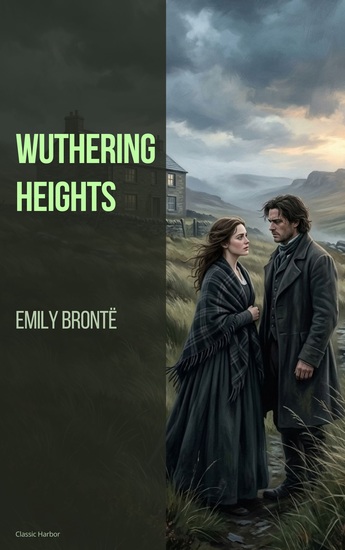
Wuthering Heights - cover

Wuthering Heights

Emily Brontë

Publisher: Classic Harbor

  • 0
  • 0
  • 0

Summary

On the wild Yorkshire moors, a powerful love story unfolds amid passion, revenge, and haunting secrets.

Emily Brontë's Wuthering Heights is a landmark of English literature, exploring intense relationships, social divisions, revenge, obsession, and the enduring effects of the past.

Set against the dramatic landscape of the Yorkshire moors, the novel centers on the troubled connections between the inhabitants of Wuthering Heights and Thrushcross Grange. Brontë's atmospheric prose and complex characters create a story filled with emotional intensity and Gothic mystery.

For readers who enjoy classic romance, Gothic literature, psychological drama, and unforgettable literary characters, Wuthering Heights remains an essential reading experience.

Enter the windswept world of the Yorkshire moors and discover one of literature's most haunting classics.
Available since: 09/21/2026.
Print length: 188 pages.

Other books that might interest you

  • Ragged Lady - cover

    Ragged Lady

    William Dean Howells

    • 0
    • 0
    • 0
    A Vermont girl of no family is taken up by a rich woman as a companion and carried to Italy — where the arrangement, and everyone's exact idea of what she is owed, comes apart. Howells edited The Atlantic and was the most powerful literary broker in America; this 1899 novel is his quietest anatomy of patronage, and the girl's refusal to be grateful on cue is the whole book.
    Show book
  • The Complete Novels and Essays of Mark Twain - cover

    The Complete Novels and Essays...

    Mark Twain

    • 0
    • 0
    • 0
    A timeless collection of novels from one of America's greatest literary voices.
    
    This comprehensive anthology gathers Mark Twain's celebrated novels, filled with adventure, humor, satire, and unforgettable characters. Through vivid storytelling and sharp social commentary, Twain captures the spirit of American life while exploring themes of freedom, friendship, morality, and human nature.
    
    From exciting river journeys to humorous observations of society, these enduring works continue to entertain and inspire readers around the world.
    
    Written by Mark Twain, this collection remains a cornerstone of American literature.
    
    Discover the wit and wisdom of a literary legend—download your copy today.
    Show book
  • The Green Fairy Book - cover

    The Green Fairy Book

    Andrew Lang

    • 0
    • 0
    • 0
    In The Green Fairy Book, Andrew Lang continues his celebrated work of gathering fairy tales from many nations into one collection, preserving stories that have delighted generations and offering them anew to young readers—and to all who value the enduring charm of folklore. This volume, the third in Lang’s famous “Coloured” Fairy Book series, draws its tales from an especially wide array of sources: French, German, Russian, Italian, Scottish, and even oral traditions from tribal cultures such as the Zulus of South Africa. 
    Lang, though a scholar of history and literature, held a deep affection for the fairy tale. In his original introduction, he writes, “The fairy tale is the oldest form of fiction, and it may be the most enduring.” He believed that fairy tales served not only to entertain but to cultivate imagination, to sharpen a child’s sense of wonder, and to subtly shape moral understanding. Though some may dismiss such tales as fanciful or outdated, Lang insisted that they contain “a kind of poetry and fun which children appreciate more than people suppose.” 
    Not all of the stories have the neat, happy endings we have come to expect from the sanitised versions of Fairy Tales in the 20th Century, and quite a few have their macabre and bloodthirsty moments! 
    Head Stories Audio presents "The Green Fairy Book" by Andrew Lang.  Narration and original music by Simon Hester.
    Show book
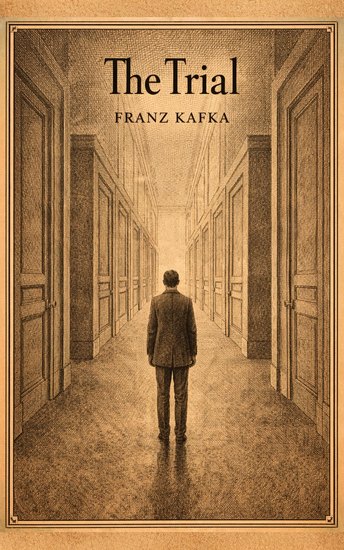
  • The Trial - cover

    The Trial

    Franz Kafka

    • 0
    • 0
    • 0
    The Trial by Franz Kafka is a haunting and thought-provoking masterpiece of twentieth-century literature that explores guilt, power, and the unsettling nature of modern bureaucracy. First published posthumously in 1925, this profound and unsettling novel tells the story of a man trapped in a mysterious legal system that operates beyond logic, transparency, or mercy.
    
    The novel opens with a startling event: Josef K., an ordinary bank official, is arrested one morning without being informed of the crime he has allegedly committed. Though he is not taken into custody, he is suddenly entangled in a shadowy judicial process that seems to exist everywhere and nowhere at once. Court officials appear in attics and tenement buildings, hearings take place in suffocating rooms filled with onlookers, and legal procedures unfold according to rules that no one fully understands.
    
    As Josef K. attempts to defend himself, he encounters a series of enigmatic characters—warders, clerks, lawyers, painters, and strangers—each offering vague guidance but no clarity. The deeper he ventures into the system, the more incomprehensible and oppressive it becomes. The court's authority is absolute, yet its structure remains invisible, creating a world governed by anxiety, ambiguity, and silent judgment.
    
    Kafka masterfully captures the psychological strain of living under constant accusation. Josef K.'s growing sense of isolation and helplessness reflects broader themes of alienation in modern society. The novel examines the individual's struggle against faceless institutions, questioning the nature of justice, authority, and personal responsibility. Is Josef K. truly innocent, or does guilt exist independently of wrongdoing? Kafka leaves the answer deliberately unresolved, heightening the novel's existential tension.
    
    Written in a stark yet surreal style, The Trial blends realism with nightmarish absurdity. Everyday settings—boarding houses, offices, and courtrooms—take on a dreamlike quality, emphasizing the fragile boundary between normal life and irrational fear. Kafka's exploration of bureaucracy and power has made the term "Kafkaesque" synonymous with situations that are illogical, oppressive, and disorienting.
    
    More than a legal drama, The Trial is a profound meditation on the human condition. It confronts readers with unsettling questions about freedom, accountability, and the search for meaning in a world governed by hidden forces. With its timeless themes and chilling atmosphere, The Trial remains one of the most influential and enduring works of modern literature.
    Show book

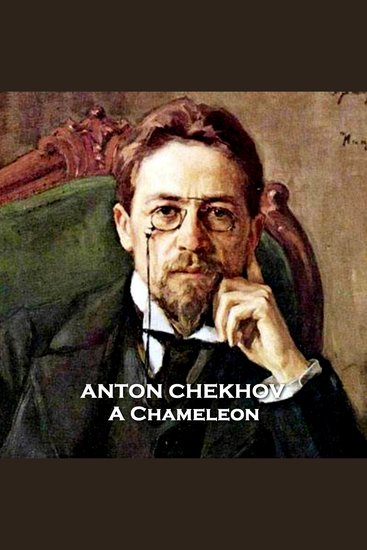
  • A Chameleon - From their pens to your ears genius in every story - cover

    A Chameleon - From their pens to...

    Anton Chekhov

    • 0
    • 0
    • 0
    Anton Pavlovich Chekhov was born on 29th January 1860 in Taganrog, on the south coast of Russia.  
    His family life was difficult; his father was strict and over-bearing but his mother was a passionate story-teller, a subject Chekhov warmed to. As he later said; ‘our talents we got from our father, but our soul from our mother’.  
    At school Chekhov was distinctly average. At 16 his father mis-managed his finances and was declared bankrupt. His family fled to Moscow. Chekhov remained and eked out a living by various means, including writing and selling short sketches to newspapers, to finish his schooling. That completed and with a scholarship to Moscow University obtained he rejoined his family. 
    He was able to help support them by selling satirical sketches and vignettes of Russian lifestyles and gradually obtained further commissions. In 1884, he qualified as a physician and, although it earned him little, he often treated the poor for free, he was fond of saying ‘Medicine is my lawful wife, and literature is my mistress.’ 
    His own health was now an issue as he began to cough up blood, a symptom of tuberculosis.  Despite this his writing success enabled him to move the family into more comfortable accommodation.  
    Chekhov wrote over 500 short stories which included many, many classics including ‘The Kiss’ and ‘The Lady with a Dog’.  His collection ‘At Dusk’ won him the coveted Pushkin Prize when was only 26.  
    He was also a major playwright beginning with the huge success of ‘Ivanov’ in 1887.   
    In 1892 Chekhov bought a country estate north of Moscow. Here his medical skills and money helped the peasants tackle outbreaks of cholera and bouts of famine. He also built three schools, a fire station and a clinic.  It left him with less time for writing but the interactions with real people gained him detailed knowledge about the peasantry and their living conditions for his stories.  
    His most famous work, ‘The Seagull’ was received disastrously at its premiere in St Petersburg. It was later restaged in Moscow to highlight its psychological aspects and was a huge success. It led to ‘Uncle Vanya’, ‘The Three Sisters’ and ‘The Cherry Orchard’.  
    Chekhov suffered a major lung hemorrhage in 1897 while visiting Moscow. A formal diagnosis confirmed tuberculosis and the doctors ordered changes to his lifestyle.  
    Despite a dread of weddings the elusive literary bachelor quietly married the actress Olga Knipper, whom he had met at rehearsals for ‘The Seagull’, on 25th May 1901. 
    By May 1904 with his tuberculosis worsening and death imminent he set off for the German town of Badenweiler writing cheerful, witty letters to his family and assuring them his health was improving.  
    On 15th July 1904 Anton Chekhov died at Badenweiler.  He was 44.
    Show book
  • The Black Monk - cover

    The Black Monk

    Anton Chekhov

    • 0
    • 0
    • 0
    Anton Pavlovich Chekhov is considered a very "real life" writer, his feet solidly on the ground at all times. The Black Monk is his foray into madness and mysticism to rival the likes of Dostoyevsky, Saltykov-Shchedrin, and Kuprin.
    Show book