Rejoignez-nous pour un voyage dans le monde des livres!
Ajouter ce livre à l'électronique
Grey
Ecrivez un nouveau commentaire Default profile 50px
Grey
Abonnez-vous pour lire le livre complet ou lisez les premières pages gratuitement!
All characters reduced
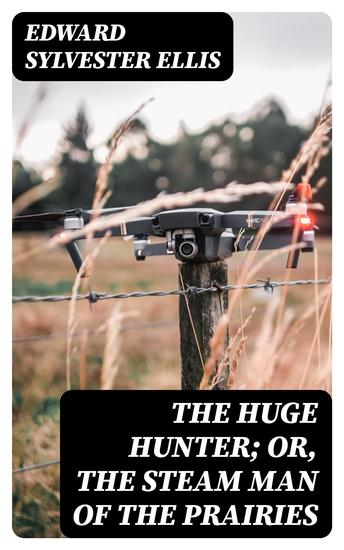
The Huge Hunter; Or The Steam Man of the Prairies - cover

The Huge Hunter; Or The Steam Man of the Prairies

Edward Sylvester Ellis

Maison d'édition: DigiCat

  • 0
  • 0
  • 0

Synopsis

In 'The Huge Hunter; Or, The Steam Man of the Prairies,' Edward Sylvester Ellis invites readers into an exhilarating blend of adventure and science fiction. Set against the vast backdrop of the American frontier, the narrative follows the exploits of a steam-powered mechanical man, showcasing Ellis's inventive approach to storytelling through vivid imagery and engaging dialogue. This work emerged during the late 19th century, a period marked by rapid industrialization and burgeoning technology, thus reflecting the cultural fascination with progress and the mechanization of life while cleverly intertwining themes of exploration and survival in the untamed wilderness. Edward Sylvester Ellis, a prolific author and educator, was deeply influenced by the American spirit of adventure and the technological advancements of his time. His extensive background in teaching and his exposure to the young readers of the era, particularly boys interested in tales of daring quests, shaped his narrative style and thematic choices. Ellis's fascination with innovation is evident in his creation of the steam man, a compelling symbol of the era's ambitions and anxieties about progress and its implications for humanity. 'The Huge Hunter' stands as a significant contribution to early American science fiction literature, appealing to both enthusiasts of adventure tales and those fascinated by technological evolution. Ellis's engaging prose and imaginative premise not only entertain but also provoke thoughtful reflections on the intersection of humanity and machinery, making it a must-read for lovers of speculative fiction and frontier narratives.
Disponible depuis: 15/09/2022.
Longueur d'impression: 157 pages.
D'autres livres qui pourraient vous intéresser

  • Candide - cover

    Candide

    Voltaire

    • 0
    • 0
    • 0
    "Candide, or Optimism" is a satirical novella written by the French philosopher Voltaire, first published in 1759. It follows the adventures of the young Candide, who is raised in a utopian world and taught that “all is for the best.” The narrative takes him through a series of misfortunes, exposing him to the harsh realities of the world, ultimately leading him to question his optimistic beliefs. Voltaire uses Candide’s journey to satirize religion, governments, the military, and the philosophy of optimism, particularly as espoused by Leibniz. "Candide" is considered one of the greatest achievements of Western literature
    Voir livre
  • Something to Think Of - cover

    Something to Think Of

    P. O. Dixon

    • 0
    • 0
    • 0
    When Elizabeth returns to London from Kent and meets Jane’s new suitor, her hasty refusal of Mr. Darcy’s marriage proposal gives her something to think of—especially when Mr. Darcy follows her to Hertfordshire, determined to make amends. He means to court her properly, win her heart, and marry her. 
    Likewise, Mr. Bingley vows to pursue Jane, hoping to reclaim her affection. Jane’s new suitor has other ideas about her future felicity, and his identical twin brother has more than a passing interest in Elizabeth’s love life as well. 
    All is fair in the game of love, even if fate leaves one or more of the gentlemen in question behind. Elizabeth encourages her sister to follow her heart, but will she heed her own advice?
    Voir livre
  • Antarctic Mystery An - cover

    Antarctic Mystery An

    Jules Verne

    • 0
    • 0
    • 0
    A wealthy American Jeorling is looking for a passage back to the USA after private studies of the wildlife on the Kerguelen Islands. Halbrane is one of the first ships to arrive at Kerguelen, and its captain Len Guy somewhat reluctantly agrees to have Jeorling as a passenger as far as Tristan da Cunha. Underway, they meet a stray iceberg with a dead body on it, which turns out to be a sailor from Jane. A note found with him indicates that he and several others including Jane's captain William Guy had survived the assassination attempt at Tsalal and are still alive.
    Voir livre
  • The Diary of a Nobody - cover

    The Diary of a Nobody

    George Grossmith, Weedon Grossmith

    • 0
    • 0
    • 0
    This “jewel at the heart of English comic literature” chronicles the daily fortunes and misfortunes of a middle-age, middle-class clerk (William Trevor, The Mail on Sunday).   Since its original publication in 1892, The Diary of a Nobody has become a much-loved classic. It is a fictional man’s dissection of the everyday drama of his life as an office worker in a London firm. With dry wit, the authors step into the character of Charles Pooter as he navigates work life with not-so-respectful young coworkers and family life with his charming wife, Carrie, and impetuous son, Lupin. From home repairs gone wrong (painting the tub red), to the comings and goings of his friends Cummings and Gowings, Pooter painstakingly shares intimate details of his existence, with the (not completely absurd) hope of maybe someday having his memoir published. An ongoing tally of the good jokes he makes shares space with descriptions of grievous insults to his person, party mishaps, the annoying behavior of everyone around him, and Lupin’s on-again off-again employment and engagement status. The Diary of a Nobody gives everyone a reason to laugh—and recognize themselves in Pooter’s droll prose.  “The funniest book in the world.” —Evelyn Waugh, author of Brideshead Revisited  “There’s a universality about Pooter that touches everybody . . . [he] fits into the tradition of absurd humour that the British do well, which started with Jonathan Swift and runs through Lewis Carroll and Edward Lear to Monty Python.” —Jasper Fforde, Time Out  “Pooter himself is as gentle as you could wish, a wonderful character, genuinely lovable. The book is beautifully constructed.” —Andrew Davies, The Herald
    Voir livre
  • Art of Being Photographed The (Unabridged) - cover

    Art of Being Photographed The...

    H. G. Wells

    • 0
    • 0
    • 0
    Herbert George "H. G." Wells (1866 - 1946) was an English writer.
    He was prolific in many genres, including the novel, history, politics, social commentary, and textbooks and rules for war games. Wells is now best remembered for his science fiction novels and is called a "father of science fiction"
    THE ART OF BEING PHOTOGRAPHED: "An album," said my uncle, as he sat and turned over my collection of physiognomy, "is, I think, the best reading in the world. You get such sidelights on the owner's heredity, George; distant cousins caricature his features and point the moral of his nose, and ancestral faces prophesy his fate.
    Voir livre
  • Virgin Soil - cover

    Virgin Soil

    Ivan Turgenev

    • 0
    • 0
    • 0
    Turgenev's "Virgin Soil" delves into the themes of idealism, disillusionment, and the limitations of revolutionary fervor. The novel explores the inherent tensions between the educated intelligentsia and the rural peasantry, shedding light on the difficulties faced in bridging the gap between different social strata and ideologies. The characters' personal struggles mirror the larger struggles of a nation on the brink of transformation. Through vivid and empathetic characterizations, Turgenev provides a profound critique of the social injustices and political stagnation prevalent in 19th-century Russia. He captures the frustrations and aspirations of a generation seeking to break free from the shackles of tradition and build a more just and equitable society. The novel paints a nuanced picture of the revolutionary spirit and its ultimate consequences, highlighting the complexities of human nature and the often contradictory forces that drive individuals and nations.
    Voir livre