Rejoignez-nous pour un voyage dans le monde des livres!
Ajouter ce livre à l'électronique
Grey
Ecrivez un nouveau commentaire Default profile 50px
Grey
Abonnez-vous pour lire le livre complet ou lisez les premières pages gratuitement!
All characters reduced
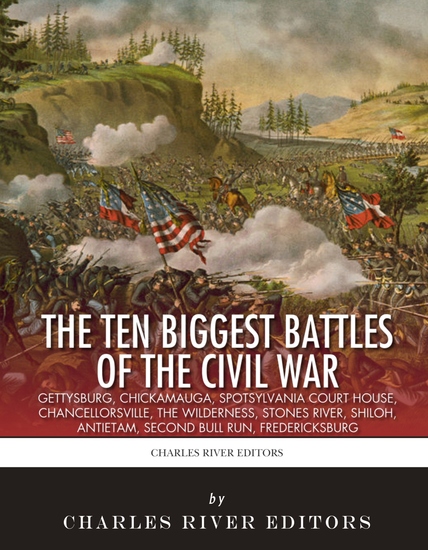
The Ten Biggest Battles of the Civil War - Gettysburg Chickamauga Spotsylvania Court House Chancellorsville The Wilderness Stones River Shiloh Antietam Second Bull Run Fredericksburg - cover

The Ten Biggest Battles of the Civil War - Gettysburg Chickamauga Spotsylvania Court House Chancellorsville The Wilderness Stones River Shiloh Antietam Second Bull Run Fredericksburg

Editors Charles River

Maison d'édition: Charles River Editors

  • 0
  • 0
  • 0

Synopsis

Americans have long been fascinated by the Civil War and its biggest battles, particularly Gettysburg, Antietam, and Shiloh, all of which involved Robert E. Lee or Ulysses S. Grant. But one of the 6 biggest battles of the war, and the one that took the heaviest toll by % on both armies was fought at the end of 1862 in Tennessee, and it involved neither of those generals.
 
In late December 1862, William Rosecrans’s Union Army of the Cumberland was contesting Middle Tennessee against Braxton Bragg’s Army of Tennessee, and for three days the two armies savaged each other as Bragg threw his army at Rosecrans in a series of desperate assaults. Bragg’s army was unable to dislodge the Union army, and he eventually withdrew his army after learning that Rosecrans was on the verge of receiving reinforcements. Though the battle was stalemated, the fact that the Union army was left in possession of the field allowed Rosecrans to declare victory and embarrassed Bragg.
 
Of all the Civil War battles fought, and of all the victories achieved by Robert E. Lee at the command of the Confederate Army of Northern Virginia, the Battle of Chancellorsville is considered the most tactically complex and ultimately the most brilliant Confederate victory of the war. 
 
In early May 1863, the Army of the Potomac was at the height of its power as it bore down on Robert E. Lee’s Army of Northern Virginia near Fredericksburg, where the Confederates had defeated them the previous December. The Union behemoth had spent most of the winter season being reorganized and drilled by “Fighting Joe” Hooker, an aggressive commander who had fought hard at places like Antietam. With an army nearing 130,000 men, Hooker’s Army of the Potomac was twice the size of the Army of Northern Virginia. 
 
Lee’s heavily outnumbered army won the most stunning victory of the war at Chancellorsville, but it cost them Stonewall Jackson. Moreover, the reorganization of the armies and the battle itself played an influential role in the way the Pennsylvania Campaign and the Battle of Gettysburg unfolded later that summer.
 
Without question, the most famous battle of the American Civil War took place outside of the small town of Gettysburg, Pennsylvania, which happened to be a transportation hub, serving as the center of a wheel with several roads leading out to other Pennsylvanian towns. From July 1-3, Robert E. Lee’s Confederate Army of Northern Virginia tried everything in its power to decisively defeat George Meade’s Union Army of the Potomac, unleashing ferocious assaults that inflicted nearly 50,000 casualties in all.
 
Day 1 of the battle would have been one of the 25 biggest battles of the Civil War itself, and it ended with a tactical Confederate victory. But over the next two days, Lee would try and fail to dislodge the Union army with attacks on both of its flanks during the second day and Pickett’s Charge on the third and final day. Meade’s stout defense held, barely, repulsing each attempted assault, handing the Union a desperately needed victory that ended up being one of the Civil War’s turning points.
 
After the South had lost the war, the importance of Gettysburg as one of the “high tide” marks of the Confederacy became apparent to everyone, making the battle all the more important in the years after it had been fought. While former Confederate generals cast about for scapegoats, with various officers pointing fingers at Robert E. Lee, James Longstreet, and James Stuart, historians and avid Civil War fans became obsessed with studying and analyzing all the command decisions and army movements during the entire campaign. Despite the saturation of coverage, Americans refuse to grow tired of visiting the battlefield and reliving the biggest battle fought in North America.
Disponible depuis: 02/05/2025.
Longueur d'impression: 389 pages.
D'autres livres qui pourraient vous intéresser

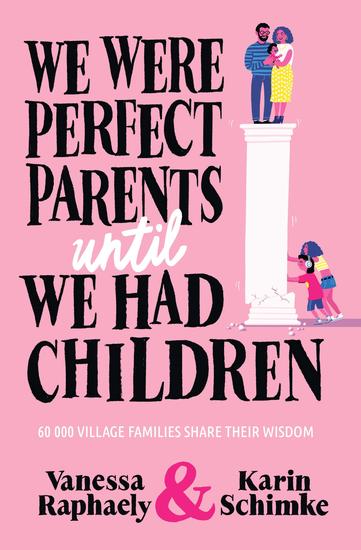
  • We Were Perfect Parents Until We Had Children - 60 000 Village Families Share Their Wisdom - cover

    We Were Perfect Parents Until We...

    Karin Schimke, Vanessa Raphaely

    • 0
    • 0
    • 0
    'I straighten her little tiara every morning – I lift her chin and remind her that she is meant for greater things than playground bullies.'
    
    'Everything shines in its own time. There is no timetable for life. Timetables are for classrooms, not for people.'
    These are just some of the wisdoms shared on The Village, South Africa's beloved Facebook group for parents raising tweens, teens and young adults.
    Having kids is a baffling endeavour beset with sulk, meltdowns, anxiety and disappointment – and that's just the parents! When you get that call to the principal's office? When the school acceptances don't come? When the bedroom door slams and you hear your child sobbing behind it? All awful but it's also a precious time.
    The trick? To find a way to enjoy our families, love our children and believe in them and ourselves despite the daily challenges. And laugh . . .
    In this book, Vanessa Raphaely and Karin Schimke have gathered together life lessons and insights from The Village members. It contains the gems and remedies from the real parenting experts – the parents – to help you raise your family in your own perfectly imperfect way.
    Voir livre
  • Uncertain - The Wisdom and Wonder of Being Unsure - cover

    Uncertain - The Wisdom and...

    Maggie Jackson

    • 0
    • 0
    • 0
    In an era of terrifying unpredictability, we race to address complex crises with quick, sure algorithms, bullet points, and tweets. How could we find the clarity and vision so urgently needed today by being unsure? Uncertain is about the triumph of doing just that. A scientific adventure set on the front lines of a volatile era, this epiphany of a book by award-winning author Maggie Jackson shows us how to skillfully confront the unexpected and the unknown, and how to harness not-knowing in the service of wisdom, invention, mutual understanding, and resilience. 


    Long neglected as a topic of study and widely treated as a shameful flaw, uncertainty is revealed to be a crucial gadfly of the mind, jolting us from the routine and the assumed into a space for exploring unseen meaning. Far from luring us into inertia, uncertainty is the mindset most needed in times of flux and a remarkable antidote to the narrow-mindedness of our day. 


    In laboratories, political campaigns, and on the frontiers of artificial intelligence, Jackson meets the pioneers decoding the surprising gifts of being unsure. Each chapter examines a mode of uncertainty-in-action, from creative reverie to the dissent that spurs team success. Step by step, the art and science of uncertainty reveal being unsure as a skill set for incisive thinking and day-to-day flourishing.
    Voir livre
  • Social Capital: Life online in the shadow of Ireland’s tech boom - cover

    Social Capital: Life online in...

    Aoife Barry

    • 0
    • 0
    • 0
    A David and Goliath story about Ireland’s role as prime real estate for the world’s largest tech multinationals, and the considerable impact it has had on us as individuals. 
    At the start of the millennium, the Tech giants landed on Ireland’s shores. Dublin, once one of Europe’s poorest cities, became a beacon of Silicon Valley’s promise of progress and power. As the face of the capital was remade in the image of Big Tech, Irish society embraced technology like no other. Romantic Ireland was dead and gone: social media was here to stay. 
    In this provocative account, Aoife Barry explores the human cost of Ireland’s Faustian pact with Big Tech, from the local communities uprooted by Google to the traumatised moderators squirrelled in the capital’s pockets, keeping the internet safe at a terrible price. Unsettling, insightful, and wryly funny, she paints a portrait of a country addicted to the internet, refreshing the news, refreshing Twitter, scrolling and scrolling towards a feverish future. She turns an equally honest eye on her own life online, from her humble beginnings using dial-up in her parent’s kitchen to working for Ireland’s first digital-only newsroom, and asks what we bargain in exchange for life in the metaverse. 
    Social Capital is the coming of age story of Ireland 3.0: set against the backdrop of the tech revolution, it chronicles how we collapse the boundary between physical and virtual reality, and where we might go from here. 
    Barry's new book, Social Capital, is a popular science exploration into the world of computers and information technology. It's a top pick for anyone interested in the intersection of culture, economics, and the latest developments in the tech industry. 
    For fans of Bill Gifford (Ledyard), Britney Spears (The woman in me), Dolly Alderton (Everything I Know About Love), Bono (Surrender), and Ian H. Robertson (How Confidence Works). 
    HarperCollins 2023
    Voir livre
  • SuperLoop (Second Edition) - How Understanding Beliefs Biology and Behavior Creates a Business That Works for Every One - cover

    SuperLoop (Second Edition) - How...

    Susan Leger Ferraro

    • 0
    • 0
    • 0
    SuperLoop is a groundbreaking guide to transforming organizations and individuals from the inside out. Whether you're a CEO seeking to revitalize your company culture or an individual looking to maximize your impact, this book provides the framework to accelerate Actionable Awareness into reality. It's time to stop merely surviving at work and start thriving—and this book will show you how.
    Voir livre
  • The Zelensky Effect - cover

    The Zelensky Effect

    Olga Onuch, Henry E. Hale

    • 0
    • 0
    • 0
    With Russian shells raining on Kyiv and tanks closing in, American forces prepared to evacuate Ukraine's leader. Just three years earlier, his apparent main qualification had been playing a president on TV. But Volodymyr Zelensky reportedly retorted, 'I need ammunition, not a ride.' Ukrainian forces won the battle for Kyiv, ensuring their country's independence even as a longer war began for the southeast. 


    You cannot understand the historic events of 2022 without understanding Zelensky. But the Zelensky effect is less about the man himself than about the civic nation he embodies: what makes Zelensky most extraordinary in war is his very ordinariness as a Ukrainian. 


    The Zelensky Effect explains this paradox, exploring Ukraine's national history to show how its now-iconic president reflects the hopes and frustrations of the country's first 'independence generation'. Interweaving social and political background with compelling episodes from Zelensky's life and career, this is the story of Ukraine told through the journey of one man who has come to symbolize his country.
    Voir livre
  • Essentials of Daoism - Including: The Sayings of Lao Tzu The Dao De Jing Zhuangzi Lieh Tzu and Sun Tzu on the Art of War - cover

    Essentials of Daoism -...

    James Legge, Lionel Giles, Lao...

    • 0
    • 0
    • 0
    This book comprises five classic works of Chinese mysticism. Culturally, these are the companion works to Confucius’ thoughts, as expanded by Mencius. Confucianism is very much the Apollonian side of Chinese culture. It focuses on matters of ethics, hierarchy, responsibility, and social obligation. Daoism is the other side of the coin, focused on abstraction and uncertainty. 
    The two translators included in this volume were very different men. While they wrote in the same period, their audiences were distinct from one another, and this comes through in their differing approaches to the original texts they are working with. One was a missionary, looking to ensure that his fellow spreaders of the word could understand as completely and correctly as possible the culture that they had come into. The other was a curator at the British Museum, who popularized the first English translations for a thoroughly domestic market.
    Voir livre