Begleiten Sie uns auf eine literarische Weltreise!
Buch zum Bücherregal hinzufügen
Grey
Einen neuen Kommentar schreiben Default profile 50px
Grey
Jetzt das ganze Buch im Abo oder die ersten Seiten gratis lesen!
All characters reduced
The Life and Legacy of Nero - cover

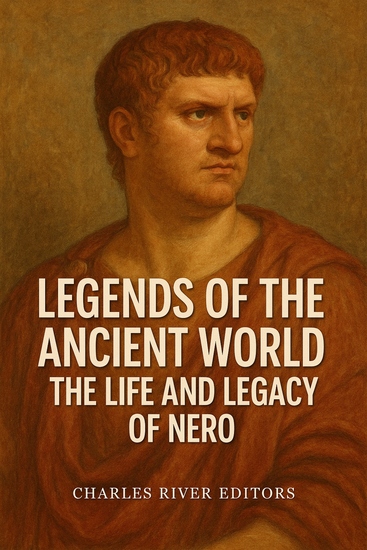
The Life and Legacy of Nero

Editors Charles River

Verlag: Charles River Editors

  • 0
  • 0
  • 0

Beschreibung

"What an artist dies with me!” – Attributed to Nero just before his suicide
 
A lot of ink has been spilled covering the lives of history’s most influential figures, but how much of the forest is lost for the trees? In Charles River Editors’ Legends of the Ancient World series, readers can get caught up to speed on the lives of antiquity’s most important men and women in the time it takes to finish a commute, while learning interesting facts long forgotten or never known.
 
Throughout the annals of history, there have been few figures as reviled as Lucius Domitius Ahenobarbus, better known as Nero Claudius Caesar Drusus Germanicus, or more simply, Nero. Even today, he remains one of the Roman Empire’s most famous – or notorious – figures, a villain whose impact on popular culture is so vast that his name crops up consistently to this day in literature, film, TV and mediums as unlikely as video games and anime.
 
Nero ranks among the very worst of the Caesars, alongside the likes of mad Caligula, slothful Commodus, and paranoid Domitian, a figure so hated that, in many ancient Christian traditions, he is literally, without hyperbole, considered the Antichrist; according to a notable Biblical scholar, the coming of the Beast and the number 666 in the Book of Revelation are references to Nero. He was the man who, famously, “fiddled while Rome burned”, an inveterate lecher, a murderous tyrant who showed little compunction in murdering his mother and who liked to use Christian martyrs as a source of illumination at night – by burning them alive. His economic policies, according to many historians, virtually bankrupted Rome.
 
Even his appearance, apparently, was ill-favoured. His busts show him to be fleshy-faced, with a weak chin that he attempted to disguise with a distinctly unprepossessing beard, and according to Suetionius he was also spotty, stinking, pot-bellied and thin-legged – not a pretty picture.
 
The best known accounts of Nero come from biographers like Tacitus, Cassius Dio, Suetionius and Josephus, but there are also indications that, to some extent, reports of Nero’s cruelty were exaggerated. Nero was popular with the common people and much of the army, and during his reign the Empire enjoyed a period of remarkable peace and stability. Many historians, including some of his ancient biographers – such as Josephus – suggest that there existed a strong bias against Nero. Part of this is because his successors wished to discredit him, and justify the insurrections which eventually drove him, hounded from the throne, to a lonely suicide. Much of the bias against Nero can also be attributed to the fact that he was a renowned persecutor of Christians, and since many of the historians who wrote about Nero in the years after his death were Christians themselves, it made sense for them to have a jaundiced view of their erstwhile nemesis. Because of this, some historians have suggested that Nero’s demeanour and reputation might not be as black as the original sources might be inclined to suggest.
 
Legends of the Ancient World: The Life and Legacy of Nero looks at the life of one of Rome’s most notorious emperors and attempts to separate fact from fiction to analyze his reign and legacy. Along with pictures of important people, places, and events, you will learn about Nero like you never have before, in no time at all.
Verfügbar seit: 22.05.2025.
Drucklänge: 30 Seiten.

Weitere Bücher, die Sie mögen werden

  • The Subversive Seventies - cover

    The Subversive Seventies

    Michael Hardt

    • 0
    • 0
    • 0
    In The Subversive Seventies, Michael Hardt sets out to show that popular understandings of the political movements of the seventies—often seen as fractious, violent, and largely unsuccessful—are not just inaccurate, but foreclose valuable lessons for the political struggles of today. While many accounts of the 1970s have been written about the regimes of domination that emerged throughout the decade, Hardt approaches the subversive from the perspectives of those who sought to undermine the base of established authority and transform the fundamental structures of society. In so doing, he provides a novel account of the theoretical and practical projects of liberation that still speak to us today, too many of which have been all but forgotten. 


    The movements of the seventies responded directly to emerging neoliberal frameworks and other structures of power that continue to rule over us today. They identified and confronted political problems that remain central for us. The 1970s, in this sense, marks the beginning of our time. Looking at a wide range of movements around the globe, from the United States, to Guinea Bissau, South Korea, Chile, Turkey, and Italy, The Subversive Seventies provides a reassessment of the political action of the 1970s that sheds new light not only on our revolutionary past but also on what liberation can be and do today.
    Zum Buch
  • Instructions to His Generals - The Military Philosophy of Frederick the Great - cover

    Instructions to His Generals -...

    Frederick the Great, Tim Zengerink

    • 0
    • 0
    • 0
    What if you could master the art of leadership, inspire loyalty, and achieve victory through strategy and discipline? 
    Instructions to His Generals: The Military Philosophy of Frederick the Great presents the timeless wisdom of one of history’s greatest military leaders, thoughtfully adapted for today’s listeners. 
    Frederick the Great, King of Prussia, distilled his strategies and leadership principles into concise instructions for his generals. His insights provide a practical roadmap for military success, effective leadership, and strategic thinking. Beyond the battlefield, these principles offer profound lessons for modern leaders, strategists, and anyone seeking success through preparation and discipline. 
    This isn’t just a military text—it’s a guide to mastering leadership, building confidence, and achieving success in the face of challenges. 
    What You’ll Discover: 
    - Strategic Leadership: Inspire loyalty, build disciplined teams, and lead decisively with preparation and adaptability. 
    - The Art of Strategy: Gain insights into planning, executing campaigns, and succeeding through calculated decisions. 
    - Discipline and Adaptability: Embrace preparation, resilience, and flexibility to overcome obstacles. 
    - Clear, Accessible Language: Frederick’s timeless instructions are presented in a modernized format for today’s leaders. 
    Frederick the Great’s Instructions offers a masterclass in leadership, strategy, and discipline. His principles continue to inspire leaders and professionals striving to succeed in a competitive world. 
    Imagine having the tools to lead decisively, adapt to challenges, and inspire confidence in those you lead. 
    Download your copy today and transform your approach to leadership with Frederick the Great’s timeless wisdom.
    Zum Buch
  • Ensuring a Better Future - Why Social Studies Matters - cover

    Ensuring a Better Future - Why...

    Dr. Kevin Colleary

    • 0
    • 1
    • 0
    We have missed part of the equation for effective education. STEM became STEAM, but we forgot social studies and the importance of what it teaches. This book explores the sacrifice of both many students’ inherent skills/interests and an effectively informed and effective citizenry through prioritized Social Studies education in public schools.
    Zum Buch
  • The Revival - The Biggest Turning Points in History - cover

    The Revival - The Biggest...

    Kelly Mass

    • 0
    • 0
    • 0
    This 2 in 1 combo contains the following titles: 
    1 - Age of Enlightenment: Finally…finally, humanity began to wake up. Finally, they decided to take science, knowledge, politics, development, multiple angles and perspectives, and the details of our everyday lives a bit more seriously. For centuries, raw and primal urges and principles had taken hold of conquerors, officials, and governments. But there was a light at the end of the tunnel. Humanity just needed to acknowledge knowledge. It needed to value the art of studying phenomena and learning, not just spiritual notions and religion. Welcome to the book about how this happened. Welcome to a glimmer of hope in humanity’s realization of what this world is and what lies in the elements yet to be discovered. 
    2 - Renaissance: When we think of the Renaissance, we often think of paintings. And indeed, many painters and sculptors were part of the artistic transformation the Renaissance caused. But there was more. The Renaissance basically formed a period of collective enlightenment and freedoms that put an end to certain tyrannies and false notions from the Middle Ages. 
    The Renaissance is a time in European history marking the shift from the Middle Ages to modernity and covering the 15th and 16th centuries, identified by an effort to restore and exceed ideas and accomplishments of classical antiquity. It happened after the crisis of the late Middle Ages and was related to great social change. Aside from the basic periodization, advocates of a "long Renaissance" might put its start in the 14th century and its end in the 17th century.
    Zum Buch
  • A Rare Recording of President Richard Nixon and Prime Minister Golda Meir - cover

    A Rare Recording of President...

    Golda Meir, President Richard Nixon

    • 0
    • 0
    • 0
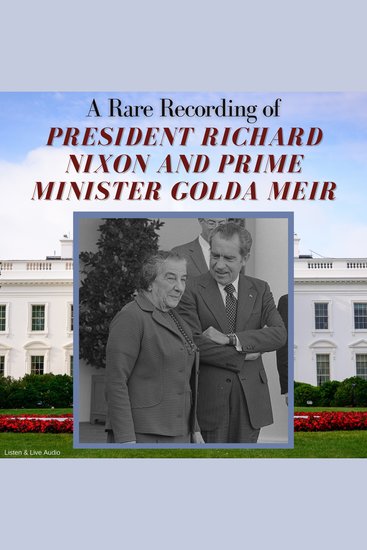
    Richard Milhous Nixon (January 9, 1913 - April 22, 1994) was the 37th president of the United States, serving from 1969 to 1974. A member of the Republican Party, he previously served as a representative and senator from California and was the 36th vice president from 1953 to 1961 under President Dwight D. Eisenhower. His five years in the White House saw reduction of U.S. involvement in the Vietnam War, détente with the Soviet Union and China, the first crewed Moon landings, and the establishment of the Environmental Protection Agency and Occupational Safety and Health Administration. Golda Meir (May 3, 1898 - December 8, 1978) was an Israeli politician who served as the fourth Prime Minister of Israel from 1969 to 1974. She was Israel's first and only female head of government, the first female head of government in the Middle East, and the fourth elected female head of government or state in the world. She has been described as the "Iron Lady" of Israeli politics, with a reputation for being down-to-earth and a persuasive speaker.
    Zum Buch
  • Why Smart Women Buy The Lies - And How Critical Thinking Reveals The Truth - cover

    Why Smart Women Buy The Lies -...

    Annie McCubbin

    • 0
    • 0
    • 0
    Someday, somebody somewhere is going to try to scam you. It could be someone online. It could be a person in your workplace. It could be a friend. It could be your partner. There are a myriad of ways in which people will try to get you to buy the lies. 
    In the second book in the Why Smart Women series, we rejoin Kat who’s in a relationship with a lovely, decent man, she’s enjoying her well-paid job and she has adopted a large groodle. Things are looking up! 
    Then her boss brings in a smooth-talking business guru, her neighbour employs a psychic to rid her flat of a curse and stylish but mysterious neighbours move in upstairs. Things start to go awry. Her happy life starts to fracture. Her relationship is threatened, the groodle disappears and she gets scammed. 
    Throughout this laugh-out-loud book, you’ll appreciate how easily cognitive flaws can poke their noses into loads of different contexts. By understanding the cognitive flaws that infiltrate your decision-making you can prevent the process of obfuscation and stay safe.
    Zum Buch