Join us on a literary world trip!
Add this book to bookshelf
Grey
Write a new comment Default profile 50px
Grey
Subscribe to read the full book or read the first pages for free!
All characters reduced
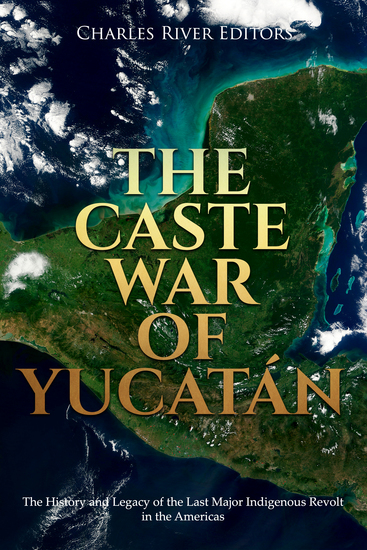
The Caste War of Yucatán - The History and Legacy of the Last Major Indigenous Revolt in the Americas - cover

The Caste War of Yucatán - The History and Legacy of the Last Major Indigenous Revolt in the Americas

Editors Charles River

Publisher: Charles River Editors

  • 0
  • 0
  • 0

Summary

Yucatán was not a wasteland when the first shipwrecked, battered Spaniards arrived on its shores. In fact, they found the descendants of an ancient civilization who refused to be conquered and who, when they finally succumbed to the steel and germs of the Europeans, refused to assimilate and instead disappeared into the jungle. By the mid-19th century, virtually all the native peoples of America had been defeated or were fleeing in small bands from canyon to canyon, only for the Maya to lead the last great, indigenous rebellion in the Yucatán, attempting to shake off the white domain initiated through the conquest of Spain. The so-called "Caste War" was a total war, much larger than the skirmishes with the Native Americans in the United States around the same time. While the Apaches and Comanches were barely bands of men attacking towns and ranches, wandering homeless, the Mayan rebellion was nothing less than a war of annihilation in an attempt to take back their former nation.
 
For many years, large portions of the peninsula were under the control of these proud Native Americans, leaving its roads and jungles essentially forbidden to the white man. Ironically, these events would help Western academics “rediscover” the Maya civilization, and several archaeological and scientific expeditions began to dig up the cities, monuments, and pyramids that make this part of Mexico one of the most frequented places by international tourists today. Thus, while a successful hotel industry was growing in the “very sad country” with the most spectacular beaches, and the ancient Mayan cities were acclaimed, their descendants were left in poverty and oblivion.
 
Using the weapons that they retained from service in the Yucatec army and weapons supplied by the British through Belize, the Mayan insurgents in the Caste War, as it came to be known, almost succeeded in taking over the entire Yucatan. However, on the eve of what would have been a successful siege of Mérida, the Maya soldiers gave up and returned to their fields. Pursued by the Yucatec forces, the Maya melted back into the jungle and formed communities that exist to this day.
 
The Caste War of Yucatán: The History and Legacy of the Last Major Indigenous Revolt in the Americas examines the events that brought about the rebellion, the people who fought it, and the results. Along with pictures and a bibliography, you will learn about the Caste War like never before.
Available since: 05/04/2025.
Print length: 48 pages.

Other books that might interest you

  • Systemic - How Racism Is Making Us Sick - cover

    Systemic - How Racism Is Making...

    Layal Liverpool

    • 0
    • 0
    • 0
    Layal Liverpool spent years bouncing from doctor to doctor, each one failing to diagnose her dermatological complaint. Just when she'd grown used to the idea that she had an extremely rare and untreatable skin condition, one dermatologist, after a quick exam, told her that she had a classic (and common) case of eczema and explained that it often appears differently on darker skin. Her experience stuck with her, making her wonder whether other medical conditions might be going undiagnosed in darker-skinned people and whether racism could, in fact, make people sick. 


    The pandemic taught us that diseases like Covid disproportionately affect people of color. Here, Liverpool goes a step further to show that this disparity exists for all types of illness and that it is caused by racism. In Systemic, she shares her journey to show how racism, woven into our societies, as well as into the structures of medicine and science, is harmful to our health. Refuting the false belief that there are biological differences between races, she goes on to show that racism-related stress and trauma can however, lead to biological changes that make people of color more vulnerable to illness, debunking the myth of illness as the great equalizer. Liverpool reveals the fatal stereotypes that keep people of color undiagnosed, untreated, and unsafe, and tells us what we can do about it.
    Show book
  • Violins of Hope - Violins of the Holocaust-Instruments of Hope and Liberation in Mankind's Darkest Hour - cover

    Violins of Hope - Violins of the...

    James A. Grymes

    • 0
    • 0
    • 0
    The violin has formed an important aspect of Jewish culture for centuries, both as a popular instrument with classical Jewish musicians—Jascha Heifetz, Yehudi Menuhin, Itzhak Perlman—and also a central factor of social life as part of the enduring Klezmer tradition. But during the Holocaust, the violin assumed extraordinary new roles within the Jewish community. For some musicians, the instrument was a liberator; for others, it was a savior that spared their lives. For many, the violin provided comfort in mankind's darkest hour, and, in at least one case, helped avenge murdered family members. Above all, the violins of the Holocaust represented strength and optimism for the future. 


    In Violins of Hope, music historian James A. Grymes tells the amazing, horrifying, and inspiring story of the violins of the Holocaust, and of Amnon Weinstein, the renowned Israeli violinmaker who has devoted the past twenty years to restoring these instruments in tribute to those who were lost, including 400 members of his own family. Juxtaposing tales of individual violins with one man's harrowing struggle to reconcile his own family's history and the history of his people, it is a poignant, affecting, and ultimately uplifting look at the Holocaust and its enduring impact.
    Show book
  • Designed to Fail - How Modern Economic Systems Evolved to Feed on Perpetual Crisis — And How We Can Save Ourselves from Our Own Destruction - cover

    Designed to Fail - How Modern...

    Manuel Alessandro Collazo

    • 0
    • 0
    • 0
    What if the systems we rely on don’t just fail to solve societal problems, but are designed to perpetuate them? If the very things that make life meaningful—well-being, human connection, and stability—are sacrificed to uphold fragile economic structures, is life within these systems truly worth living? When health declines, relationships fracture, and communities dissolve, what remains? 
    Uncovering the hidden mechanics of the crisis economy, this book reveals how manufactured crises fuel economic growth, turning fear, division, and instability into the most valuable commodities. It explores how industries sustain themselves not by solving problems, but by ensuring they never truly disappear. From the processed food industry to digital isolation, media-driven polarization, and pharmaceutical dependence, systemic instability isn’t a flaw—it’s a feature of the modern economic model. 
    Beyond exposing the problem, this book asks whether an alternative is possible. Can ethical industry scale without being consumed by the system it seeks to challenge? How can modern technologies like AI and blockchain be harnessed to ensure integrity? Can individuals reclaim autonomy in a world designed to keep them in a perpetual state of anger and uncertainty? And if ethical industry is achievable, can it meaningfully reduce the suffering embedded in the systems that sustain it, or is profit through human hardship an unavoidable reality? 
    This book doesn’t just expose these systems—it challenges the individual to look within, reclaim their agency, and recognize their ability to chip away at the structures of suffering, generating small but powerful ripples of positive change that may one day shape a brighter future. 
    For those seeking to understand the quiet, systemic degeneration of modern societies, this book is your starting point.
    Show book
  • HBR's 10 Must Reads on Mental Toughness Updated and Expanded (featuring "How to Stop Worrying About What Other People Think of You" by Michael Gervais) - cover

    HBR's 10 Must Reads on Mental...

    Herminia Ibarra, Martin E.P....

    • 0
    • 0
    • 0
    Come back from every setback stronger and more confident. 
     
    If you read (or listen to) nothing else on mental toughness, listen to this book. We've chosen a new selection of current and classic Harvard Business Review articles that will help you embrace challenges and adversity, learn from disappointment, and build your emotional strength and resilience. 
     
    This book will inspire you to handle tough criticism; let go of your fear of other people's opinions; recognize when to push through—and when to quit; remain steady and execute in a crisis; navigate difficult work and career transitions; and turn passion and perseverance into top performance. 
     
    HBR's 10 Must Reads are definitive collections of classic ideas, practical advice, and essential thinking from the pages of Harvard Business Review. Exploring topics like disruptive innovation, emotional intelligence, and new technology in our ever-evolving world, these books empower any leader to make bold decisions and inspire others. 
     
    This updated and expanded edition features new, breakthrough articles, additional short-form pieces, and a detailed discussion guide to give you and your team the tools you need for sustained success.
    Show book
  • The Boston Mob Guide - Hit Men Hoodlums & Hideouts - cover

    The Boston Mob Guide - Hit Men...

    Stephanie Schorow, Beverly Ford

    • 0
    • 0
    • 0
    Boston journalists Beverly Ford and Stephanie Schorow navigate the backrooms and seedy hangouts throughout the real story of Boston's gangster past. 


    The capture of notorious mobster James "Whitey" Bulger closed an infamous chapter in Boston history, yet the city's criminal underworld has a long and bloody rap sheet that stretches back to the beginning of the twentieth century. Ford and Schorow reveal the underbelly of Boston through profiles of ruthless gangsters like Charles "King" Solomon, the Angiulo brothers, Joseph "The Animal" Barboza, Stephen "The Rifleman" Flemmi, and many more who carried out deadly hits and lucrative heists.
    Show book
  • Authoritarianism - A Very Short Introduction - cover

    Authoritarianism - A Very Short...

    James Loxton

    • 0
    • 0
    • 0
    Authoritarianism is one of the buzzwords of our age. But what is it exactly? This Very Short Introduction provides a comprehensive overview of the world of authoritarian regimes, including military, single-party, and personalist regimes. It considers how understandings of authoritarianism have evolved over time, as well as the curious fact that many authoritarian regimes today hold elections. Drawing on examples from Africa, Asia, Europe, Latin America, and the Middle East, James Loxton examines the life cycle of authoritarian regimes. How are they born? What challenges do they face during life? Why do they die? The author shows how factors such as natural resource wealth and cross-border collaboration can contribute to authoritarian durability. He also highlights the disturbing fact that even when authoritarian regimes collapse, voters often use their newfound democratic rights to send former authoritarian officials back to office.
    Show book