Begleiten Sie uns auf eine literarische Weltreise!
Buch zum Bücherregal hinzufügen
Grey
Einen neuen Kommentar schreiben Default profile 50px
Grey
Jetzt das ganze Buch im Abo oder die ersten Seiten gratis lesen!
All characters reduced
The Great Pirate Adventures - cover

The Great Pirate Adventures

Edgar Allan Poe, Charles Dickens, Alexandre Dumas, Daniel Defoe, L. Frank Baum, James Fenimore Cooper, Robert Louis Stevenson, William Hope Hodgson, Frederick Marryat, Howard Pyle, Walter Scott, F. Scott Fitzgerald, J. M. Barrie, Harry Collingwood, G. A. Henty, Arthur Conan Doyle, W.H.G. Kingston, Robert E. Howard, J. Allan Dunn, R. M. Ballantyne, John Esquemeling, Harold MacGrath, Ralph D. Paine, Stanley Lane-Poole, Charles Boardman Hawes, Richard le Gallienne, Joseph Lewis French, Charles Ellms, Jack London, Jules Verne, Captain Charles Johnson, Currey E. Hamilton, J. D. Jerrold Kelley

Verlag: DigiCat

  • 0
  • 0
  • 0

Beschreibung

Embark on a high-seas odyssey with *The Great Pirate Adventures*, a diverse anthology capturing the swashbuckling essence and daring exploits of piracy. This collection sails through a spectrum of literary styles, from the suspenseful and gothic undertones of timeless adventures to thrilling escapades that navigate romance, betrayal, and discovery. The anthology weaves together narratives that are both thrilling and thought-provoking, encapsulating the golden age of piracy. Distinct tales brimming with danger and intrigue promise to sweep readers into the tumultuous world of buccaneers and privateers. The breadth of the included stories ensures that each page-turn unveils unexpected turns and cunning ploys across distant waters. This compilation unites an impressive cadre of renowned authors, whose works have each contributed to shaping literary history. From the vivid imaginations of Jules Verne, Edgar Allan Poe, and Arthur Conan Doyle, to the gripping narratives of Jack London and F. Scott Fitzgerald, the anthology features giants and pioneers of storytelling. These authors draw from historical, cultural, and imaginative tapestries, bringing to life not only the complexity of pirate life but also exploring deeper themes such as leadership, morality, and survival. Their combined voices offer a richly layered interpretation of the adventurous world of pirates throughout literary history. Readers are invited to discover the compelling vignettes within *The Great Pirate Adventures*, providing a unique opportunity to encounter a diversity of perspectives and storytelling expertise within a unified volume. This anthology is an indispensable journey for fans of classic literature, offering educational insights while captivating the imagination. Let the gallant writing engage you in dialogues of adventure, historical intrigue, and the multifaceted human spirit, expanding beyond the pages into introspective and thrilling voyages of your own.
Verfügbar seit: 13.11.2022.
Drucklänge: 11081 Seiten.

Weitere Bücher, die Sie mögen werden

  • The Dangerous Life and Ideas of Diogenes The Cynic - cover

    The Dangerous Life and Ideas of...

    Jean-Manuel Roubineau

    • 0
    • 0
    • 0
    The ancient philosopher Diogenes—nicknamed "The Dog" and decried by Plato as a "Socrates gone mad"—was widely praised and idealized as much as he was mocked and vilified. A favorite subject of sculptors and painters since the Renaissance, his notoriety is equally due to his eccentric behavior, scorn of conventions, and biting aphorisms, and to the role he played in the creation of the Cynic school, which flourished from the 4th century B.C. to the Christian era. Jean-Manuel Roubineau paints a new portrait of an atypical philosopher whose life left an indelible mark on the Western collective imagination and whose philosophy courses through various schools of thought well beyond antiquity. 


    Roubineau sifts through the many legends and apocryphal stories that surround the life of Diogenes. Was he a counterfeiter? Did he meet Alexander the Great? Was he an apologist for incest, patricide, and anthropophagy? How did he actually die? Roubineau retraces the known facts of Diogenes' existence. 


    Beyond the rehashed clichés, this book inspires us to rediscover Diogenes' philosophical legacy—whether it be the challenge to the established order, the detachment from materialism, the choice of a return to nature, or the formulation of a cosmopolitan ideal strongly rooted in the belief that virtue is better revealed in action than in theory.
    Zum Buch
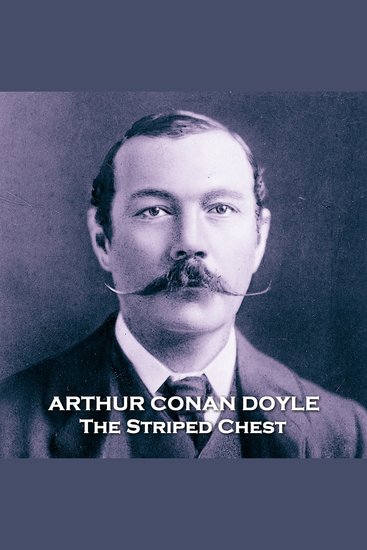
  • The Striped Chest - From their pens to your ears genius in every story - cover

    The Striped Chest - From their...

    Arthur Conan Doyle

    • 0
    • 0
    • 0
    Arthur Conan Doyle was born in Edinburgh, Scotland on 22nd May 1859.  His childhood was blighted by his father’s heavy drinking which for some years broke up the family. Fortunately, wealthy uncles were willing to support them by paying for education and clothing.  
    He was accepted at the University of Edinburgh to study medicine and also began to write short stories the first, ‘The Haunted Grange of Goresthorpe’, was published in Blackwood’s Magazine.  Despite several other stories and some articles in the British Medical Journal his medical studies took priority. 
    When these finished he was appointed as Doctor on the Greenland whaler ‘Hope of Peterhead’ in 1880 and then, after graduation, as ship’s surgeon on the SS Mayumba on its voyage to West Africa. 
    1882 saw a move to Plymouth and his own independent practice. With few patients he resumed writing and completed his first novel, ‘The Mystery of Cloomber’, although most of his output was short stories based on his experiences at sea.  
    He married Louisa Hawkins in 1885. However, two years later he met and fell in love with Jean Elizabeth Leckie, though they remained platonic out of respect for, and loyalty to, his wife. 
    His literary career suddenly burst into life in November 1886 with ‘A Study In Scarlet’, the first of the fabulously successful Sherlock Holmes stories.  
    With two children to support he now revisited his haphazard commercial arrangements and curtailed everything save for commissions from the Strand Magazine.  
    As a sportsman he was remarkably proficient. He was goalkeeper for Portsmouth Association Football Club and played ten first-class cricket matches for the Marylebone Cricket Club as well as captain of the Crowborough Beacon Golf Club in East Sussex.  
    In 1891 tired of writing Holmes stories, he began a series of historical novels and even went so far as to apparently kill off Holmes in a lethal brawl with his arch-nemesis Moriarty. 
    Despite heavy and sustained criticism he continued to write in support of the Boer War, a fact he thought contributed to his knighthood in 1902.  The following year to great relief and acclaim he brought Sherlock Holmes back from the dead in his first outing for a decade. 
    Sadly, his wife Louisa died from TB in 1906 and, a year later, he at last married Jean.  
    During the War and for several years after family deaths had left him depressed. In a search for solace and answers he alighted upon spiritualism and, such was his interest, that he wrote several books on the subject. 
    On 7th July 1930 Conan Doyle was discovered in the hall of Windlesham Manor, his house in East Sussex, clutching his chest dying of a heart attack.  He was 71.
    Zum Buch
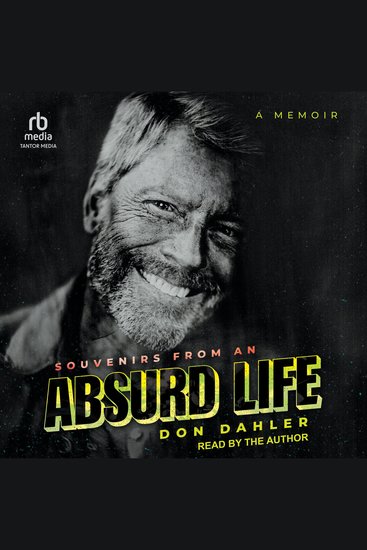
  • Souvenirs from an Absurd Life - A Memoir - cover

    Souvenirs from an Absurd Life -...

    Don Dahler

    • 0
    • 0
    • 0
    One man's unlikely rise from bartender to national television reporter and the incredible adventures he's had along the way. 


    Hockey great Wayne Gretzky famously noted, "You miss one hundred percent of the shots you don't take." 


    Don Dahler took these words to heart, causing his entire life to change in a remarkable way. Souvenirs from an Absurd Life presents true stories about a relative nobody once struggling to make rent before he decided he would not accept what appeared to be a dim, boring, unfulfilling future. Instead, Dahler charted a new course for himself, somehow landing an award-winning career as a network correspondent and news anchor, covering a vast array of subjects, including wars, the attacks of 9/11, and the biggest stories of the times for FOX, CNBC, ABC, and CBS News. Despite the considerable odds against him, Don Dahler took his shot, and he made it.
    Zum Buch
  • Out at the Plate - The Dot Wilkinson Story - cover

    Out at the Plate - The Dot...

    Lynn Ames

    • 0
    • 0
    • 0
    It’s not simply that Dot Wilkinson was one of the most decorated women’s softball players, bowlers, and athletes of all time and one of the original players from the three-time-world-champion PBSW Phoenix Ramblers softball team (1933–1965). Nor was it the length of her time here on Earth—over a century—although any of these things by itself would be impressive. The magic of Dot’s story is in the details. It’s the tale of a childhood spent in poverty, an indomitable, unbreakable spirit, a determination to be the very best to play whatever sport she undertook, the independence to live her personal life on her own terms, and her tremendous success at all of it. Over more than a decade of countless conversations and interviews, Dot shared all of it with her dear friend, author Lynn Ames. Dot held nothing back. Out at the Plate, told through the lens of Dot and Lynn’s friendship, is the story of a forgotten era in women’s history and sports, and one extraordinary woman’s place at the center of it all.
    Zum Buch
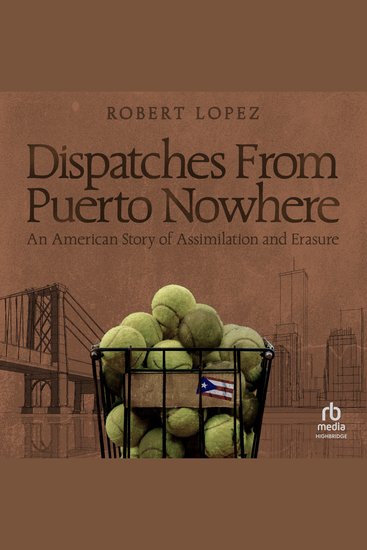
  • Dispatches From Puerto Nowhere - An American Story of Assimilation and Erasure - cover

    Dispatches From Puerto Nowhere -...

    Robert Lopez

    • 0
    • 0
    • 0
    Robert Lopez's grandfather Sixto was born in Mayaguez, Puerto Rico, in 1904, immigrating to the United States in the 1920s, where he lived in a racially proportioned apartment complex in East New York, Brooklyn, until his death in 1987. The family's efforts to assimilate within their new homeland led to the near complete erasure of their heritage, culture, and language within two generations. 


    Little is known of Sixto—he may have been a longshoreman, a painter, or a boxer, but was most likely a longshoreman—or why he originally decided to leave Puerto Rico, other than that he was a meticulously slow eater who played the standup keyboard and guitar, and enjoyed watching baseball. Through family recollection, the constant banter volleyed across nets within Brooklyn's diverse tennis community, as well as an imagined fabulist history drawn from Sixto's remembered traits, in Dispatches From Puerto Nowhere: An American Story of Assimilation and Erasure, Robert Lopez paints a compassionate portrait of family that attempts to bridge the past to the present, and reclaim a heritage threatened by assimilation and erasure.
    Zum Buch
  • American Legends: The Life of Roy Rogers - cover

    American Legends: The Life of...

    Editors Charles River

    • 0
    • 0
    • 0
    In the early 20th century, Westerns were one of the most popular genres in Hollywood, and one of the young stars at the forefront was Roy Rogers, who had come from an Ohio farm to transform himself into a cowboy. Regardless of his background, Rogers certainly looked the part of the quintessential cowboy, along with his wife Dale Evans and his horse Trigger. His versatile singing and acting abilities made him successful both on radio and on the screen. 
    Rogers came of age at a time when the “singing cowboy” was at the apex of his popularity, and that was favorable because he actually got his start in show business as a singer. In the early ‘30s, he bounced around several groups as a country music singer before earning national attention as a member of the Sons of the Pioneers, who were signed to Decca and had a couple of hits. As a result, when he first appeared in movies in 1935, it was usually in bit roles that required singing, but when Gene Autry threatened to quit acting in 1938, Rogers was viewed as a suitable replacement for lead roles. As it turned out, he became the premiere “singing cowboy” in Autry’s stead, and from 1939-1954, he was one of the Top 10 Western stars in Hollywood, and a Top 10 movie star overall during some of those years. 
    As Rogers evolved into the “King of the Cowboys”, he became a pop culture icon, and he was shrewd enough to capitalize on his image. All sorts of Roy Rogers merchandise hit stores, from action figures to comic strips, and Rogers even banked on the popularity of his horse Trigger by featuring him enough to make the horse a household name as well. Even today, people can find the name Roy Rogers all over the place, if only because he eventually had his name lent to a popular fast food chain in later years.
    Zum Buch