Rejoignez-nous pour un voyage dans le monde des livres!
Ajouter ce livre à l'électronique
Grey
Ecrivez un nouveau commentaire Default profile 50px
Grey
Abonnez-vous pour lire le livre complet ou lisez les premières pages gratuitement!
All characters reduced
Delphi Collected Works of Denis Diderot (Illustrated) - cover

Delphi Collected Works of Denis Diderot (Illustrated)

Denis Diderot

Maison d'édition: Delphi Publishing Ltd

  • 0
  • 0
  • 0

Synopsis

A prominent figure of the Age of Enlightenment, the French philosopher Denis Diderot served as chief editor of the ‘Encyclopédie’, the first encyclopaedia to include contributions from many named contributors. He developed a materialist philosophy and arrived at startling intuitive insights into biology and chemistry. In speculating on the origins of life without divine intervention, he foreshadowed the evolutionary theories of Darwin and put forth a prophetic picture of the cellular structure of matter. His ideas, often captured in the form of paradox and dialogue, stem from a sense of life’s ambiguities and a profound understanding of the complexities and contradictions of human nature. This eBook presents Diderot’s collected works, with numerous illustrations, rare texts appearing in digital print for the first time, informative introductions and the usual Delphi bonus material. (Version 1)
 
* Beautifully illustrated with images relating to Diderot’s life and works* Concise introductions to the major texts* Many important treatises, with individual contents tables* Features translations appearing for the first time in digital publishing* Images of how the books were first published, giving your eReader a taste of the original texts* Excellent formatting of the texts* Features three biographies – discover Diderot’s intriguing life* Ordering of texts into chronological order and genres
 
Please visit www.delphiclassics.com to browse through our range of exciting titles
 
CONTENTS:
 
The NovelsThe Indiscreet Toys (1748)Memoirs of a Nun (1796)
 
The Philosophical WorksPhilosophical Thoughts (1746)Letter on the Blind (1749)Letter on the Deaf and Dumb (1751)On Composition (1755)My Strange Thoughts on Drawing (1755)Letter to My Brother (1760)Freedom of Thought (1765)Maimonides (1765)Rameau’s Nephew (1774)Conversation between D’Alembert and Diderot (1769)Regrets for my Old Dressing Gown (1769)Thoughts on Religion (1770)A Father Talks with his Children (1771)Paradox of the Actor (1830)
 
The BiographiesDiderot and the Encyclopædists (1886) by John MorleyDiderot: The Talker (1906) by Evelyn Beatrice HallDenis Diderot (1911) by John Morley
 
Please visit www.delphiclassics.com to browse through our range of exciting titles or to purchase this eBook as a Parts Edition of individual eBooks
Disponible depuis: 12/11/2022.
Longueur d'impression: 2564 pages.
D'autres livres qui pourraient vous intéresser

  • Procrastination - What It Is Why It's a Problem and What You Can Do About It - cover

    Procrastination - What It Is Why...

    Fuschia M. Sirois

    • 0
    • 0
    • 0
    Why do we procrastinate? How can we stop wasting time, and finish our work? 


    Drawing on the latest theory and research, this book explains why people procrastinate, and provides practical, evidence-based strategies to help you stop delaying, complete your tasks, and fulfill your potential. At the heart of procrastination are your emotions and ability to regulate your mood. In this book you will learn how to dial down negative emotions, and replace old habits with new ones that can help you stay on track with your tasks and goals. You will also learn how to treat your procrastination with compassion, rather than harsh judgments or complicated analyses of your motivation. 


    Exercises in the book help you recognize why a task might be triggering negative feelings, plus how to be more self-compassionate, and how to build meaning into the everyday tasks that help you reach your goals. This book is ideal for anyone who struggles with procrastination, or knows someone who does, and who is looking for evidence-based insights and strategies for dealing with procrastination.
    Voir livre
  • Reality Report The: Book summary & analysis - cover

    Reality Report The: Book summary...

    Margot Langley

    • 0
    • 0
    • 0
    This content is an independent and unofficial summary created for informational and educational purposes only. It is not affiliated with, authorized, approved, licensed, or endorsed by the original author or publisher. All rights to the original work belong to its respective copyright holders. This summary is not intended to substitute the original book, but to offer a concise overview and interpretation of its main ideas.


    The Reality Report is a bold, thought-provoking investigation into the forces shaping our world today. Blending investigative journalism, social commentary, and personal insight, this audiobook explores the truths hidden beneath the noise—challenging narratives, exposing contradictions, and encouraging critical reflection. With each chapter, listeners are drawn into a compelling narrative that questions what’s real, what’s manipulated, and what it means to stay informed in an age of distortion.
     
    Urgent, insightful, and unflinchingly honest, this is essential listening for those seeking clarity, awareness, and a deeper understanding of the world around them.
    Voir livre
  • An Ethics for Today - Finding Common Ground Between Philosophy and Religion - cover

    An Ethics for Today - Finding...

    Richard Rorty

    • 0
    • 1
    • 0
    One of the most widely discussed philosophers of the 21st century finds common ground between spiritual and secular ethics in this provocative book.As controversial and he was influential, Richard Rorty developed a brand of philosophical pragmatism that rejects all theories of truth. His groundbreaking work also dismisses modern epistemology and its preoccupation with knowledge and representation. Though he was a strict secularist, Rorty believed there could be no universally valid answers to moral questions. This led him to a surprisingly complex view of religion rarely expressed in his writings. In this posthumous publication, Rorty finds in the pragmatic thought of John Dewey, John Stuart Mill, William James, and George Santayana, among others, a political imagination shared by religious traditions. Rather than promote belief or nonbelief, Rorty seeks to locate patterns of similarity and difference so an ethics of decency and a politics of solidarity can rise. He particularly responds to Pope Benedict XVI and his campaign against the relativist vision. Whether holding theologians, metaphysicians, or political ideologues to account, Rorty remains steadfast in his opposition to absolute uniformity and its exploitation of political strength.
    Voir livre
  • Frequencies - Treatise - cover

    Frequencies - Treatise

    Alexandr Korol

    • 0
    • 0
    • 0
    Over 10 years ago ... I made an incredible discovery for myself ... and I wrote it all down in my diary. 
    ...I have even shared my draft before....  
    Frequencies are parallel worlds ... they are social strata of society ... and we all live on different frequencies ....  
    If I surround myself with people and things and food and music ... of frequency number 5 ... then I will connect to frequency 5 ... and if there is laziness on that frequency ... and if on that frequency ... people often break bones ... then I will become lazy and break my leg or my arm by accident ... when I leave the house ... in winter time ... when it's slippery ....  
    But at frequency 10 ...  everything is different ... if you surround yourself with elements of frequency 10 ... then you get into another world ... where you will be always in a positive mood ... and have money ... and health ... and even your thoughts will be different .... 
    And I wrote about it ... when I was 20 years old ... in 2011 ... in the summer I first noticed it ... that there are different worlds ... and in different worlds ... there is a different me ....  
    Now I decided not to twist all my old materials about frequencies ... but to start from scratch ... once again ... to explain in detail ... what are frequencies ... and more precisely what is it... where you live in...  
    Author Alexandr Korol 
    Official email: mail@akinformation.com 
    Official website: https://akinformation.com 
    Donate: https://akinformation.com/en/wallet.html
    Voir livre
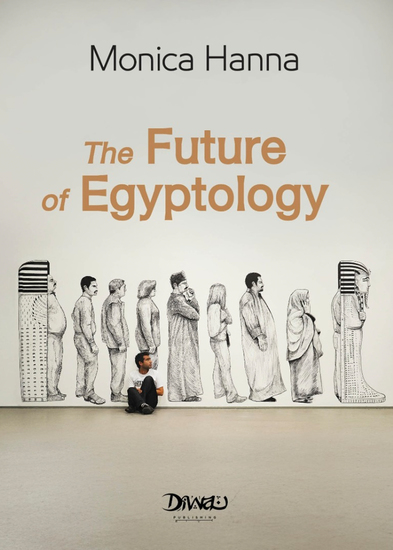
  • The Future of Egyptology - cover

    The Future of Egyptology

    Monica Hanna

    • 0
    • 0
    • 0
    When ancient Egypt is mentioned, images often come to mind of tombs covered in hieroglyphs being opened by Victorian-era explorers, revealing "wonderful things"—as Howard Carter famously described upon first glimpsing the treasures of Tutankhamun. But how did Egyptology become the preserve of wealthy Europeans? And what can be done today to restore agency and rightful ownership to the country where this field was born?
    Voir livre
  • Ivan the Terrible and Vlad Dracula: The Lives and Legacies of Medieval Europe’s Most Notorious Rulers - cover

    Ivan the Terrible and Vlad...

    Charles River Editors

    • 0
    • 0
    • 0
    Many medieval figures are somewhat shrouded in mystery, due to the scarcity of available sources and to the difficulties posed by the interpretation of historical narratives dating from this period. And even when there is enough documented evidence to put together a sufficiently coherent biographical account, other sources and accounts may emerge that flagrantly contradict the already established and generally accepted historical narrative. 
    Nowhere is this more evident than in the legacy of Vlad III Dracula, whom history has recorded as one of the most notorious and bloodthirsty tyrants of the 15th century. In addition to lending the name Dracula to Bram Stoker’s famous vampire, Vlad is known around the world by the cognomen Vlad the Impaler, due to his reputation for impaling thousands of his enemies. Vlad was reputed to be such a tyrant that his reputation and stories of his deeds spread across Germany and the rest of Europe during his lifetime. Naturally, trying to determine who Vlad was and what he was really like has been made more complex by the subsequent fame he achieved in Europe and beyond, beginning with the dissemination of the German and Slavic 15th century narratives that aided in the construction of a diabolical, mythical-like figure that has been passed down throughout history to today.  
    While certain factual aspects regarding Ivan IV’s reign can certainly be deduced from the primary sources that have withstood the test of time, the majority of accounts dating from the 16th century and after must be evaluated critically and read in light of certain traditions and ideas that circulated in the region regarding the model ruler and the tyrant. Naturally, this makes it hard for contemporary audiences to determine whether Ivan IV was worthy of the epithet “Groznyi” (“the Terrible”), but that heavily influenced the way in which Ivan IV was perceived and subsequently depicted in historiography.
    Voir livre