

Begleiten Sie uns auf eine literarische Weltreise!
Buch zum Bücherregal hinzufügen
Grey
Einen neuen Kommentar schreiben Default profile 50px
Grey
Jetzt das ganze Buch im Abo oder die ersten Seiten gratis lesen!
All characters reduced
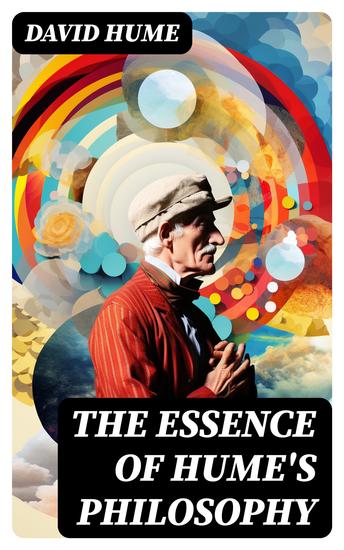
The Essence of Hume's Philosophy - A Treatise of Human Nature An Enquiry Concerning Human Understanding & An Enquiry Concerning the Principles of Morals - cover

The Essence of Hume's Philosophy - A Treatise of Human Nature An Enquiry Concerning Human Understanding & An Enquiry Concerning the Principles of Morals

David Hume

Verlag: DigiCat

  • 0
  • 0
  • 0

Beschreibung

In "The Essence of Hume's Philosophy," David Hume presents a compelling exploration of human understanding and moral philosophy, elucidating the intricacies of empiricism and skepticism that define his thought. The book meticulously navigates through Hume's distinctive style—marked by clarity, wit, and a conversational tone—while situating his ideas within the broader context of Enlightenment philosophy. Hume's reflections on causality, perception, and the self challenge readers to reconsider established notions, weaving together a rich tapestry of metaphysical inquiry and ethical deliberation that continues to resonate in contemporary discussions. David Hume (1711-1776) was a towering figure of the Scottish Enlightenment, known for his profound influence on philosophy, history, and the natural sciences. His formative experiences in Edinburgh and his immersion in debates surrounding empiricism and rationalism significantly shaped his philosophical inquiries. Hume's freethinking spirit and dedication to challenging dogma have fueled his enduring legacy, as he sought to reconcile human experience with intellectual rigor. "The Essence of Hume's Philosophy" is essential reading for anyone interested in the intersections of reason and human emotion. Hume's work not only enriches our understanding of philosophical thought but also offers valuable insights into our own moral and cognitive frameworks. This book invites readers to reflect deeply on humanity's place within the unfolding tapestry of knowledge and belief.
Verfügbar seit: 28.12.2023.
Drucklänge: 826 Seiten.

Weitere Bücher, die Sie mögen werden

  • The Genealogy of Morals - cover

    The Genealogy of Morals

    Friedrich Nietzsche

    • 0
    • 0
    • 0
    Friedrich Nietzsche's genealogical analysis in The Genealogy of Morals is an exploration of the historical development of certain moral values, specifically those associated with notions of justice, honour, and good. Taking a critical stance against the Enlightenment-era reception of Kantian morality, Nietzsche argues that these values were formed through a process of power dynamics rather than abstract principles. Read in English, unabridged.
    Zum Buch
  • Liberalism In the Classical Tradition - cover

    Liberalism In the Classical...

    Ludwig Von Mises

    • 0
    • 0
    • 0
    "Liberalism In the Classical Tradition" is a seminal work written by Ludwig von Mises, an Austrian economist and philosopher. Originally published in 1927 as "Die Gemeinwirtschaft: Untersuchungen über den Sozialismus" (Socialism: An Economic and Sociological Analysis), it was later translated into English in 1962. The book provides a comprehensive defense of classical liberalism, focusing on the principles of individual liberty, free markets, and limited government. Ludwig von Mises argues against socialism and interventionism, emphasizing the importance of private property, voluntary exchange, and the market process. He explores the economic and moral foundations of classical liberalism and critiques alternative political and economic systems. Mises contends that individual freedom and property rights are essential for human flourishing and the prosperity of society.
    Zum Buch
  • The Conspiracy To Destroy All Existing Governments and Religions - cover

    The Conspiracy To Destroy All...

    William Guy Carr

    • 0
    • 0
    • 0
    Those who find it difficult to accept the fact that the U.S. is the target of political and economic conspiracies are not ready f or this book which deals with a conspiracy on a much higher level. The average man is not acquainted with the history and documentation involved. Also it has not yet been brought home to him that the Powers of Evil are as real as the Powers of Good. 
    In this book the reader is exposed to Professor Robison's publishing of secret documents and many later disclosures. He is then quickly carried through history by the author who follows the thread of conspiracy through time.
    Zum Buch
  • The Book of Five Rings - Adapted for the Contemporary Reader - cover

    The Book of Five Rings - Adapted...

    Miyamoto Musashi, James Harris

    • 0
    • 0
    • 0
    The Book of Five Rings (五輪書, Go Rin no Sho) is a text on kenjutsu (sword fighting), and combat in general, written by the Japanese swordsman Miyamoto Musashi around 1645. 
    The modern-day warrior employs it as a manual of technique and philosophy. 
    Carefully adapted in to modern English for easy reading. ✓ 
    Enjoy ♥
    Zum Buch
  • Kidnapped at Sea - The Civil War Voyage of David Henry White - cover

    Kidnapped at Sea - The Civil War...

    Andrew Sillen

    • 0
    • 0
    • 0
    THE TRUE STORY OF DAVID HENRY WHITE, A FREE BLACK TEENAGE SAILOR ENSLAVED ON THE HIGH SEAS DURING THE CIVIL WAR, WHOSE LIFE STORY WAS FALSELY AND INTENTIONALLY APPROPRIATED TO ADVANCE THE LOST CAUSE TROPE OF A CONTENTED SLAVE, HAPPY AND SAFE IN SERVILITY. 
     
    David Henry White, a free Black teenage sailor from Lewes, Delaware, was kidnapped by Captain Raphael Semmes of the Confederate raider Alabama on October 9, 1862, from the Philadelphia-based packet ship Tonawanda. White remained captive on the Alabama for over 600 days, until he drowned during the Battle of Cherbourg on June 19, 1864. 
     
    In a best-selling postwar memoir, Semmes falsely described White as a contented slave who remained loyal to the Confederacy. In Kidnapped at Sea, archaeologist Andrew Sillen uses a forensic approach to describe White’s enslavement and demise and illustrates how White’s actual life belies the Lost Cause narrative his captors sought to construct. 
     
    Kidnapped at Sea is the first book to focus on White’s actual life, rather than relying on Semmes and other secondary sources. Until now, Semmes’s appropriation of White’s life has escaped scrutiny, thereby demonstrating the challenges faced by disempowered, illiterate people—and how well-crafted, racist fabrications have become part of Civil War memory. 
     
    “In this fast-paced narrative, Andrew Sillen uncovers the astounding story of David Henry White, a free Black teenager kidnapped from a US ship and forced to accompany the Confederate raider Alabama. Through a haunting account, Sillen restores White’s humanity and, in doing so, provides a timely examination of the necessity for addressing historical crimes.”—Caroline E. Janney, author of Ends of War: The Unfinished Fight of Lee’s Army after Appomattox
    Zum Buch
  • The Economy of Rome - Trade Wealth and Commerce - cover

    The Economy of Rome - Trade...

    Rogan Fish

    • 0
    • 0
    • 0
    The Roman economy was built upon a complex and interdependent system that evolved from its agrarian roots into a vast network of trade, production, and commerce. From the early Republic to the height of the Empire, Rome’s economic foundation was shaped by its reliance on agriculture, slave labor, and a structured monetary system. These key components allowed the Roman state to sustain its military conquests, support its urban populations, and facilitate long-distance trade across the Mediterranean and beyond. 
    Agriculture served as the backbone of the Roman economy, with the majority of the population engaged in farming. Small-scale subsistence farming dominated early Roman society, but as the Republic expanded, wealthy landowners acquired vast estates known as latifundia. These estates were worked by slaves and tenant farmers, producing surplus crops such as wheat, olives, and grapes, which were essential to both local consumption and trade. The shift from independent farming to large-scale agricultural estates increased economic disparities but also enabled Rome to support a growing urban population and supply its armies. 
    Slavery played a crucial role in sustaining the Roman economy. Enslaved people were not only laborers in agriculture but also worked in mines, workshops, and domestic households. The steady influx of slaves, primarily through military conquests, allowed Rome to maintain high levels of production and economic growth. The reliance on slave labor, however, also created structural weaknesses, as the economy was dependent on a continuous supply of enslaved workers, making it vulnerable during times of military decline.
    Zum Buch
