Rejoignez-nous pour un voyage dans le monde des livres!
Ajouter ce livre à l'électronique
Grey
Ecrivez un nouveau commentaire Default profile 50px
Grey
Abonnez-vous pour lire le livre complet ou lisez les premières pages gratuitement!
All characters reduced
Here in America - cover

Here in America

David Edgar

Maison d'édition: Nick Hern Books

  • 0
  • 0
  • 0

Synopsis

'I'm saying there's someone who could stop this madness. If you stood up, and said "no".'
On a rainswept afternoon in 1952, Hollywood and Broadway's leading director Elia Kazan met his closest collaborator, the playwright Arthur Miller. As the anti-Communist crusade of McCarthyism blacklisted hundreds of their colleagues, Kazan and Miller faced a stark choice. Should they betray their friends, or risk never working again?
David Edgar's play Here in America is a compelling drama that imagines a confrontation between two giants of stage and screen, both passionately involved with an actress about to become the most famous movie star in the world. It was first performed at the Orange Tree Theatre, London, in 2024, directed by James Dacre.
Disponible depuis: 26/09/2024.
Longueur d'impression: 88 pages.

D'autres livres qui pourraient vous intéresser

  • A Foreign Country - cover

    A Foreign Country

    Nigel Pantling

    • 0
    • 0
    • 0
    In A Foreign Country, Nigel Pantling takes us to some strange places - the exotic, the imaginary and the rediscovered past - and for each he serves up a heady local brew, equal parts memory, invention, wit and menace. Here, North Korean tourists rub shoulders with Syrian adventurers, the newly dead with a City lothario, Popeye and Olive Oyl with Cold War warriors. Surprising and unsettling by turns, these poems are a whistle-stop journey though different times, countries and customs, enriched by deep personal experience.
    Voir livre
  • Faust Part II - cover

    Faust Part II

    Johann Wolfgang von Goethe

    • 0
    • 0
    • 0
    Faust Part II is Johann Wolfgang von Goethe's monumental continuation and completion of his legendary dramatic masterpiece. Expanding far beyond the intimate tragedy of Part I, this second installment transforms the story of the restless scholar into a sweeping philosophical epic that explores politics, economics, art, mythology, ambition, and ultimately, redemption. Vast in scope and profound in meaning, Faust Part II stands as one of the most ambitious works in world literature.
    
    After the tragic events surrounding Gretchen, Faust's journey does not end. Instead, it evolves. Mephistopheles remains at his side as Faust is drawn into ever-greater realms of experience and influence. No longer confined to personal desire alone, Faust now seeks fulfillment on a grand scale—through power, creativity, and transformation of society itself. His striving shifts from romantic passion to political authority, aesthetic achievement, and even the reshaping of nature.
    
    Goethe structures Faust Part II in five acts, each unfolding in dramatically different settings—from imperial courts and fantastical masquerades to classical mythological landscapes inspired by ancient Greece. In one of literature's most striking episodes, Faust encounters Helen of Troy, the embodiment of ideal beauty, blending classical mythology with modern longing. Through this union, Goethe symbolically unites Romantic and Classical ideals, exploring the tension between passion and harmony, imagination and order.
    
    Unlike the deeply personal tragedy of Part I, Part II is rich with allegory and symbolism. Faust becomes a figure representing humanity's insatiable drive to expand knowledge, power, and dominion over the world. His involvement in financial schemes at the Emperor's court foreshadows modern economic systems, while his ambitious land-reclamation project reflects humanity's desire to conquer and reshape nature. Yet Goethe does not present ambition as purely destructive; instead, he portrays striving as an essential and defining human quality.
    
    Mephistopheles continues to provide ironic commentary, embodying doubt, skepticism, and negation. His sharp wit contrasts with Faust's relentless forward momentum. Together, they navigate a world where illusion and reality blur, where myth intersects with modernity, and where human aspiration collides with moral consequence.
    
    The philosophical core of Faust Part II lies in its exploration of redemption. Goethe ultimately suggests that it is not perfection but continuous striving—an unending effort toward higher purpose—that defines human greatness. Even in the face of error and failure, the persistent desire to create, improve, and transcend becomes a path toward spiritual elevation.
    
    Completed shortly before Goethe's death in 1832, Faust Part II represents the culmination of a lifetime of thought and artistic development. Its language is complex, poetic, and richly layered with cultural references, demanding reflection and rewarding careful reading. While more abstract and symbolic than its predecessor, it offers a grand and visionary conclusion to Faust's journey.
    
    Profound, imaginative, and intellectually daring, Faust Part II is not merely a continuation of a story—it is a sweeping meditation on civilization, creativity, and the eternal human drive to reach beyond limits. Together with Part I, it forms one of literature's greatest achievements, a timeless exploration of ambition, responsibility, and the possibility of ultimate grace.
    Voir livre

  • A-Typical Rainbow - cover

    A-Typical Rainbow

    JJ Green

    • 0
    • 0
    • 0
    'I can change colours of objects by looking at them, hear the symphonies of household simplicities, taste the emotions in a room like sweet or bitter wine, and feel life's every heartbeat breaking through my ribcage in glorious technicolour. Just don't ask me to make eye contact.'
    An imaginative child's glorious fantasies – of dolphins and dragonflies, gingerbread houses and chocolate rivers – offer him an escape from hostile reality.
    When reality dictates he has to conform to the 'real world', he has to make a choice. Should he live authentically and risk stigma, or can he continue to hide?
    Based on real events from the perspective of the writer and the autistic community, JJ Green's A-Typical Rainbow is an uplifting play about the experience of growing up neurodivergent and queer in early 2000s Britain.
    It premiered at London's Turbine Theatre in June 2022, produced by Aria Entertainment, directed by Bronagh Lagan, and starring playwright JJ Green, who is a passionate advocate for autistic artists like himself.
    This edition includes the full text of the play along with contributions from the largely – and proudly – neurodivergent cast and creative team.
    Voir livre
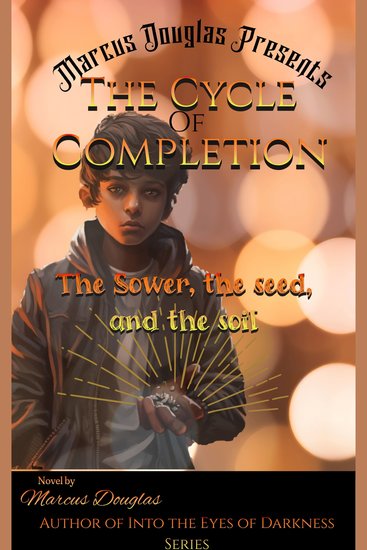
  • Marcus Douglas Presents The Cycle of Completion - The Sower the seed and the soil - cover

    Marcus Douglas Presents The...

    Marcus Douglas

    • 0
    • 0
    • 0
    New Jerusalem stands sealed away from a world destroyed by disease and war, but their Orator Nebuchadnezzar has led them astray from what built their utopia. In the wake of his pride, a new disease began ravaging the city until one of the seven Localities needed to be sealed off for the good of the others. 
    With the city foundering, critical systems grinding to a halt, and food stores dwindling, they find hope in young David Shakir, whose grandfather founded this great haven. But will that burden crush the young boy whose spent his life thought sickly and weak, confined to his wheelchair? 
    The city looks to David and his closeness to God for leadership and his armor bearer, Elijah Ruiz. Can they be able to lead them out of these dark times, or will the looming threat within the sealed off Locality Seven consume them all?
    Voir livre
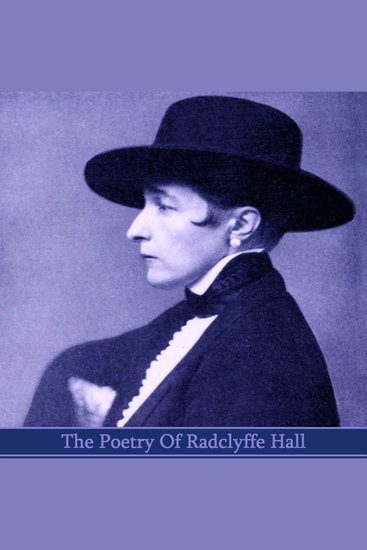
  • The Poetry of Radclyffe Hall - Eton and Oxford educated lesbian pioneer and icon in modern literature - cover

    The Poetry of Radclyffe Hall -...

    Radclyffe Hall

    • 0
    • 0
    • 0
    Marguerite Radclyffe-Hall was born on August 12th, 1880 to wealthy parents who separated while she was still an infant.  Her parents thereafter paid little attention to her. Hall was educated privately, and then at King’s College London. Later she travelled to Europe, settling in Dresden, Germany.  With the death of her paternal grandfather she inherited a large estate and was then able to live as she pleased. 
    In Germany, Hall met Mabel Batten and fell in love despite the twenty-three year age difference. Batten gave Hall the nickname ‘John’ by which she was henceforward known in every circumstance throughout her life except in her work as an author. 
    In 1915, Hall met and, in 1917 moved in with sculptor Una Troubridge, with whom she would remain for the rest of her life. 
    Hall wrote poetry all throughout her twenties and thirties. She had published Dedicated to Arthur Sullivan as early as 1894, and five further volumes of collected works were released before she stopped writing poetry and published her first novel, The Forge, in 1924. 
    That same year also saw publication of The Unlit Lamp, the first work for which Hall was known as simply Radclyffe Hall. 
    The Well of Loneliness, the most important novel of Hall’s career, was published in 1928 to immediate sensation and controversy. It is Hall’s most direct artistic expression of her own personal sexual orientation. 
    After the controversy of The Well of Loneliness, Hall would publish only two more novels and a collection of short stories. 
    After years spent travelling in Italy and France and a series of long lasting affairs with other women (of which Troubridge was apparently aware), Hall retired with Troubridge to Rye, in East Sussex. Here, suffering from tuberculosis, she also underwent eye surgery and thereafter had difficulty reading and writing. 
    On October 7, 1943, Radclyffe Hall died from colon cancer at the age of sixty-three. She is buried in Highgate Cemetery in London. 
    This volume comes to you from Portable Poetry, a specialized imprint from Deadtree Publishing.  Our range is large and growing and covers single poets, themes, and many compilations.
    Voir livre
  • Poster-Painter's Masterpiece - cover

    Poster-Painter's Masterpiece

    Sam Walter Foss

    • 0
    • 0
    • 0
    Sam Walter Foss was an American librarian and poet. For many years the opening lines from Foss' The Coming American ("Bring me men to match my mountains / Bring me men to match my plains / Men with empires in their purpose / And new eras in their brains") were inscribed on a granite wall at the United States Air Force Academy to inspire cadets and officers, but they were removed in 2003 to harmonize in perception to the Air Force Academy's having become coeducational. - Summary by Wikipedia
    Voir livre