Rejoignez-nous pour un voyage dans le monde des livres!
Ajouter ce livre à l'électronique
Grey
Ecrivez un nouveau commentaire Default profile 50px
Grey
Abonnez-vous pour lire le livre complet ou lisez les premières pages gratuitement!
All characters reduced
Dear Leader - cover

Dear Leader

Damian Rogers

Maison d'édition: Coach House Books

  • 0
  • 0
  • 0

Synopsis

I'm ill-equipped   for this. I sit     by a fake fireplace
   
that frames a real flame.   I've been crossed     by two crows today.
   
'Multi-vectored, Rogers's poems hum with life and tension, their speaker poised as mother, seer, reporter and daughter. They speak of loss and cold realities (misplaced charms of luck, a tour of an assisted-living facility, coins thrown into Niagara Falls). They also interweave dreams and visions: “O Lion, I am / an old handmaiden; I will not lay the pretty baby in the lap / of the imposter.�* Simple but evocative, at once strange and plain, Rogers's poems of address ricochet off the familiar “Dear Reader�* or Dickinson's “Dear Master�* ... Rogers's poems provide instructions for what to leave, what to take and what to fight. They act as selvage between the vast mother-ocean — the mem of memory — and the fabric we make of the uncertain in-between.’
   
— Hoa Nguyen, The Boston Review
   
‘How can we live with the kind of pain that worsens each day? Dear Leader explains through bold endurance, enumerated blessings and the artistic imagination. By pasting stark truths over, or under, images of strange, compelling beauty, Rogers creates a collage, a simulation of the human heart underassault, bleeding but unbroken. Part Orpheus, part pop-heroine who can “paint the daytime black,�* all, an original act of aesthetic violence and pure, dauntless, love.’
   
— Lynn Crosbie
   
’In Dear Leader, Damian Rogers re-invents the same-old poetic lyric to offers us one-of-a-kind insights on childbirth and party bars, rolling blackouts and old rock standards. Here, what looks at first like familiar language always reveals itself to be a rare mineral. And that’s the magic: this is a poetry that refuses to be staged or to succumb to cliché or mannerism, insisting on celebration and condemnation, caution and cosmic vibrations. “Say you’re a poet,�* Rogers advises us, tongue-in-cheek, “Maybe you mean / Hi, I have a lot of feelings.�* Striking that balance between one-liners and mourning is no small feat.‘
   
—Trillium Award Jury Citation
   
Praise for Paper Radio:
   
‘Paper Radio jumped out at me and I can’t say why, but that’s what you want poetry to do, and I never want to say why. Because it’s real and talking to me. Because it’s bloody and horrifying beauty. It’s the Clash and Buckminster Fuller, Auden and Bowie.’
   
— Bob Holman
Disponible depuis: 14/04/2015.
Longueur d'impression: 88 pages.
D'autres livres qui pourraient vous intéresser

  • The Poetry of Gerard Manley Hopkins - Innovative poet that posthumously inspired T S Eliot Dylan Thomas W H Auden & others - cover

    The Poetry of Gerard Manley...

    Gerard Manley Hopkins

    • 0
    • 0
    • 0
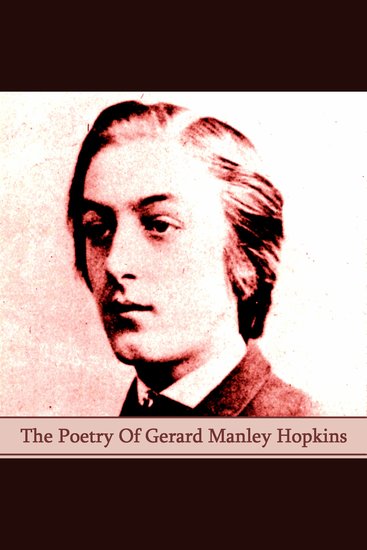
    Gerard Manley Hopkins was born in Stratford, then part of Essex on 28th July, 1844, to deeply religious parents?the first of nine children. 
    The family moved to Hampstead in 1852, near to where John Keats had lived thirty years before.  At age ten the young Gerard was sent to school in nearby Highgate and afterwards to Balliol College, Oxford. 
    Hopkins was unusually shy and reserved and prone to bizarre ideas. He once argued that most people drank more liquids than they really needed and bet that he could go without drinking for a week. He persisted until his tongue was black and he collapsed.  
    In January 1866 Hopkins composed his most ascetic poem, The Habit of Perfection but a few days later he included poetry in the list of things to be given up for Lent. In July he decided to become a Catholic and by May 1868 Hopkins firmly "resolved to be religious." Less than a week later, he made a bonfire of his poems and ceased to write for almost seven years.  
    In 1874 Hopkins returned to the Society of Jesus at Manresa House, Roehampton to teach classics. While he was studying in the Jesuit house of theological studies in North Wales, he was asked to write a poem to commemorate the foundering of a German ship in a storm. So in 1875 he was moved to take up poetry once more and write a lengthy poem, The Wreck of the Deutschland, inspired by the Deutschland maritime disaster in which 157 people died, including five nuns.  The poem was accepted but not printed by a Jesuit publication. This rejection fed his ambivalence about his poetry. Most of his poetry remained unpublished until after his death. 
    Hopkins chose the austere and restrictive life of a Jesuit and was at times gloomy. The brilliant student who had left Oxford with a first-class honours degree failed his final theology exam and although ordained in 1877, Hopkins would not progress in the order. That same year he wrote God’s Grandeur, and sonnets including The Starlight Night and finished The Windhover. 
    In 1884 he became professor of Greek and Latin at University College Dublin. His English roots, his disagreement with current Irish politics, as well as his own small stature (5'2"), shy nature and personal foibles meant that he was not an effective teacher. This and his isolation in Ireland deepened his gloom.  
    The final years of his life continued to find him in a depressed state and to restrict his poetic inspiration. His extremely heavy work load coupled with the dislike of living in Dublin, away from England and friends meant his health further deteriorated, even his eyesight began to fail. As a devout Jesuit, he found himself in an artistic dilemma. To subdue any egotism which would violate the humility required by his religious position, he decided never to publish his poems.  
    After suffering several bouts of diarrhoea, Gerard Manley Hopkins died of typhoid fever on 8th June, 1889 at the early age of 44. On his death bed, his last words were, "I am so happy, I am so happy. I loved my life." 
     This volume comes to you from Portable Poetry, a specialized imprint from Deadtree Publishing.  Our range is large and growing and covers single poets, themes, and many compilations.
    Voir livre
  • Top 10 Poets The - The War Poets - Five poems each from some of the best war poets ever - cover

    Top 10 Poets The - The War Poets...

    Wilfred Owen

    • 0
    • 0
    • 0
    The language of Poetry is an art that most of us attempt at some point in our lives.  Although its commonplace exposure has been somewhat marginalised in today’s often fast-paced lives we all recognise good verse that can empathise with our thoughts or open us up to experience new things in new ways, to better understand and to enjoy the many strands of our lives. 
     
    But finding a starting point can be overwhelming, even off-putting, so in this series we offer up our Top 10 classic poets, who brim with talent and verse, on a range of subjects and themes that we can all enjoy. 
     
    War may be called diplomacy by other means but for the youth of a nation, pressed into service for that nation, its effects are horror, terror, injury, trauma and the likelihood of death.  Within the words of these 10 poets, dreams, ambition and reality collide into some very vivid and moving words. 
    1 - The Top 10 Poets - The War Poets - An Introduction 
    2 - Soldier's Dream by Wilfred Owen 
    3 - Anthem For Doomed Youth by Wilfred Owen 
    4 - Futility by Wilfred Owen 
    5 - From My Diary July 1914 by Wilfred Owen 
    6 - Sonnet - On Seeing A Piece of Our Heavy Artillery Brought into Action by Wilfred Owen 
    7 - This Is No Case of Petty Right or Wrong by Edward Thomas 
    8 - These Things That Poets Said by Edward Thomas 
    9 - The Trumpet by Edward Thomas 
    10 - Cock Crow by Edward Thomas 
    11 - Adlestrop by Edward Thomas 
    12 - Libido by Rupert Brooke 
    13 - Dead Men's Love by Rupert Brooke 
    14 - Desertion by Rupert Brooke 
    15 - The Funeral of Youth. Threnody by Rupert Brooke 
    16 - Soldier by Rupert Brooke 
    17 - Killed in Action by Isaac Rosenberg 
    18 - August 1914 by Isaac Rosenberg 
    19 - Spring 1916 by Isaac Rosenberg 
    20 - Isolation A Fragment by Isaac Rosenberg 
    21 - Break of Day in the Trenches by Isaac Rosenberg 
    22 - The Lost Ones by Francis Ledwidge 
    23 - A Soldier's Grave by Francis Ledwidge 
    24 - Lament for the Poets, 1916 by Francis Ledwidge 
    25 - Growing Old by Francis Ledwidge 
    26 - The Call to Ireland by Francis Ledwidge 
    27 - Blighty by Ivor Gurney 
    28 - Sonnets 1917 - V - England the Mother by Ivor Gurney 
    29 - On Somme by Ivor Gurney 
    30 - Strange Hells by Ivor Gurney 
    31 - In Memoriam (Easter 1915) by Ivor Gurney 
    32 - The Dying Patriot by James Elroy Flecker 
    33 - No Coward's Song by James Elroy Flecker 
    34 - Pillage by James Elroy Flecker 
    35 - Destroyer of Ships, Men, Cities by James Elroy Flecker 
    36 - Epithalamion by James Elroy Flecker 
    37 - The English Graves by Laurence Binyon 
    38 - The Distant Guns by Laurence Binyon 
    39 - For the Fallen by Laurence Binyon 
    40 - England's Poet by Laurence Binyon 
    41 - Ypres by Laurence Binyon 
    42 - A Call to Action by Charles Sorley 
    43 - A Letter From the Trenches to An Old School Friend by Charles Sorley 
    44 - Such Such Is Death by Charles Sorley 
    45 - German Rain by Charles Sorley 
    46 - To Germany by Charles Sorley 
    47 - Prayer Before Battle by Alfred Lichtenstein 
    48 - The Battle at Saarburg by Alfred Lichtenstein 
    49 - Monday in the Courtyard of the Barracks by Alfred Lichtenstein 
    50 - Soldiers' Songs by Alfred Lichtenstein 
    51 - The End by Alfred Lichtenstein
    Voir livre
  • Aspects Of Love - cover

    Aspects Of Love

    William Shakespeare

    • 0
    • 0
    • 0
    Aspects Of Love is an anthology of poetic explorations on the theme of erotic love - though one of the "poets" represented here is better known, even than as a dramatist, as the philosopher, Plato. His Symposium heads off this set of erotic explorations. In The Symposium's philosophic play, he depicts a scene of men cosing together over dinner, each describing what he finds in his experience of love. I have followed this pattern in the choice of works for this anthology - in a similar manner, each of these works deals in a radically different way with the discovery of love. Whether philandering or married, heterosexual, lesbian or gay, under cover of friendship or as flagrant delight, from Plato through Donne, Whitman, Shakespeare or Sappho. we will not cease from exploration till we reach at last, as The Symposium does, a vision of the union of love as a discovery of the Divine. Surely there must be something here for everyone.
    Voir livre
  • The Sacred Nine Wisdom Of The Ancients - cover

    The Sacred Nine Wisdom Of The...

    Justin Wesenberg

    • 0
    • 0
    • 0
    The Sacred Nine is a channeled poetry book about unlocking the ancient wisdom that lies within. 
    This poetry book is for soul seekers who are ready to unravel the mystery, and discover who they are. 
    Unlock the wisdom 
    Of the Sacred Nine 
    And come to find 
    Your light divine 
    Radiant and impenetrable 
    Holy and pure 
    Discovering this 
    Will make you strong and sure 
    This wisdom has been shared 
    For countless generations 
    Here to bring peace 
    And healing to our nations 
    So that we can live 
    Aligned and true 
    Let love come forth 
    In all that you do 
    Now is the time 
    To create your reality 
    As you come to exist 
    In your full totality 
    This channeled poetry book was inspired by the Sacred Nine, and their divine wisdom and guidance. 
    If you’re stepping into the divine mystery, ready to discover more of who you are, allow The Sacred Nine Wisdom Of The Ancients to guide you back to yourself!
    Voir livre
  • When the Sky Fell - Challenging Paradigms of Our Ancient Past and Cosmic Ancestry (Cliff's Notes) - cover

    When the Sky Fell - Challenging...

    Clifford L Falen Jr

    • 0
    • 0
    • 0
    This audiobook is narrated by an AI Voice.   
    Dive into a thought-provoking exploration that challenges conventional understanding, inspired by decades of dedicated study in biblical history, ancient texts, and fringe science. This book, part of the "Cliff's Notes" series, distills complex ideas from groundbreaking works like Immanuel Velikovsky's Ages in Chaos, Zecharia Sitchin’s Earth Chronicles, and the Electric Universe theory into an accessible narrative. It encourages open-mindedness, urging listeners to question assumptions, seek deeper truths, and expand their understanding of history and celestial mechanics. Discover alternative perspectives that aim to enrich, rather than invalidate, existing beliefs, blending timelines and offering fresh insights into ancient narratives.
    Voir livre
  • Frieze - cover

    Frieze

    Olga Dermott-Bond

    • 0
    • 0
    • 0
    Frieze by Olga Dermott-Bond is an astonishing and spellbinding debut poetry collection. Goddesses, saints, dead girls, creatures, mothers, and muses all gather in this collection to confide their secret histories and desires. Voices are recovered from canvas, from behind museum glass, from the pages of literature and the tales of Irish folklore, to explore what can be recaptured and what remains still out of reach.
    'In these tender poems, Olga Dermott-Bond conjures a gallery in which we enter every painting, a museum where we slip inside glass cases and come out changed.' - Miriam Nash
    From a bold voice in women's poetry. Frieze is art obsessed and darkly magical, with a touch of gothic. Akin to poets like Victoria Kennefick, Helen Ivory and Pascale Petit.
    Voir livre