Begleiten Sie uns auf eine literarische Weltreise!
Buch zum Bücherregal hinzufügen
Grey
Einen neuen Kommentar schreiben Default profile 50px
Grey
Jetzt das ganze Buch im Abo oder die ersten Seiten gratis lesen!
All characters reduced
Dear Leader - cover

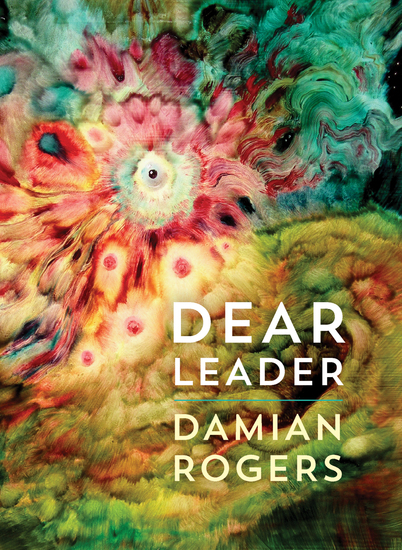
Dear Leader

Damian Rogers

Verlag: Coach House Books

  • 0
  • 0
  • 0

Beschreibung

I'm ill-equipped   for this. I sit     by a fake fireplace
   
that frames a real flame.   I've been crossed     by two crows today.
   
'Multi-vectored, Rogers's poems hum with life and tension, their speaker poised as mother, seer, reporter and daughter. They speak of loss and cold realities (misplaced charms of luck, a tour of an assisted-living facility, coins thrown into Niagara Falls). They also interweave dreams and visions: “O Lion, I am / an old handmaiden; I will not lay the pretty baby in the lap / of the imposter.�* Simple but evocative, at once strange and plain, Rogers's poems of address ricochet off the familiar “Dear Reader�* or Dickinson's “Dear Master�* ... Rogers's poems provide instructions for what to leave, what to take and what to fight. They act as selvage between the vast mother-ocean — the mem of memory — and the fabric we make of the uncertain in-between.’
   
— Hoa Nguyen, The Boston Review
   
‘How can we live with the kind of pain that worsens each day? Dear Leader explains through bold endurance, enumerated blessings and the artistic imagination. By pasting stark truths over, or under, images of strange, compelling beauty, Rogers creates a collage, a simulation of the human heart underassault, bleeding but unbroken. Part Orpheus, part pop-heroine who can “paint the daytime black,�* all, an original act of aesthetic violence and pure, dauntless, love.’
   
— Lynn Crosbie
   
’In Dear Leader, Damian Rogers re-invents the same-old poetic lyric to offers us one-of-a-kind insights on childbirth and party bars, rolling blackouts and old rock standards. Here, what looks at first like familiar language always reveals itself to be a rare mineral. And that’s the magic: this is a poetry that refuses to be staged or to succumb to cliché or mannerism, insisting on celebration and condemnation, caution and cosmic vibrations. “Say you’re a poet,�* Rogers advises us, tongue-in-cheek, “Maybe you mean / Hi, I have a lot of feelings.�* Striking that balance between one-liners and mourning is no small feat.‘
   
—Trillium Award Jury Citation
   
Praise for Paper Radio:
   
‘Paper Radio jumped out at me and I can’t say why, but that’s what you want poetry to do, and I never want to say why. Because it’s real and talking to me. Because it’s bloody and horrifying beauty. It’s the Clash and Buckminster Fuller, Auden and Bowie.’
   
— Bob Holman
Verfügbar seit: 14.04.2015.
Drucklänge: 88 Seiten.

Weitere Bücher, die Sie mögen werden

  • The Apothecary of Flight - cover

    The Apothecary of Flight

    Jane Burn

    • 0
    • 0
    • 0
    The Apothecary of Flight by Jane Burn is a heady flight into the art of poetry itself: its vital importance as a tool for expression; for understanding and translating the self; for articulating the sheer force and joy of poetry and the way, for a person with autism, it can hold, identify and celebrate both the smallest and weightiest of life's experiences and concepts.
    These unfettered and exquisite poems pulse with the details of both the wild and tame, the sacred and the humane – observing nature and animals with an artist's eye, capturing the ways in which place and time can hold the experiences of the body, memory and identity. This ongoing dialogue with poetry itself sets a visionary path towards discovery – the page as a place to root oneself, a place of deep creative freedom, self-permission, belonging and defiance. Ultimately, the form, presence and physicality of Burn's extraordinary poems move us with compassion towards the happiest solitude of words, and of love.
    Zum Buch
  • Lifescapes - A Biographer's Search for the Soul - cover

    Lifescapes - A Biographer's...

    Nelson Thomas

    • 0
    • 0
    • 0
    "A lyrical, radiant memoir." —Kirkus Reviews, Starred Review 
    Ann Wroe, obituaries editor for The Economist, reflects on the art and impossibility of capturing life on the page. Through her experiences and through people she has known, studied, or merely glimpsed in windows, she movingly explores what makes a life and how that life lingers after in this breathtaking combination of poetry, memoir, and observation. 
    'What is life?' asked the poet Shelley, and he could not come up with an answer. Scientists, too, for all their understanding of how life manifests, thrives and evolves, have still not answered that fundamental question. Yet biographers and obituarists continue to corral lives in a few columns, or a few hundred pages, aware all the time how fleeting and elusive their subject is. 
    In this dazzlingly original blend of poetry, biography, observation, and memoir, Wroe explores the experience of trying to capture the essence of a person. Animated by her rare imagination, eye for the telling detail, and the wit, beauty and clarity of her writing, Lifescapes is a luminous, deeply personal answer to Shelley's question.
    Zum Buch
  • The Luck - cover

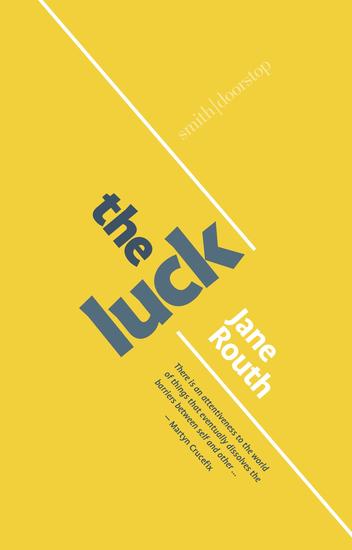
    The Luck

    Jane Routh

    • 0
    • 0
    • 0
    A new collection from Jane Routh, author of Circumnavigation, shortlisted for the Forward Prize for Best First Collection, and Teach Yourself Mapmaking, a Poetry Book Society Recommendation.
    After lockdowns have swept calendars clear, leaf-fall, early sunrise and gales are Jane Routh's measures of time, as she goes about her tasks in the hill pasture and woodlands where she has the luck to live.
    With sharp, lyrical description and down-to earth understanding, her poems consider the flora and fauna around her, formative moments and lifespans – as well as the dead who won't be forgotten. Her elegant and informed writing conveys a sense of belonging in a particular place and the care for its future, carrying a universal resonance.
    Zum Buch
  • Dreaming and Drowning - cover

    Dreaming and Drowning

    Kwame Owusu

    • 0
    • 0
    • 0
    'The supernatural is possible and the impossible is natural and life teeters on the edge of the unreal'
    Malachi's been looking forward to a fresh start at uni for months. He's settling in, he's got a stack of books to read and he's met someone new – Kojo, a musician with a megawatt smile, who's basically perfect.
    But something doesn't feel right. He keeps having the same nightmare – sinking, crushed by the weight of the ocean – and it's getting worse… A beast grows in the water, hungry, relentless, hunting him but always just out of sight. As the boundaries between nightmare and reality fracture, Malachi must fight harder than ever to stay afloat.
    Kwame Owusu's play Dreaming and Drowning is an intimate and visceral deep-dive into the boundless mind of a young Black queer man wrestling with anxiety.
    It won the Mustapha Matura Award, was shortlisted for the Alfred Fagon Award, and was one of the winning plays in the RSC's 37 Plays competition. It was first performed at the Bush Theatre, London, in November 2023, directed by the playwright, performed by Tienne Simon, and produced by WoLab.
    Zum Buch
  • WaitWho Got Goosed™ Vol 2 - cover

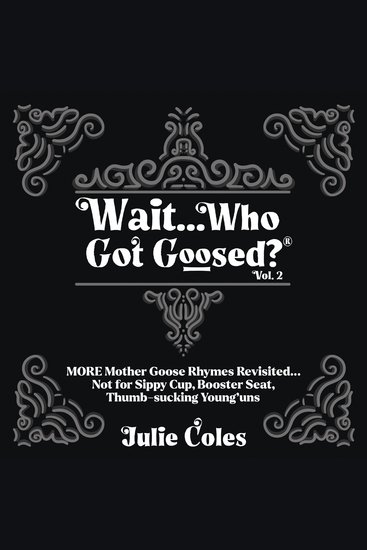
    WaitWho Got Goosed™ Vol 2

    Julie Coles

    • 0
    • 0
    • 0
    "Wait...Who Got Goosed?™ Vol 2: 
    More Mother Goose Rhymes Revisited...Not for Sippy cup-Booster seat-Thumb sucking young'uns  
    Whether encountering Audacious Women, people who make Regrettable Decisions, or discovering how some folks handle Truly Inexplicable Moments, Wait...Who Got Goosed?TM Vol. 2 poems for mature readers will illicit some gasps, a lot of laughs, or maybe a few shakes of the head. Human blunders viewed through a lyrical, humorous lens can sometimes lighten our perspectives about some pretty awkward moments. What Exasperation Looks Like describes experiences that would benefit from lessons learned in the related Useful Ways to Self-Help. Andwho among us has known Some Driven to Inspire, while Others...Not So Much? Readers will meet a range of relatable characters, some of whom encounter consequences of their own making, while others make accidental discoveries that reveal opportunities for self-reflection and growth. This is an invitation for readers to embark on a joyful and enlightening journey! 
    Wait...Who Got Goosed?TM Vol. 2: A modern-day tribute to Mother Goose Rhymes; Tales capturing the imaginations of mature readers, is released under Pivot In New Directions Publishing®.
    Zum Buch
  • Testament to Beauty - A former Poet Laureate demonstrates his poetic talents in this tender and beautiful verse - cover

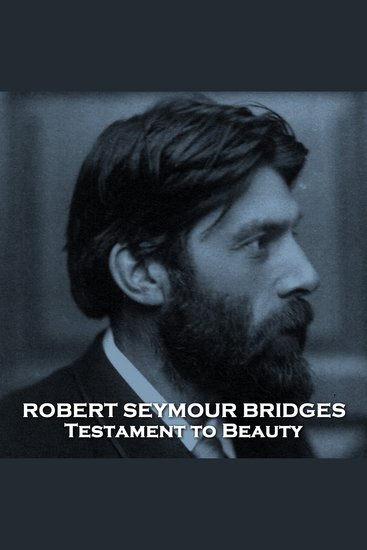
    Testament to Beauty - A former...

    Robert Seymour Bridges

    • 0
    • 0
    • 0
    Robert Seymour Bridges, OM was born on 23rd October 1844 at Walmer in Kent where he spent his early childhood in a house overlooking the anchoring ground of the British fleet.  
    His father died aged only 47 in 1853. A year later his mother remarried and the family relocated to Rochdale, where his stepfather was the vicar.  
    In 1854 Bridges was sent to Eton College and attended until 1863.  After Eton he went to Corpus Christi College at Oxford. There he became good friends with Gerard Manley Hopkins and would later compile an edition of his poems that is now considered a major contribution to English literature. 
    He graduated from Oxford, in 1867, with a second-class degree in literae humaniores.  Initially he planned to join the Church of England and travelled to the Middle East to broaden his religious horizons.  However, he soon decided that life as a physician would be a better path and, after 8 months studying German (that being the language of many scientific papers at the time) he began his study of medicine at St. Bartholomew's Hospital in 1869.  His long-term ambition was that by the age of forty he could retire from medicine to devote himself to writing. 
    Unfortunately Bridges failed his final medical examinations in 1873 and, as unable to immediately retake the papers, spent six months in Italy learning Italian as well as immersing himself in its art. In July 1874 he went to Dublin to continue his medical studies. Re-examined in December he passed and became a house physician at St Bartholomew's Hospital. It was whilst here that he engaged in a series of highly critical remarks about the Victorian medical establishment. One such was his claim that whilst working as a young doctor he saw a staggering 30,940 patients in one year. 
    A bout of severe pneumonia and lung disease forced his retirement from the medical profession in 1882 and so, slightly ahead of schedule, he began his literary career in earnest.  He already been writing for several years and had published his first poetry collection in 1873.  
    After his illness and a trip to Italy, Bridges moved, with his mother, to Yattendon in Berkshire.  It was during this time, from 1882 to 1904, that Bridges wrote most of his best-known lyrics as well as eight plays and two masques, all in verse.  
    It was also here, in 1884, that he married Monica Waterhouse. They would go on to have three children and spend the rest of their lives in rural seclusion, in an idyllic marriage, first at Yattendon, then at Boars Hill, Oxford. 
    Bridges made an important contribution to hymnody with the publication in 1899 of his Yattendon Hymnal. This collection of hymns became a bridge between the Victorian hymnody of the late 19th century and the modern hymnody of the early 20th century. He was also a chorister at Yattendon church for 18 years. 
    In 1902 Monica and his daughter Margaret became seriously ill with tuberculosis, and a move from Yattendon to a healthier climate was in order. After several temporary homes they moved abroad to spend a year in Switzerland before returning to settle again in England at Chilswell House, which Bridges had designed, and built on Boar's Hill overlooking Oxford University.   
    His greatest achievement though was still some years ahead of him.  The office of Poet Laureate was held by Alfred Austin but with his death it was offered first to Rudyard Kipling, who refused it, and then to Bridges. He was appointed Poet Laureate in 1913 by George V, the only medical graduate to have ever held the office. Bridges, at this time, was neither highly regarded nor well known but a safe pair of hands in a World rapidly being overshadowed by the storms about to erupt over Europe and the First World War. 
    The events of this War, including the wounding of his son, Edward, had a sobering effect on Bridges' poetry. His work became fiercely patriotic. In 1915 edited a volume of prose and poetry, The Spirit of Man, intended to appeal to readers living in war time
    Zum Buch