Begleiten Sie uns auf eine literarische Weltreise!
Buch zum Bücherregal hinzufügen
Grey
Einen neuen Kommentar schreiben Default profile 50px
Grey
Jetzt das ganze Buch im Abo oder die ersten Seiten gratis lesen!
All characters reduced
Walkable Streets - cover

Walkable Streets

Benjamin Ramirez

Übersetzer A AI

Verlag: Publifye

  • 0
  • 0
  • 0

Beschreibung

Walkable Streets explores the vital role of pedestrian-friendly infrastructure in creating thriving urban communities. It examines how prioritizing walkability can lead to economic revitalization, enhanced social interaction, and significant environmental benefits. The book highlights that investing in pedestrian infrastructure can boost property values and foster a stronger sense of community. Moreover, walkable streets encourage physical activity, reduce social isolation, and promote inclusivity for all residents, regardless of age or ability.

 
The book approaches the topic by first introducing the core concepts of walkability before delving into the economic, social, and environmental advantages. Drawing upon urban planning studies, economic analyses, and sociological research, Walkable Streets presents a compelling case for re-evaluating urban design priorities. It progresses by offering practical strategies and policy recommendations for creating more walkable streets, acknowledging the challenges and opportunities in implementation, while emphasizing the long-term benefits of pedestrian-focused design.
Verfügbar seit: 21.02.2025.
Drucklänge: 85 Seiten.
Weitere Bücher, die Sie mögen werden

  • Dagestan: The History and Legacy of Russia’s Most Ethnically Diverse Republic - cover

    Dagestan: The History and Legacy...

    Charles River Editors

    • 0
    • 0
    • 0
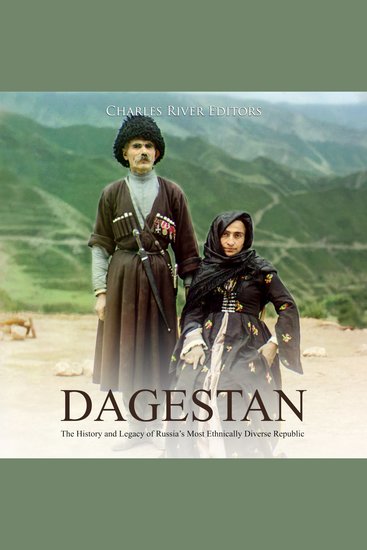
    Wedged in the North Caucasus mountain range and bordering the Caspian Sea, Dagestan is a true meeting point of cultures, religions and geopolitical rivalries. A crossroad between east and west, Dagestan has been vitally important at different times for various powers in Asia, Europe, and the Middle East, and even between different religious and ethnic groups. In spite of all that, and in large measure because of it, Dagestan’s society is a composite of these rivalries over the centuries.  
    	Today, Dagestan is part of the Russian Federation, but its history happens to be both indicative and idiosyncratic of the region’s fascinating and complex development. Dagestan shares many similarities with its smaller neighbor to the west, Chechnya, without receiving as much attention from outside historians and journalists. This is despite the fact Dagestan is home to around three million inhabitants with a range of languages, ethnicities and religions. Islam is the dominant religion at over 80% of the population, with the majority being Sunni Muslims, but the majority ethnic group, the Ayars, only make up about 30% of the population. Dagestan’s capital city is little-known Makhachkala, and the rest of the country contains spectacular mountain ranges of over 12,000 feet in height, as well as lakes and major rivers like the Terek, Sulak and Samur.  
    	This geography has made Dagestan particularly difficult for outsiders to dominate, but the relationships with outside powers nevertheless provided the tensions that runs through the history of Dagestan. Having come into contact with the Persians, Ottomans, Russians, and even Western European states, Dagestan has both been a melting point and at times almost hermetically sealed to intruders for centuries, making it one of the world’s true fault lines in terms of religion, empire, and geography. As a result, Dagestan has never truly been conquered despite its modern position within Russia.
    Zum Buch
  • Does Self-Knowledge Come Through Searching? - Ojai 1949 - Public Talk 1 - cover

    Does Self-Knowledge Come Through...

    Jiddu Krishnamurti

    • 0
    • 0
    • 0
    1. Does self-knowledge come through searching? - 16 July 1949 
    • What is it that most of us are seeking? 
    • Does clarity come through searching and trying to find out what others say? 
    • Can incessant search and longing give you the extraordinary sense of reality or 
    creative being that comes when you really understand yourself? 
    • Without knowing your background and the substance of your thought, where 
    it comes from, surely your search is utterly futile and your action has no 
    meaning. 
    • The responsibility for any action depends on ourselves, not on others. 
    • Q: Do I have to be at any special level of consciousness to understand you? 
    • Q: The movement of life is experienced in relationship to people and to ideas.
    Zum Buch
  • The Last Jews of Eastern Europe - cover

    The Last Jews of Eastern Europe

    Yale Strom

    • 0
    • 0
    • 0
    In striking photography and informative text, this volume both celebrates and mourns Eastern European Jewish life of the early- to mid-twentieth century.From Odessa to Budapest, Warsaw, Prague, and Sarajevo, the Jews of Eastern Europe established thriving, traditional communities . And while there are still proud Jews who keep the Kehilla robust in the region, they are a shadow of their former glory. In The Last Jews of Eastern Europe, Yale Strom and photographer Brian Blue record a way of life that largely disappeared through the torment, violence, and upheaval of the twentieth century. Through the USSR, Poland, Czechoslovakia, Hungary, Romania, Yugoslavia, and Bulgaria, this volume records the three great blows to Eastern European Jewry: the historical persecution of the Jews who suffered the envy of their neighbors; the slaughter of millions during World War II; and the loss of those who accepted the aliyah to Israel. It also records how the Jews of Eastern Europe laugh, weep, and sing.
    Zum Buch
  • How to Interpret the Constitution - cover

    How to Interpret the Constitution

    Cass R. Sunstein

    • 0
    • 0
    • 0
    From New York Times bestselling author Cass Sunstein, a timely and powerful argument for rethinking how the U.S. Constitution is interpreted 
     
    The U.S. Supreme Court has eliminated the right to abortion and is revisiting other fundamental questions today—about voting rights, affirmative action, gun laws, and much more. Once-arcane theories of constitutional interpretation are profoundly affecting the lives of all Americans.  
    In this brief and urgent book, Harvard Law School professor Cass Sunstein provides a lively introduction to competing approaches to interpreting the Constitution—and argues that the only way to choose one is to ask whether it would change American life for the better or worse. If a  
    method of interpretation would eliminate the right of privacy, allow racial segregation, or obliterate free speech, it would be unacceptable for that reason. 
     
    But some Supreme Court justices are committed to “originalism,” arguing that the meaning of the Constitution is settled by how it was publicly understood when it was ratified.  
     
    Originalists insist that their approach is dictated by the Constitution. That, Sunstein argues, is a big mistake. The Constitution doesn’t contain instructions for its own interpretation.  
     
    Any approach to constitutional interpretation needs to be defended in terms of its broad effects—what it does to our rights and our institutions. It must respect those rights and institutions—and safeguard the conditions for democracy itself. 
     
    Passionate and compelling, How to Interpret the Constitution is essential reading for anyone who is concerned about how the Supreme Court is changing the rights and lives of Americans today.
    Zum Buch
  • Operation Speedy Express: The History and Legacy of One of the Vietnam War’s Most Controversial Campaigns - cover

    Operation Speedy Express: The...

    Editors Charles River

    • 0
    • 0
    • 0
    Before the Vietnam War, most Americans would have been hard pressed to locate Vietnam on a map. South Vietnamese President Diệm’s regime was extremely unpopular, and war broke out between Communist North Vietnam and South Vietnam around the end of the 1950s. Kennedy’s administration tried to prop up the South Vietnamese with training and assistance, but the South Vietnamese military was feeble. A month before his death, Kennedy signed a presidential directive withdrawing 1,000 American personnel, but shortly after Kennedy’s assassination, new President Lyndon B. Johnson reversed course, instead opting to expand American assistance to South Vietnam. 
    	Operation Speedy Express was a highly controversial military operation carried out by the U.S. Army supported by the Army of South Vietnam (ARVN) as well as regional and popular forces during the Vietnam War. It lasted from December 1968 until May 1969 and took place in the Mekong Delta's Kien Hoa and Vinh Binh provinces. The operation was a part of U.S. Army “pacification” efforts toward the Viet Cong, as American forces sought to interdict Viet Cong supply and communication lines from Cambodia and deny them the use of operational bases. Formally, the operation involved 8,000 U.S. soldiers and resulted in 242 American lives lost compared to 10,899 Viet Cong and People’s Army of Vietnam (PAVN) killed, according to Department of Defense records. Operation Speedy Express was considered successful by U.S. standards, as determined by the primary metric of body counts. However, while the number of Vietnamese dead, including civilians, is unknown, it is assumed to surpass 5,000, and the high number of casualties was attributed to the indiscriminate use of firepower, which included air and artillery strikes in densely populated areas.
    Zum Buch
  • Battle of Woody Point The: The History of the Confrontation that Led to the Deaths of the First American Settlers in the Pacific Northwest - cover

    Battle of Woody Point The: The...

    Editors Charles River

    • 0
    • 0
    • 0
    The fur trade had its tensions, but for many years, traders and natives worked out their own systems, times, and traditions, allowing many different groups to interact and even compete without issues that led to war. Though native groups sometimes found themselves in conflicts based on long-standing rivalries or relations with the Europeans, most of the fur traders, the trappers, the Indians, and Hudson’s Bay Company officials lived peaceably. The great amount of distance from one another in this land of millions of miles likely helped to alleviate tensions. When a new vision for the Hudson’s Bay Company came about, one where settlers, not itinerants, would be responsible for the colony, the rules changed. 
    In 1810, through the Pacific Fur Company, John Jacob Astor began to direct his energies at the still mostly unexploited regions accessible from the mouth of the Columbia River. This was, of course, in open defiance of British claims, but that was very much in keeping with Astor’s style. Astor put up the money, and a group of American and Canadian fur traders would manage affairs on the ground, traveling to the region to erect Fort Astoria and a string of trading posts in the region that could deal with the natives, trade with Asia and the East Coast, and amass untold riches. Or at least that was the plan. 
    Fort Astoria wouldn’t last a decade, and its turbulent history was so full of unfortunate twists and turns, a mixture of bad luck and incompetence, that the story still fascinates people today. And among all the chapters of that short history, none are as interesting as the fateful Battle of Woody Point, a misnomer for a confrontation that was brought about by misunderstandings, arrogance, and misplaced pride. The episode, despite its brevity and its occurrence in the furthest reaches of North America at the time, would color relations between whites and natives in the Pacific Northwest for decades.
    Zum Buch