Rejoignez-nous pour un voyage dans le monde des livres!
Ajouter ce livre à l'électronique
Grey
Ecrivez un nouveau commentaire Default profile 50px
Grey
Abonnez-vous pour lire le livre complet ou lisez les premières pages gratuitement!
All characters reduced
East communicates with West 1 - cover

East communicates with West 1

박 Nomadsirius

Maison d'édition: YH Partners

  • 0
  • 0
  • 0

Synopsis

East communicates with West 1(In English, 2023).Prologue.Dutch historian Johan Huizinga (1872-1945) released \"The Autumn of the Middle Ages\" in 1919, offering profound insights into the medieval era and shedding light on its dark times. With a deep understanding of language, Huizinga becomes captivated by play and devotes himself to the study of games within the course of history. The medieval period is a beautiful sunset that occurs as darkness descends, symbolized by sunsets and moonlight. Culture emerges from play as a bud of the Renaissance. The ideal life rooted in the era of the red dusk consists of three paths. Firstly, it involves escaping from the mundane world, denying worldly pleasures absolutely. Secondly, it involves striving to change the world, ardently desiring a transformed society. Thirdly, it involves filling life with fantasy, living life as a game. The paths of escape and struggle are taken by a tiny minority, while fantasy is a journey that many can embark upon. The quality of fantasy is determined by accumulated knowledge and intellectual abilities. When the realm of fantasy is beneficial and enjoyable, it truly becomes genuine play. By doing something beneficial for oneself and others, one gains wealth and prosperity.
Disponible depuis: 21/07/2023.
Longueur d'impression: 82 pages.

D'autres livres qui pourraient vous intéresser

  • Stillborn - Grieving and Remembering the Little Ones We Lost - cover

    Stillborn - Grieving and...

    Stacey Wilmore

    • 0
    • 0
    • 0
    Losing a child before they take their first breath is an indescribable pain—one that lingers in the heart, reshaping the world as we know it. No parent expects to say goodbye before they say hello. Yet, for those who have experienced stillbirth, this heartbreaking reality becomes a defining moment, one that forever alters their journey through life. The silence of a delivery room, the emptiness of arms that were meant to cradle, and the dreams that vanish in an instant—these are the wounds that so many carry, often in solitude.  
      
    Grief after stillbirth is unique. It is a grief that comes with memories that were never made, with birthdays that will never be celebrated, and with a love so strong yet without a place to go. It is a pain that is often misunderstood, leaving parents feeling isolated in their sorrow. This book is a space for that grief—a place where your pain is acknowledged, your baby is remembered, and your heart is given permission to heal in its own time.  
      
    In the aftermath of loss, many parents struggle to find words for their emotions. The world around them often moves on too quickly, expecting them to heal at a pace that feels impossible. Friends and family may not always understand, unintentionally offering words that hurt more than they heal. Some parents are left feeling as though their baby’s existence is slipping away, as if their grief is something to be hidden or minimized. But your love for your child does not fade, and neither should their memory. 
    Voir livre
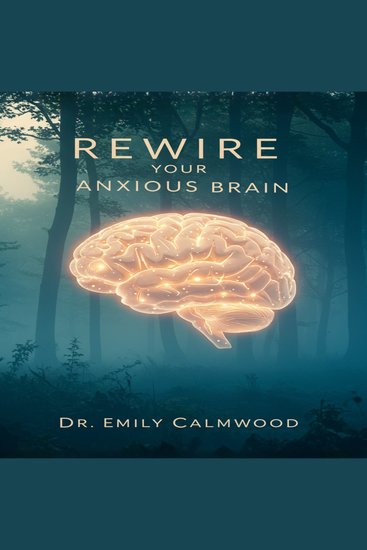
  • Rewire Your Anxious Brain - Proven Techniques to Calm Your Mind Overcome Worry and Find Lasting Peace - cover

    Rewire Your Anxious Brain -...

    Dr. Emily Calmwood

    • 0
    • 0
    • 0
    Is modern anxiety hijacking your life? Reclaim your calm with proven, science-backed techniques! 
    In today's hyper-connected world, anxiety feels relentless. Rewire Your Anxious Brain by Dr. Emily Calmwood, a researcher and fellow anxiety sufferer, offers a practical, evidence-based path to lasting peace. 
    This book dives deep into the science of anxiety, demystifying its roots and equipping you with actionable strategies from Cognitive Behavioral Therapy (CBT) and mindfulness. Learn to identify your anxiety signals, challenge negative thoughts, and master relaxation techniques to calm your mind and body. Discover how to build resilience and take control, not just survive, but thrive. 
    Perfect for anyone overwhelmed by worry and seeking real, lasting solutions, this book is your guide to rewiring your brain for a calmer, more centered life. 
    Start your journey to a peaceful mind – get your copy of Rewire Your Anxious Brain today! 
     
    Voir livre
  • Worthy of Freedom - Indenture and Free Labor in the Era of Emancipation - cover

    Worthy of Freedom - Indenture...

    Jonathan Connolly

    • 0
    • 0
    • 0
    A study of Indian indentured labor in Mauritius, British Guiana, and Trinidad that explores the history of indenture’s normalization. In this book, historian Jonathan Connolly traces the normalization of indenture from its controversial beginnings to its widespread adoption across the British Empire during the nineteenth century. Initially viewed as a covert revival of slavery, indenture caused a scandal in Britain and India. But over time, economic conflict in the colonies altered public perceptions of indenture, now increasingly viewed as a legitimate form of free labor and a means of preserving the promise of abolition. Connolly explains how the large-scale, state-sponsored migration of Indian subjects to work on sugar plantations across Mauritius, British Guiana, and Trinidad transformed both the notion of post-slavery free labor and the political economy of emancipation. Excavating legal and public debates and tracing practical applications of the law, Connolly carefully reconstructs how the categories of free and unfree labor were made and remade to suit the interests of capital and empire, showing that emancipation was not simply a triumphal event but, rather, a deeply contested process. In so doing, he advances an original interpretation of how indenture changed the meaning of “freedom” in a post-abolition world.
    Voir livre
  • Phenomenology of Productive Imagination: Embodiment Language Subjectivity - cover

    Phenomenology of Productive...

    Saulius Geniusas

    • 0
    • 0
    • 0
    Although productive imagination has played a highly significant role in (post-) Kantian philosophy, there have been very few book-length studies explicitly dedicated to its analysis. 
    
    In his new book, Saulius Geniusas develops a phenomenology of productive imagination while relying on those resources that we come across in Edmund Husserl’s, Max Scheler’s, Martin Heidegger’s, Ernst Cassirer’s, Miki Kiyoshi’s, Jean-Paul Sartre’s, Maurice Merleau-Ponty’s, and Paul Ricoeur’s writings, while also engaging in present-day philosophical discussions of the imagination. Investigating the relation between imagination and embodiment, affectivity, perception, language, selfhood, and intersubjectivity, the book provides a phenomenological conception of productive imagination, which is committed to basic phenomenological principles and which is sensitive to how productive imagination has been conceptualized in the history of phenomenology. 
    
    Against such a background, Geniusas develops a new conception of productive imagination: It is a basic modality of intentionality that indirectly shapes the human experience of the world by forming the contours of action, intuition, knowledge, and understanding. It is not so much a blind and indispensable function of the soul, but an art concealed in the body, for it springs out of instincts, drives, desires, and needs. 
    
    The author demonstrates unexpected ways in which phenomenology of productive imagination enriches our understanding of embodied subjectivity.
    Voir livre
  • BULLSH!T - 50 Fibs That Made South Africa - cover

    BULLSH!T - 50 Fibs That Made...

    Jonathan Ancer

    • 0
    • 0
    • 0
    An outrageous miscellany of serious and light-hearted lies, myths, untruths, fibs and fabrications that tells the tall tale of South Africa.
    The fibs come thick and fast, like a burst sewerage pipe:
    • Why everything we've learnt about Shaka Zulu, 'Africa's Napoleon', is a pack of lies.
    • Back in the darkest of ages (the 1970s!), citizens were told that there were satanic messages if you played some of The Beatles songs backwards.
    • National icon Hansie Cronje was a paragon of virtue, and integrity … until he wasn't.
    • President Nelson Mandela told us that we, as a nation, were 'special'. Turns out we aren't.
    Whether a fabulous fib, an artful con, a doctor's spin, or simply a bald-faced lie, there's something for everyone.
    Voir livre
  • Opium Wars and Sino-Japanese Wars The: The History of the Conflicts that Ended China’s Standing as a World Power - cover

    Opium Wars and Sino-Japanese...

    Editors Charles River

    • 0
    • 0
    • 0
    The 19th century saw the rise of one of the largest, most powerful empires of the modern era. The sun never set on the British Empire, whose holdings spanned the globe, in one form or another. Its naval supremacy linked the Commonwealth of Canada with the colonies in South Africa and India, and through them trade flowed east and west. An integral but underutilized part of this vast trade network included China, a reclusive Asian kingdom closed off from the Western world that desired none of its goods. Unfortunately for China, the British had the might of an empire and economic force, not to mention modern arms, on their side. Breaking into China’s lucrative trade markets nearly destroyed the nation, severely discredited the Chinese dynasty, wreaked havoc on its people, and further propelled Britain’s empire into a dominant economic and military position. The collision of these two empires took many years and caused much bloodshed. In fact, the troubles started well before the eventual hostilities, festering as frustration mounted until finally boiling over. 
    Though both nations modernized, and China far outweighed Japan in terms of men and materiel potential, the island nation handily won its first modern war. The conflict resulted in Japan’s short-term gains in the wake of victory, and the long term disaster for both sides’ new roles in Asia, for with the end of Chinese dominance in East Asia came a new era for the region as a whole.  
    In 1937, the Empire of Japan once more went to war with China, a nation broken into petty warlord fiefdoms and wracked by civil war. The most modern Asian nation enacted a brutal campaign over the fragmented realms that made up China, committing atrocities just as horrendous as their Axis ally in Europe. Despite this, the sheer size of China, coupled with Japan’s overextension, allowed the larger, less developed nation to endure.
    Voir livre