Rejoignez-nous pour un voyage dans le monde des livres!
Ajouter ce livre à l'électronique
Grey
Ecrivez un nouveau commentaire Default profile 50px
Grey
Abonnez-vous pour lire le livre complet ou lisez les premières pages gratuitement!
All characters reduced
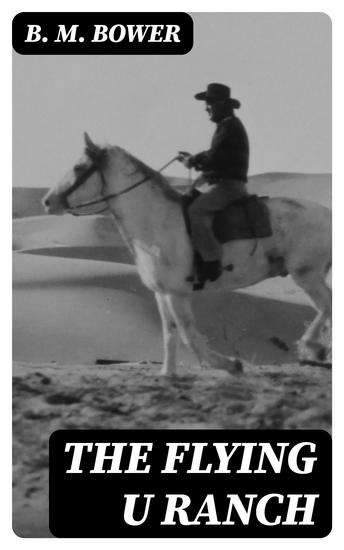
The Flying U Ranch - cover

The Flying U Ranch

B. M. Bower

Maison d'édition: DigiCat

  • 0
  • 0
  • 0

Synopsis

In "The Flying U Ranch," B. M. Bower masterfully weaves a narrative that captures the rugged and romantic essence of the American West. Set against the backdrop of a cattle ranch in Montana, the story centers on the misadventures of the Flying U gang, blending humor with poignant character studies. Bower's vivid prose and authentic dialogue vividly evoke the landscape and lifestyle of early 20th-century ranchers, while her keen eye for detail illuminates the complexities of human relationships within a pastoral setting. This novel is situated within the frontier literature of its time, which sought to immortalize the cowboy mythos while also addressing the nuanced realities of frontier life. B. M. Bower, a pioneer among female Western writers, was deeply influenced by her own experiences growing up in the West. Born in 1871 in the ranching heartland of Montana and raised among cowboys, Bower's unique perspective allowed her to challenge the gender norms of her time. Her background informed her storytelling, enabling her to create authentic, relatable characters who navigate the trials and triumphs of ranch life, all while embodying the spirit of independence and adventure. "The Flying U Ranch" is a must-read for anyone who appreciates classic Western literature, as well as those drawn to themes of camaraderie, resilience, and the allure of the untamed frontier. Bower's novel not only entertains but also enriches our understanding of a formative period in American history, making it a valuable addition to any literary collection.
Disponible depuis: 16/09/2022.
Longueur d'impression: 101 pages.

D'autres livres qui pourraient vous intéresser

  • Theory of the Perpetual Discomfort of Humanity The (Unabridged) - cover

    Theory of the Perpetual...

    H. G. Wells

    • 0
    • 0
    • 0
    Herbert George "H. G." Wells (1866 - 1946) was an English writer.
    He was prolific in many genres, including the novel, history, politics, social commentary, and textbooks and rules for war games. Wells is now best remembered for his science fiction novels and is called a "father of science fiction"
    THE THEORY OF THE PERPETUAL DISCOMFORT OF HUMANITY: He had been sitting with his feet upon the left jamb of my mantel, admiring the tips of his shoes in silence for some time.
    Voir livre
  • Journeyman - A Novel - cover

    Journeyman - A Novel

    Erskine Caldwell

    • 0
    • 1
    • 0
    The classic American novel of a philandering, murderous preacher from the national bestselling author of God’s Little Acre.    When preacher Semon Dye moves into the tiny Georgia town of Rocky Comfort, many of its citizens welcome him. After all, the only church in town is being used to store fertilizer. But sermons aren’t the first thing on the mind of the tall, magnetic, and utterly dissolute man. Other callings take priority: women, whiskey, gambling, and hiding from the law. Even as he seduces wives, cheats at cards, and provokes old feuds, Dye manages to cast a dark spell over all the people in Rocky Comfort.   Journeyman is a wicked send-up of religious fervor by an American master of dark political satire. This ebook features an illustrated biography of Erskine Caldwell including rare photos and never-before-seen documents courtesy of the Dartmouth College Library.
    Voir livre
  • The Cask of Amontillado - cover

    The Cask of Amontillado

    Edgar Allen Poe

    • 0
    • 0
    • 0
    A harrowing tale of two, supposed, friends. Nothing is as it seems, though. What will happen to the noble Fortunato.
    Voir livre
  • Chelkash by Maxim Gorky - A small time thief is caught up in a larger scheme testing his willpower and showing the dangers of greed - cover

    Chelkash by Maxim Gorky - A...

    Maxim Gorky

    • 0
    • 0
    • 0
    Alexei Maximovich Peshkov was born on 28th March 1868, in Nizhny Novgorod, Russia. 
     
    Better known as Maxim Gorky he was orphaned at 11 and ran away from home at 12.  At 19 he had already attempted suicide and thereafter travelled, by foot, across the Russian Empire for 5 years. 
     
    His first book ‘Essays & Stories’ in 1898 was a sensation and so began a long career as an author of short stories, novels and plays.  Gorky saw writing as a moral and political act that would help to change the unjust world around him.  He was an ardent early advocate of the emerging Marxist movement and publicly opposed the Tsarist regime leading several times to his arrest.  
     
    In 1904 he began his own theatre but the censor banned every play and Gorky was forced to abandon the project. 
     
    But Gorky was a financially successful author, editor, and playwright and gave monies to political parties as well as for civil rights and social reform.  The brutal shooting of workers, which set in motion the Revolution of 1905, pushed Gorky more decisively toward radical solutions.  
     
    In 1906 he went to the United States to raise funds for the Bolsheviks. Those experiences including a scandal over travelling with his lover and not his wife deepened his contempt for the ‘bourgeois soul.’ 
     
    Gorky now moved to Capri in Italy, both for health reasons and to escape the increasingly repressive times in Russia.  
     
    An amnesty for the 300th anniversary of the Romanov dynasty saw him return to Russia in 1914. His politics remained close to the Bolshevik cause.  But soon, after the 1918 revolution, his essays referred to Lenin as a tyrant for his senseless arrests and repression.  He was soon appealing to the outside world for food aid after the catastrophic crop failure. 
     
    In October 1921 Gorky returned to Italy, now in Fascist hands, and settled in Sorrento until 1932.  His health worsened with the onset of tuberculosis. 
     
    He wrote several successful books there but now decided to find an understanding with the communist regime. Stalin invited him home and his return was hailed as a major propaganda victory.  He was decorated with the Order of Lenin, and a province, a park, and various streets re-named in his honour. 
     
    But he had his faults too.  In 1933, Gorky co-edited a book on the White Sea-Baltic Canal and denied even a single prisoner died during its construction, but thousands had. As well, knowing that some Nazis were homosexual, a phrase was attributed to him that said ‘exterminate all homosexuals and fascism will vanish’.  Although he was himself was quoting another he was decidedly homophobic. 
     
    With the increase of Stalinist repression in 1935 Gorky was placed under unannounced house arrest. 
     
    Maxim Gorky died on the 18th June 1936 from pneumonia.  He was 68. 
     
    Stalin and Molotov were among those who carried Gorky's urn of ashes at his funeral.  
     
    In Gorky’s story, a thief, Chelkash, ensnares a young man into his scheme to steal silk from a ship.  When he then sells the stolen goods he is set upon by the young accomplice.  What happens then is as unexpected as it is remarkable.
    Voir livre
  • Pygmalion - cover

    Pygmalion

    George Bernard Shaw

    • 0
    • 0
    • 0
    Pygmalion is a play by George Bernard Shaw, named after the Greek mythological figure. It premiered at the Hofburg Theatre in Vienna on 16 October 1913 and was first presented in German on stage to the public in 1913. Its English-language premiere took place at Her Majesty's Theatre in the West End in April 1914 and starred Herbert Beerbohm Tree as phonetics professor Henry Higgins and Mrs Patrick Campbell as Cockney flower girl Eliza Doolittle.
    In ancient Greek mythology, Pygmalion fell in love with one of his sculptures, which then came to life. The general idea of that myth was a popular subject for Victorian era British playwrights, including one of Shaw's influences, W. S. Gilbert, who wrote a successful play based on the story called Pygmalion and Galatea that was first presented in 1871. Shaw would also have been familiar with the musical Adonis and the burlesque version, Galatea, or Pygmalion Reversed. Shaw's play has been adapted numerous times, most notably as the 1938 film Pygmalion, the 1956 musical My Fair Lady and its 1964 film version.
    Shaw mentioned that the character of Professor Henry Higgins was inspired by several British professors of phonetics: Alexander Melville Bell, Alexander J. Ellis, Tito Pagliardini, but above all, the cantankerous Henry Sweet.
    Voir livre
  • Alice's Adventures in Wonderland - cover

    Alice's Adventures in Wonderland

    Lewis Carroll

    • 0
    • 0
    • 0
    Alice's Adventures in Wonderland (also known as Alice in Wonderland) is an 1865 English children's novel by Lewis Carroll, a mathematics don at the University of Oxford. It details the story of a girl named Alice who falls through a rabbit hole into a fantasy world of anthropomorphic creatures. It is seen as an example of the literary nonsense genre.  
    Plot: 
    Alice, a young girl, sits bored by a riverbank and spots a White Rabbit with a pocket watch and waistcoat lamenting that he is late. Surprised, Alice follows him down a rabbit hole, which sends her into a lengthy plummet but to a safe landing. Inside a room with a table, she finds a key to a tiny door, beyond which is a garden. While pondering how to fit through the door, she discovers a bottle labelled "Drink me". Alice drinks some of the bottle's contents, and to her astonishment, she shrinks small enough to enter the door. However, she had left the key upon the table and cannot reach it. Alice then discovers and eats a cake labelled "Eat me", which causes her to grow to a tremendous size. Unhappy, Alice bursts into tears, and the passing White Rabbit flees in a panic, dropping a fan and two gloves. Alice uses the fan for herself, which causes her to shrink once more and leaves her swimming in a pool of her own tears. Within the pool, Alice meets various animals and birds, who convene on a bank and engage in a "Caucus Race" to dry themselves. Following the end of the race, Alice inadvertently frightens the animals away by discussing her cat... 
    CREATED: 
    Narrated by Abigail Weir 
    Author: Lewis Carroll 
    Date of original publication: 1865 
    Genre: children's novel 
    Language : English 
    Version : unabridged, full/complete 
    Without subtitles
    Voir livre