Begleiten Sie uns auf eine literarische Weltreise!
Buch zum Bücherregal hinzufügen
Grey
Einen neuen Kommentar schreiben Default profile 50px
Grey
Jetzt das ganze Buch im Abo oder die ersten Seiten gratis lesen!
All characters reduced
The Vanishing Future: How Declining Fertility Strains Education Overwhelms Healthcare and Calls for a New Social Framework - cover

The Vanishing Future: How Declining Fertility Strains Education Overwhelms Healthcare and Calls for a New Social Framework

Aurora Linden

Verlag: BookRix

  • 0
  • 0
  • 0

Beschreibung

What happens when classrooms grow empty, hospitals overflow with the elderly, and the social contract begins to unravel? The Vanishing Future offers a professional, data-driven exploration of the demographic ticking clock and its profound impact on education, healthcare, and welfare systems worldwide.With precision and clarity, the book traces how low fertility reshapes societies: shrinking school enrollments destabilize education systems, aging populations strain healthcare infrastructure, and social safety nets face unprecedented pressure. Drawing on international case studies and historical comparisons, it exposes both the risks of inaction and the opportunities for reform.Designed for professionals, academics, and policymakers, The Vanishing Future not only diagnoses the problem but also proposes frameworks for sustainability—rethinking policies, institutions, and values in the face of demographic decline. It is essential reading for anyone seeking to understand and address one of the most pressing challenges of the 21st century.
Verfügbar seit: 09.09.2025.

Weitere Bücher, die Sie mögen werden

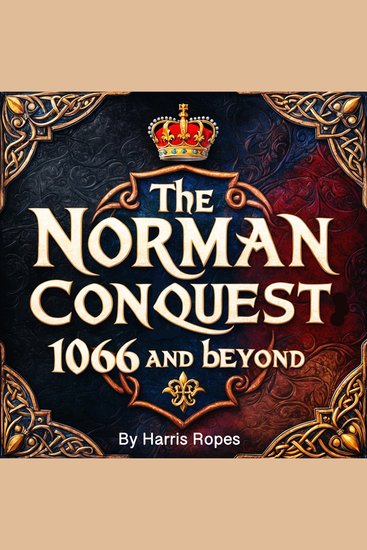
  • The Norman Conquest - 1066 and Beyond - cover

    The Norman Conquest - 1066 and...

    Harris Ropes

    • 0
    • 0
    • 0
    The Norman Conquest of England in 1066 was not an isolated event but the culmination of complex political, social, and military developments. Understanding the factors that led to this momentous invasion requires an exploration of the Anglo-Saxon world, the rise of Normandy, and the political landscape that shaped the conflict. 
    By the mid-11th century, England was a prosperous but politically volatile kingdom. The Anglo-Saxon rule, established centuries earlier, had seen periods of stability and turmoil. King Edward the Confessor, who reigned from 1042 to 1066, was deeply religious but lacked a direct heir, leading to uncertainty about the kingdom’s future. His court was divided between powerful noble factions, including Earl Harold Godwinson, one of England’s most influential figures. This internal division made England vulnerable to external threats. 
    At the same time, Normandy, a powerful duchy in northern France, had been rising as a formidable force under the leadership of Duke William. The Normans, originally descended from Viking settlers, had adopted French customs, built strong political institutions, and developed an efficient military system. William, known for his ambition and strategic mind, had a close relationship with Edward the Confessor, who had supposedly promised him the English throne. However, this claim was disputed, setting the stage for conflict.
    Zum Buch
  • Jewish Language and Literature - The Impact of Yiddish Hebrew and Other Languages - cover

    Jewish Language and Literature -...

    Joseph Arston

    • 0
    • 0
    • 0
    The origins of Jewish language and literature are deeply intertwined with the history of the Jewish people, shaped by centuries of cultural exchange, migration, and adaptation. At the heart of Jewish literary tradition lies the Hebrew language, whose roots stretch back to the ancient world. Hebrew, as the language of the Bible, forms the foundation of Jewish thought, identity, and religious practice. The earliest examples of Hebrew literature can be found in the sacred texts of the Torah, where the stories, laws, and teachings of the Jewish people are recorded. These texts, passed down through generations, have remained central to Jewish life and continue to be a source of literary and theological inspiration. 
    In addition to Hebrew, other languages played an important role in the development of Jewish language and literature. Aramaic, a Semitic language closely related to Hebrew, became widespread during the Babylonian exile and remained influential for centuries. Aramaic is the language of significant portions of the Talmud and other rabbinic writings, shaping Jewish legal and philosophical thought. Over time, Jewish communities across the globe adopted the languages of the regions they inhabited, which further contributed to the diversity of Jewish literary expression. 
    The emergence of Yiddish, a language born in the Jewish communities of Eastern Europe, marked a significant shift in Jewish linguistic and literary culture. Yiddish, a Germanic language enriched with Hebrew, Aramaic, and Slavic elements, became the vernacular of millions of Ashkenazi Jews. It allowed for the creation of a vibrant body of literature, including plays, novels, and poetry, that expressed the daily lives, struggles, and aspirations of Jewish communities. Yiddish literature flourished in the 19th and early 20th centuries, with writers such as Sholem Aleichem, Isaac Bashevis Singer, and I.L. Peretz capturing the complexities of Jewish life through their works.
    Zum Buch
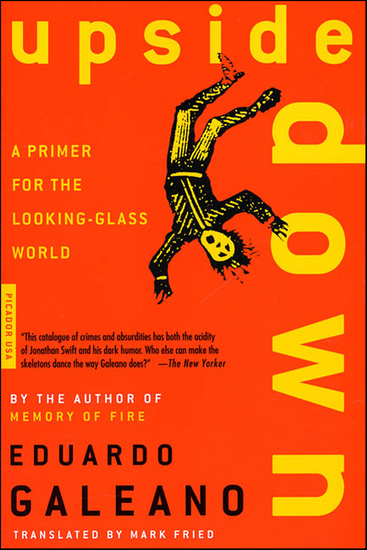
  • Upside Down - A Primer for the Looking-Glass World - cover

    Upside Down - A Primer for the...

    Eduardo Galeano

    • 0
    • 0
    • 0
    From the winner of the first Lannan Prize for Cultural Freedom, a bitingly funny, kaleidoscopic vision of the First World through the eyes of the Third.Eduardo Galeano, author of the incomparable Memory of Fire Trilogy, combines a novelist's intensity, a poet's lyricism, a journalist's fearlessness, and the strong judgments of an engaged historian. Now his talents are richly displayed in Upside Down, an eloquent, passionate, sometimes hilarious exposé of our first-world privileges and assumptions.In a series of lesson plans and a “program of study” about our beleaguered planet, Galeano takes the reader on a wild trip through the global looking glass. From a master class in “The Impunity of Power” to a seminar on “The Sacred Car” —with tips along the way on “How to Resist Useless Vices” and a declaration of “The Right to Rave” —he surveys a world unevenly divided between abundance and deprivation, carnival and torture, power and helplessness. We have accepted a reality we should reject, Galeano teaches us, one where machines are more precious than humans, people are hungry, poverty kills, and children toil from dark to dark.A work of fire and charm, Upside Down makes us see the world anew and even glimpse how it might be set right.“Galeano's outrage is tempered by intelligence, an ineradicable sense of humor, and hope.” —Los Angeles Times
    Zum Buch
  • Body Language Secrets - The Complete Guide to Understand Non-Verbal Communication How to Analyze People Speed Reading Their Hidden Thoughts and Improve Your Social Skills to Win in Business and Life - cover

    Body Language Secrets - The...

    Scott Habits

    • 0
    • 0
    • 0
    Do you want to become a master of non-verbal communication? Interested in learning how subconscious cues influence our interactions every day? Are you looking for a powerful, profound way of boosting your communication skills with subtle body language tweaks? Then this book is for you. 
    Whether you want to improve your confidence, become a better leader and communicator, or become the master of any social situation, body language is a vital tool which we use every day – even if you don’t know it. 
    Inside this detailed guide, you’ll explore the art of body language, uncovering the secrets of speed reading people and learning how to harness this essential skill to drastically improve your communication with others. Covering how the body “speaks”, the best way to read emotions, and the top mistakes to avoid, here’s what you’ll find inside:Why Body Language Is a Must-Know Skill For Any Leader or Effective CommunicatorThe BEST Places To Look For Body-Language Cues (and How To Work Out What They Mean)Understanding How The Body Speaks and Making Sense of Non-Verbal CuesTop Ways To Improve Your People-Reading SkillsHow To Harness Body Language For Work, Interviews, Dating, Flirting and MoreA Detailed Guide To Faking Your Body Language – and Spotting When People Are Doing It To YouCommon Body Language Mistakes To Avoid!And So Much More… 
    Even if you’re a complete beginner to the world of body language, this guide breaks down everything you need to know in a simple, easy-to-understand way. Now it’s never been easier to understand non-verbal communication, read people effortlessly, and harness the art of body language to transform your communication skills! 
    So what are you waiting for? Download this audiobook now to uncover the secrets of body language today!
    Zum Buch
  • Series 65 Exam Prep 2025-2026 - Elevate your Series 65 Exam Prep! Dive into dynamic audio lessons for maximum test success - cover

    Series 65 Exam Prep 2025-2026 -...

    Soren Graymarch

    • 0
    • 0
    • 0
    Series 65 Exam Prep 2025-2026 
    Simplified Guide & Explanations Included 
    Are you aiming to advance your career in financial advising and reinforce your knowledge by successfully passing the Series 65 Exam? 
    Looking for an all-encompassing guide that includes everything you need to pass the Series 65 Exam? 
    Your search ends here! 
    This guide is your ultimate resource for enhancing understanding, honing your skills, and engaging in practical exercises. With this guide, you're set up for triumph. 
    Updated in accordance with the latest Series 65 Exam structure. 
    Key features of this comprehensive guide: 
    - Deep insights into the Series 65 Exam Certification 
    - Thorough explanation of essential concepts for financial advising success 
    - Effective strategies for exam preparation and problem-solving 
    Our guide stands out due to its extensive coverage, which is vital for your success in the exam. Concepts are not just glossed over; they are explored in depth for clarity. 
    Please note that this guide operates independently and is not affiliated with any official Series 65 organization, serving purely as a resource for your success. 
    Crafted with a clear framework and straightforward language, our Series 65 Exam Guide guarantees smooth transitions between topics. Say farewell to complex jargon and embrace clear, precise, and technically accurate material. 
    So, why wait? Click the BUY NOW button, secure your guide, and embark on your journey to Series 65 Exam success!
    Zum Buch
  • Great Britain and World War II: The History and Legacy of the British in the War - cover

    Great Britain and World War II:...

    Charles River Editors

    • 0
    • 0
    • 0
    "My good friends," the mustached, bony man with thick eyebrows and large, strong teeth somewhat reminiscent of those of a horse, shouted to the crowds from the second-floor window of his house at 10 Downing Street, "this is the second time in our history, that there has come back to Downing Street from Germany peace with honor. I believe it is peace for our time." The man addressing the crowd, British Prime Minister Neville Chamberlain, had just returned from the heart of Nazi Germany following negotiations with Adolf Hitler, and the crowd gathered outside the English leader's house on September 30, 1938 greeted these ringing words with grateful cheers.  
    Of course, the Munich Agreement is widely reviled today and is held up as the epitome of appeasement, but historians still debate its effects on the Second World War, as well as Neville Chamberlain's character and motivations. Some believe the attempted appeasement of Nazi Germany hastened, or even caused, the mayhem occupying the next seven years. Others believe that the pact merely failed to alter war's inevitable arrival in either direction. Historians and authors alternately interpret Chamberlain as a bumbling, arrogant fool, a strong-willed statesman who simply miscalculated the nature of Hitler and Nazi Germany. Another possible interpretation, with considerable documentary support, asserts Chamberlain wished to enlist Germany's aid against the state most Europeans perceived as the true threat of the era, the Soviet Union.  
    	Europe’s attempts to appease him, most notably at Munich in 1938, failed, as Nazi Germany swallowed up Austria and Czechoslovakia by 1939. Italy was on the march as well, invading Albania in April of 1939. The straw that broke the camel's back, however, was Germany's invasion of Poland on September 1 of that year. Two days later, France and Great Britain declared war on Germany, and World War II had begun in earnest. 
    Zum Buch