Begleiten Sie uns auf eine literarische Weltreise!
Buch zum Bücherregal hinzufügen
Grey
Einen neuen Kommentar schreiben Default profile 50px
Grey
Jetzt das ganze Buch im Abo oder die ersten Seiten gratis lesen!
All characters reduced
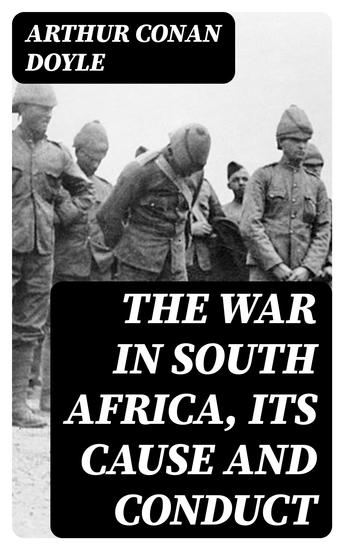
The War in South Africa Its Cause and Conduct - cover

The War in South Africa Its Cause and Conduct

Arthur Conan Doyle

Verlag: DigiCat

  • 0
  • 0
  • 0

Beschreibung

In "The War in South Africa, Its Cause and Conduct," Arthur Conan Doyle presents a meticulous analysis of the Second Anglo-Boer War, blending vivid narrative with rigorous historical scrutiny. Written with a keenly observant eye, Doyle employs a journalistic style, rich in detail and imbued with a palpable sense of urgency, capturing the tumultuous events of 1899-1902. He delves into the motivations behind the conflict, addressing imperial ambitions as well as the experiences of soldiers and civilians, while offering insights on military strategies and ethical dilemmas faced during wartime. This work not only serves as a historical document but also reflects the imperial sentiment of the era, encapsulating a moment when Britain grappled with its role on the global stage. Arthur Conan Doyle, primarily known for his creation of Sherlock Holmes, was also a passionate commentator on socio-political issues, which heavily influenced his writing. His deep interest in military affairs, alongside personal experiences as a volunteer physician during the war, lent authenticity to his account. Doyle's dual identity as both a storyteller and a historian allows him to weave a compelling narrative that engages and informs. Readers interested in the complexities of colonial conflicts and the implications of war will find "The War in South Africa, Its Cause and Conduct" an essential addition to their library. Doyle's firsthand perspective and comprehensive analysis offer a unique window into a pivotal moment in history, making it a requisite read for anyone seeking to understand the interplay of history, politics, and human experience.
Verfügbar seit: 16.09.2022.
Drucklänge: 150 Seiten.

Weitere Bücher, die Sie mögen werden

  • ACT Therapy Made Simple - Essential Techniques to Overcome Anxiety Depression Stress Panic Attacks and Negative Thinking - cover

    ACT Therapy Made Simple -...

    Jordan K. Bennett

    • 0
    • 0
    • 0
    Do your thoughts keep spiraling? Is anxiety, stress, or low mood taking over your daily life? 
    This practical guide to Acceptance and Commitment Therapy (ACT) gives you proven techniques to manage your emotions, break negative patterns, and start building a more fulfilling life. 
    Whether you’re facing panic attacks, depression, chronic pain, or obsessive thoughts, you’ll discover how to: 
    ✔️ Calm your mind with mindfulness-based strategies 
    ✔️ Use ACT’s six core processes to reduce emotional suffering 
    ✔️ Break free from anxious loops, fear-based reactions, and low self-worth 
    ✔️ Apply ACT to addiction recovery, trauma, OCD, weight loss, and more 
    ✔️ Develop psychological flexibility—the key to lasting change 
      
    Straightforward and science-backed, this audiobook is ideal for both personal healing and for professionals looking for actionable, evidence-based tools. 
    🎧 Start your journey with ACT Therapy Made Simple—and take back control of your mind, your mood, and your life.
    Zum Buch
  • Decentering Whiteness in the Workplace - A Guide for Equity and Inclusion - cover

    Decentering Whiteness in the...

    Janice Gassam Asare, Layla Saad

    • 0
    • 0
    • 0
    Your DEIJ efforts are stagnating because you continue to center whiteness. Creating a truly anti-racist organization requires learning how to identify and rectify the systemic, and often unconscious, centering of white culture and values in the workplace. 
     
    Corporate America continues to struggle with racial equity in a post-George Floyd world. As the United States becomes more diverse and the public consciousness continues to shift, successful racial equity efforts in the workplace are needed now more than ever. 
     
    Decentering Whiteness in the Workplace exposes the ways that white culture and expectations are centered in the modern American workplace and the fears within corporate spaces about talking candidly, openly, and honestly about whiteness, white supremacy, and anti-Blackness. 
     
    Readers will discover: 
    -	A direct and straightforward analysis about what white-centering is 
    -	An evaluation of the different ways that whiteness is centered in the workplace, such as bereavement and holiday policies and dress codes 
    -	A guide on how to recognize and decenter whiteness within oneself and at work 
    -	Solutions for people to contribute individually and systemically to anti-oppression 
     
    Decentering Whiteness in the Workplace provides a crucial guidebook with practical solutions for leaders, DEIJ practitioners, and anyone hoping to truly create an anti-racist workplace.
    Zum Buch
  • Aesthetical Essays - cover

    Aesthetical Essays

    Friedrich Schiller

    • 0
    • 0
    • 0
    In "Aesthetical Essays," Friedrich Schiller delves into the profound role of art and beauty in human life and society. Through a series of insightful essays, Schiller explores the transformative power of aesthetics, arguing that beauty elevates the human spirit and fosters freedom and moral development. He posits that art bridges reason and emotion, offering a path to achieving harmony within the self and the world. This philosophical masterpiece invites readers to ponder art's enduring impact.
    Zum Buch
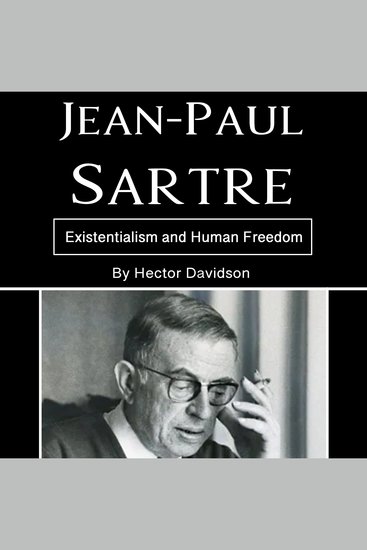
  • Jean-Paul Sartre - Existentialism and Human Freedom - cover

    Jean-Paul Sartre -...

    Hector Davidson

    • 0
    • 0
    • 0
    Jean-Paul Sartre, a towering figure in 20th-century philosophy, is perhaps best known for his development of existentialism, a school of thought that emphasizes individual freedom, choice, and the creation of meaning in an otherwise indifferent universe. Sartre’s philosophy arises from the existentialist tradition but distinguishes itself through its rigorous approach to human freedom and responsibility. At the heart of Sartre's thought is the idea that human beings are condemned to be free, burdened with the constant task of making choices without any external justification or predetermined essence. 
    Born in Paris in 1905, Sartre’s intellectual journey was shaped by early encounters with phenomenology and existential philosophy, especially through the works of Edmund Husserl and Martin Heidegger. However, it was his engagement with phenomenology, along with his studies in literature and politics, that laid the groundwork for his later ideas. Sartre’s major philosophical work, Being and Nothingness (1943), is considered one of the central texts of existentialist thought, where he explores the nature of existence, consciousness, and freedom in profound detail. 
    Sartre’s existentialism diverges from traditional metaphysical perspectives by rejecting the notion of an intrinsic human nature or essence. For Sartre, existence precedes essence, meaning that individuals are not born with any predefined purpose or identity; instead, they must create their essence through their actions and choices. This concept places the responsibility for defining oneself squarely on the individual, leading to Sartre’s famous assertion that "man is nothing else but what he makes of himself."
    Zum Buch
  • Winter Storm - The Battle for Stalingrad and the Operation to Rescue 6th Army - cover

    Winter Storm - The Battle for...

    Hans Wijers

    • 0
    • 0
    • 0
    A compilation of first-person accounts from German soldiers on their experiences at the Battle of Stalingrad during World War II, featuring rare photos. Real battles. Real Soldiers. Real stories.  By the fall of 1942, the battle for Stalingrad had become a fight for every street and building, and nowhere was the struggle more intense than in the bombed-out factories in the northern half of the city. There, amidst crumbled stone and twisted steel, German soldiers fought from room to room against a Soviet enemy who appeared never to tire. Meanwhile, Soviet offenses outside Stalingrad had trapped the German 6th Army inside the city. Erich von Manstein attempted to break through and relieve the encircled army, but to no avail. Both stories—the fierce battle for the factories and Manstein’s relief effort—are told here in the words of the men who were there.
    Zum Buch
  • The Cholera Years - The United States in 1832 1849 and 1866 - cover

    The Cholera Years - The United...

    Charles E. Rosenberg

    • 0
    • 0
    • 0
    Cholera was the classic epidemic disease of the nineteenth century, as the plague had been for the fourteenth. Its defeat was a reflection not only of progress in medical knowledge but of enduring changes in American social thought. Rosenberg has focused his study on New York City, the most highly developed center of this new society. Carefully documented, full of descriptive detail, yet written with an urgent sense of the drama of the epidemic years, this narrative is as absorbing for general audiences as it is for the medical historian. In a new Afterword, Rosenberg discusses changes in historical method and concerns since the original publication of The Cholera Years. 
     
    “A major work of interpretation of medical and social thought . . . this volume is also to be commended for its skillful, absorbing presentation of the background and the effects of this dread disease.”—I.B. Cohen, New York Times 
     
    ”The Cholera Years is a masterful analysis of the moral and social interest attached to epidemic disease, providing generally applicable insights into how the connections between social change, changes in knowledge and changes in technical practice may be conceived.”—Steven Shapin, Times Literary Supplement 
     
    ”In a way that is all too rarely done, Rosenberg has skillfully interwoven medical, social, and intellectual history to show how medicine and society interacted and changed during the 19th century. The history of medicine here takes its rightful place in the tapestry of human history.”—John B. Blake, Science
    Zum Buch