Begleiten Sie uns auf eine literarische Weltreise!
Buch zum Bücherregal hinzufügen
Grey
Einen neuen Kommentar schreiben Default profile 50px
Grey
Jetzt das ganze Buch im Abo oder die ersten Seiten gratis lesen!
All characters reduced
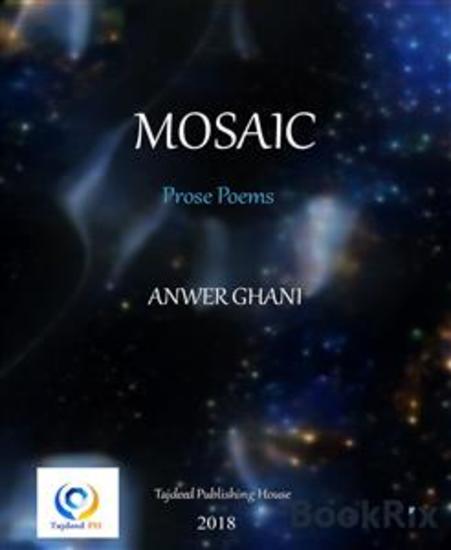
MOSIAC - Prose poems - cover

MOSIAC - Prose poems

Anwer Ghani

Verlag: BookRix

  • 0
  • 0
  • 0

Beschreibung

The ideas, as any creature, always try to present in full and powerful existences. So, one idea may wear many dresses to show itself and the writer should listen to her voice and give attention to her wishes. 
To accomplish all these targets, the writing should have an efficient existence with the occurrence which gives full and powerful transfiguration of ideas. This efficient transfiguring property of writing can appear with multi-expressive structures, where the sentences bring the same deep idea and central message but they appear in different images and statements. This system we call "The Mosaic". In the mosaic transfiguring system, the sentences appear as mirrors. The mirrored system of the textual sentences forms an intellectual existence imitates the mosaic.
Verfügbar seit: 21.12.2023.
Drucklänge: 21 Seiten.

Weitere Bücher, die Sie mögen werden

  • A Love Story Called My Hell - cover

    A Love Story Called My Hell

    A. Wayne Heusel

    • 0
    • 0
    • 0
    A love story called My Hell was inspired by my Muse, and many of the poets I have studied. It was originally written to be a narrated stage play. In this Narrative epic Love Story there are hidden messages that only your subconscious will perceive. I wrote this epic story with the intent to show the moral of the story, "Love Conquers All." The story is about a  journey through Hell and many personal confrontations with Satan himself. This is one Journey through Hell you will never forget. Welcome to My Hell.
    Zum Buch
  • The Ballad of Reading Gaol - cover

    The Ballad of Reading Gaol

    Oscar Wilde

    • 0
    • 0
    • 0
    Wilde’s meditation on capital punishment, the Ballad of Reading Gaol comes after he was convicted and imprisoned under charges of gross indecency. The charges stemmed from his affair with Lord Alfred Douglas, the son of the Marquis of Queensberry. It relates the story of an execution of a man who murdered his wife which Wilde witnessed during his internment. Published in 1898, it was Wilde’s last published poem as he would die in 1900 from cerebral menengitis, caused by syphilis.(Summary by John Gonzalez)
    Zum Buch
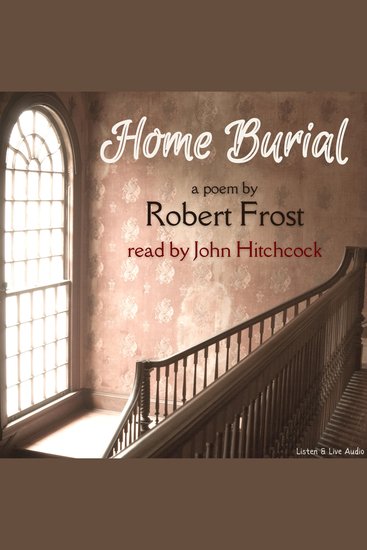
  • Home Burial - a poem - cover

    Home Burial - a poem

    Robert Frost

    • 0
    • 1
    • 0
    "Home Burial" is a poem about a man and woman whose baby has died. It tells of the burial, how the parents react to this death, particularly their lack of communication. 
    This piece is especially poignant given that Frost's son Elliot died at age 4, his daughter Elinor Bettina died when she was a few days old, his wife experienced a miscarriage, two of his daughters suffered mental breakdowns and died, and his son Carol committed suicide. 
    A Blackstone Audio production.
    Zum Buch
  • Blacks - cover

    Blacks

    Gwendolyn Brooks

    • 0
    • 0
    • 0
    Here is a necessary collection of poetry for admirers of words and treasurers of literary beauty. Spanning more than 30 years, this collection of literary masterpieces by the venerable Ms. Gwendolyn Brooks, arguably Illinois' most beloved Poet Laureate and Chicago's elder black literary stateswoman, Blacks includes all of Ms. Brooks' critically acclaimed writings. Within its covers is the groundbreaking Annie Allen, which earned her the Pulitzer Prize in 1950. There is also the sweepingly beautiful and finely crafted A Street in Bronzeville, a highly anticipated and lauded poetic treasure that spoke volumes for this great poet's love of black people, Chicago's Black community, and even the community of the world. Blacks includes a special treat, Maud Martha, Brooks' only novel.
    Zum Buch
  • Hush'd Be the Camps Today - cover

    Hush'd Be the Camps Today

    Walt Whitman

    • 0
    • 0
    • 0
    LibriVox readers bring you  16 readings of Hush'd Be the Camps Today by Walt Whitman, in honor of the 150th anniversary of Abraham Lincoln's death on April 15, 1865. This was the weekly poem for April 12, 2015, to April 18, 2015. - Summary by Adele de Pignerolles
    Zum Buch
  • Faust Part II - cover

    Faust Part II

    Johann Wolfgang von Goethe

    • 0
    • 0
    • 0
    Faust Part II is Johann Wolfgang von Goethe's monumental continuation and completion of his legendary dramatic masterpiece. Expanding far beyond the intimate tragedy of Part I, this second installment transforms the story of the restless scholar into a sweeping philosophical epic that explores politics, economics, art, mythology, ambition, and ultimately, redemption. Vast in scope and profound in meaning, Faust Part II stands as one of the most ambitious works in world literature.
    
    After the tragic events surrounding Gretchen, Faust's journey does not end. Instead, it evolves. Mephistopheles remains at his side as Faust is drawn into ever-greater realms of experience and influence. No longer confined to personal desire alone, Faust now seeks fulfillment on a grand scale—through power, creativity, and transformation of society itself. His striving shifts from romantic passion to political authority, aesthetic achievement, and even the reshaping of nature.
    
    Goethe structures Faust Part II in five acts, each unfolding in dramatically different settings—from imperial courts and fantastical masquerades to classical mythological landscapes inspired by ancient Greece. In one of literature's most striking episodes, Faust encounters Helen of Troy, the embodiment of ideal beauty, blending classical mythology with modern longing. Through this union, Goethe symbolically unites Romantic and Classical ideals, exploring the tension between passion and harmony, imagination and order.
    
    Unlike the deeply personal tragedy of Part I, Part II is rich with allegory and symbolism. Faust becomes a figure representing humanity's insatiable drive to expand knowledge, power, and dominion over the world. His involvement in financial schemes at the Emperor's court foreshadows modern economic systems, while his ambitious land-reclamation project reflects humanity's desire to conquer and reshape nature. Yet Goethe does not present ambition as purely destructive; instead, he portrays striving as an essential and defining human quality.
    
    Mephistopheles continues to provide ironic commentary, embodying doubt, skepticism, and negation. His sharp wit contrasts with Faust's relentless forward momentum. Together, they navigate a world where illusion and reality blur, where myth intersects with modernity, and where human aspiration collides with moral consequence.
    
    The philosophical core of Faust Part II lies in its exploration of redemption. Goethe ultimately suggests that it is not perfection but continuous striving—an unending effort toward higher purpose—that defines human greatness. Even in the face of error and failure, the persistent desire to create, improve, and transcend becomes a path toward spiritual elevation.
    
    Completed shortly before Goethe's death in 1832, Faust Part II represents the culmination of a lifetime of thought and artistic development. Its language is complex, poetic, and richly layered with cultural references, demanding reflection and rewarding careful reading. While more abstract and symbolic than its predecessor, it offers a grand and visionary conclusion to Faust's journey.
    
    Profound, imaginative, and intellectually daring, Faust Part II is not merely a continuation of a story—it is a sweeping meditation on civilization, creativity, and the eternal human drive to reach beyond limits. Together with Part I, it forms one of literature's greatest achievements, a timeless exploration of ambition, responsibility, and the possibility of ultimate grace.
    Zum Buch