Rejoignez-nous pour un voyage dans le monde des livres!
Ajouter ce livre à l'électronique
Grey
Ecrivez un nouveau commentaire Default profile 50px
Grey
Abonnez-vous pour lire le livre complet ou lisez les premières pages gratuitement!
All characters reduced
Marxism and Darwinism : Evidence speeches and papers in its favour - cover

Marxism and Darwinism : Evidence speeches and papers in its favour

Anton Pannekoek

Maison d'édition: Good Press

  • 0
  • 0
  • 0

Synopsis

In "Marxism and Darwinism: Evidence, Speeches, and Papers in its Favour," Anton Pannekoek intricately weaves the scientific principles of Darwinian evolution with the socio-political theory of Marxism, establishing a pioneering dialogue between the two frameworks. Through a blend of robust argumentation and meticulous evidence, Pannekoek elucidates the compatibility of biological evolution with Marxist principles, challenging contemporary notions of determinism while advocating for a dynamic understanding of societal development. Written with clarity and fervor, the book emerges from the socialist milieu of early 20th-century Europe, reflecting the intellectual ferment of the time and responding to the pressing debates within both scientific and political communities regarding evolution and material conditions. Pannekoek, a Dutch astronomer and ardent Marxist theorist, was deeply influenced by the revolutionary currents of his time, as well as by his scientific background. His unique position allowed him to critically engage with questions surrounding natural science and its implications for human society. Pannekoek's exploration of the intersections of these fields was not merely academic; it was a call to understand human history in light of material conditions and evolutionary theory, fostering a more nuanced view of societal change. This compelling work is a significant contribution to both Marxist scholarship and the philosophy of science, providing readers with a rare synthesis of insights that remains relevant today. I highly recommend "Marxism and Darwinism" to anyone interested in the interplay of science and ideology, offering a profound perspective that invites further reflection on the evolutionary forces shaping societal constructs.
Disponible depuis: 02/03/2025.
Longueur d'impression: 230 pages.
D'autres livres qui pourraient vous intéresser

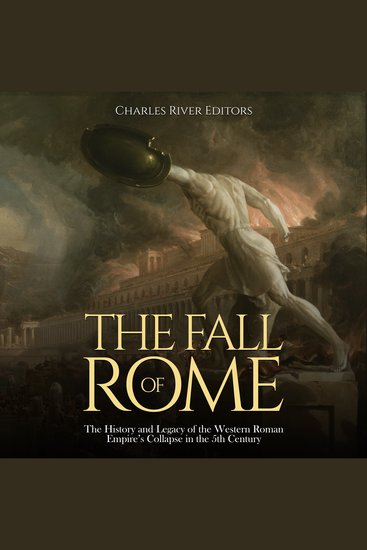
  • Fall of Rome The: The History and Legacy of the Western Roman Empire’s Collapse in the 5th Century - cover

    Fall of Rome The: The History...

    Editors Charles River

    • 0
    • 0
    • 0
    For the people of the ancient Mediterranean and beyond, the city of Rome had been a symbol of power for centuries, and entering the early 5th century CE, the Eternal City hadn’t been taken by an enemy force since the Gauls had done it about 800 years, an unheard of period of tranquility in a world wracked with almost constant warfare. 
    	Thus, when the Visigoths, whom the Romans considered uncultured and inferior, took the city of Rome and sacked it in 410, the world was stunned. It made theologians of the newly Christianized empire question God’s plan on Earth, and it encouraged many leading Romans to look east to Constantinople for their future. Indeed, the Western Roman Empire would completely collapse in the late 5th century, less than 70 years after the Visigoths sacked Rome, and just how it went from being a superpower to a poorly led, weak, and vulnerable shadow of its former self has preoccupied historians for centuries.  
    	To this day, it remains difficult to trace just when the decline began, but it’s fair to say that the sack of Rome was the result of a number of factors that had been coalescing for many years. Only Roman arrogance kept the empire from seeing the grave peril its capital was in, which helped bring about the events leading up to the fall of Rome itself. The Latin phrase imperium sine fine (“empire without end”) neatly summed up not just the geographic reach of the mighty empire, but the feeling that it would never end. Nonetheless, little more than 300 years after the end of the Pax Romana, the Western Roman Empire had all but ceased to exist. During the same period, the population of the city of Rome itself declined from over a million people to less than 30,000. Within the walls of Rome, vast areas returned to pastureland and shepherds grazed their flocks in a surreal landscape among the ruins of structures representing the might of the empire.
    Voir livre
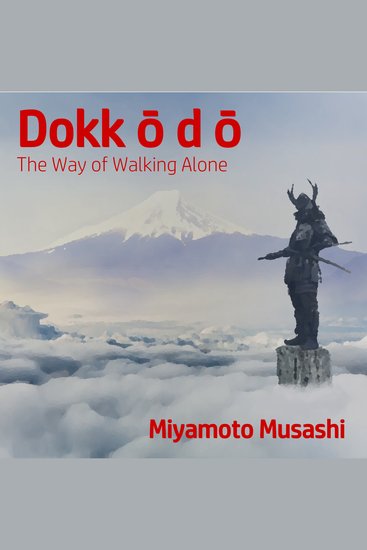
  • The Dokkōdō - The Way of Walking Alone - cover

    The Dokkōdō - The Way of Walking...

    Miyamoto Musashi

    • 0
    • 0
    • 0
    A testament to the way of solitude and simplicity, the 21 precepts of the Dokkōdō, also known as The Way of Walking Alone, is one of Musashi's principal legacies. Inspired by his life of combat and the bushido code, Miyamoto Musashi wrote the Dokkōdō in Japan in 1645, to pass on his wisdom and philosophy of life before he died. In the short text, the master duelist shares 21 precepts for healthy living. They are influenced by principles akin to Stoicism. Even today, these universal lessons can be useful for leading an honest and happy life. 
    Among the main themes he addresses in the Dokkōdō, Miyamoto Musashi stresses the importance of simplicity, discipline and detachment. He suggests forgetting material desires and distractions and concentrating on the essential. He advocates not only material simplicity, but also mental, spiritual simplicity; purity of thought. In his vision, mental clarity enables deeper self-mastery.
    Voir livre
  • On the Canal - The Marines of L-3-5 on Guadalcanal 1942 - cover

    On the Canal - The Marines of...

    Ore J Marion, Thomas Cuddihy,...

    • 0
    • 0
    • 0
    A gripping true story of the WWII Guadalcanal Campaign—told with no-holds-barred honesty and humor by a Marine who was there. In August of 1942, Allied forces led by U.S. Marines came ashore on Guadalcanal, launching the first major land offensive against Imperial Japan. M. Sgt. Ore J. Marion of L Company, 3rd Battalion, 5th Regiment was among them. Here, Marion and other men of L-3-5 share a personal account of their experiences over the course of this grueling and protracted campaign.  The stories contained in these pages are harrowing, profane, heartbreaking, irreverent, and deeply human. As with many personal accounts, some memories recorded here are at odds with the official accounts in Washington’s archives. Rather than presenting a clean and consistent narrative, On the Canal reflects the messy business of warfare and human memory.
    Voir livre
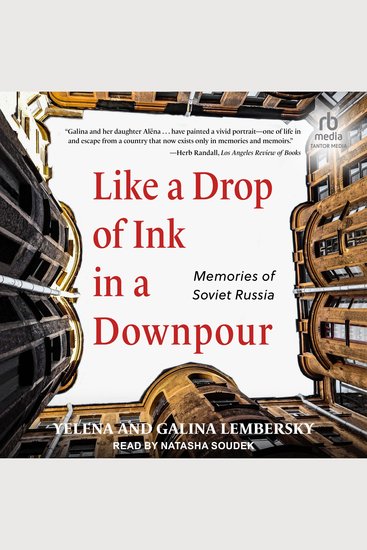
  • Like a Drop of Ink in a Downpour - Memories of Soviet Russia - cover

    Like a Drop of Ink in a Downpour...

    Galina Lembersky, Yelena Lembersky

    • 0
    • 0
    • 0
    Like a Drop of Ink in a Downpour is a heartfelt mother-and-daughter memoir about three generations of women and their fight to leave Soviet Russia. A mother is a dissident, a refusenik, and a prisoner in Leningrad (Saint Petersburg) in the 1970s and '80s. Her daughter, eleven years old, is left without a family. A grandmother is in the USA, waiting for her daughter and granddaughter and not knowing if she'll ever see them again. "I am fine," the three of them write to each other in their letters. 


    How can you be "fine" when you have to fight to survive? When you must be silent? When the place that you love turns against you? 


    Told from the dual points of view, this memoir shows the reality of life in the Soviet Union, giving an insider's perspective on the roots of Putin's Russia. It is also a coming-of-age story, heartfelt and funny, a testament to the unbreakable bond between mothers and daughters, and the healing power of art.
    Voir livre
  • The Globalization Myth - Why Regions Matter - cover

    The Globalization Myth - Why...

    Shannon K. O’Neil

    • 0
    • 0
    • 0
    A case for why regionalization, not globalization, has been the biggest economic trend of the past forty years 


    The conventional wisdom about globalization is wrong. Over the past forty years as companies, money, ideas, and people went abroad more often than not, they looked regional rather than globally. O'Neil details this transformation and the rise of three major regional hubs in Asia, Europe, and North America. Current technological, demographic, and geopolitical trends look only to deepen these regional ties. O'Neil argues that this has urgent implications for the United States. Regionalization has enhanced economic competitiveness and prosperity in Europe and Asia. It could do the same for the United States, if only it would embrace its neighbors.
    Voir livre
  • Democracy in America - cover

    Democracy in America

    Alexis de Tocqueville

    • 0
    • 0
    • 0
    Explore the timeless insights of Alexis de Tocqueville in his masterpiece, Democracy in America. This profound work, originally published in the 19th century, remains a cornerstone of political philosophy and social science, offering a detailed examination of the American democratic system, its principles, and its implications for liberty and equality.
     
    Through keen observations and eloquent analysis, Tocqueville explores the unique strengths and challenges of democracy. He delves into topics such as the balance between individual freedom and social equality, the role of religion in public life, the impact of a free press, and the dynamics of civil society.
     
    The audiobook offers a captivating journey through the mind of one of history’s greatest political thinkers, examining the foundations of democracy and its relevance to contemporary society. With a tone that is both reflective and motivational, this audiobook will engage listeners who are curious about governance, civic engagement, and the enduring quest for a just society.
     
    Perfect for leaders, scholars, and anyone passionate about understanding the roots of modern democratic values, Democracy in America is a vital resource for navigating the complexities of politics and culture today.
    Voir livre