Begleiten Sie uns auf eine literarische Weltreise!
Buch zum Bücherregal hinzufügen
Grey
Einen neuen Kommentar schreiben Default profile 50px
Grey
Jetzt das ganze Buch im Abo oder die ersten Seiten gratis lesen!
All characters reduced
Gone - cover

Gone

Annemarie Nikolaus

Übersetzer Sarah Lynch

Verlag: Schreibwerk

  • 0
  • 0
  • 0

Beschreibung

In the end; death. But why?The circumstances are mysterious and no-one is able to bring light into the darkness. Provided someone tries at all … or wants to.Three speculative short stories.
Verfügbar seit: 12.12.2021.

Weitere Bücher, die Sie mögen werden

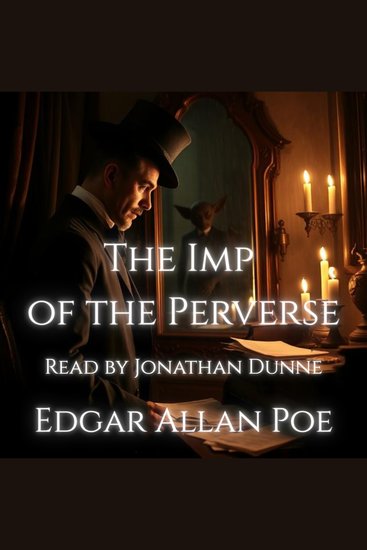
  • The Imp of the Perverse - cover

    The Imp of the Perverse

    Edgar Allan Poe

    • 0
    • 0
    • 0
    Title: The Imp of the Perverse 
    Author: Edgar Allan Poe 
    Narrator: Jonathan Dunne 
    Original Publication: 1845 
    Public Domain: Yes 
    Series Placement: Number 44 in the Timeless Terrors series 
    Description: 
    The Imp of the Perverse by Edgar Allan Poe is a chilling exploration of the human compulsion toward self-destruction — that sinister whisper urging us to do precisely what we know we must not. Told in Poe’s hypnotic, confessional style, the story begins as a philosophical essay on impulse and perversity, then descends into the fevered confession of a murderer undone by his own mind. 
    This tale reveals Poe at his most psychologically incisive, dissecting guilt, pride, and the dark delight of defiance. Beneath its gothic calm lies a truth as disturbing now as in 1845 — that the greatest horror may be found not in the supernatural, but in the secret architecture of the human soul. 
    Narrated by Amazon bestselling horror author Jonathan Dunne, this performance evokes Poe’s morbid eloquence and the relentless pull of conscience that drives his doomed narrator to madness. While the text is in the public domain, this narration is an original performance and copyright © 2025 Jonathan Dunne. 
    Part of Timeless Terrors, a series devoted to resurrecting the masters of the macabre and uncanny, The Imp of the Perversestands as one of Poe’s most haunting studies of inner torment — a reminder that sometimes, the truest demon wears our own face.
    Zum Buch
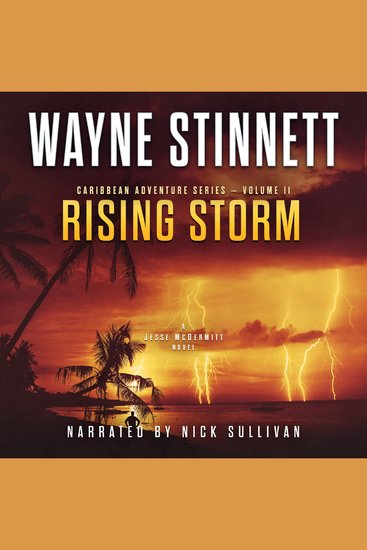
  • Rising Storm - A Jesse McDermitt Novel - cover

    Rising Storm - A Jesse McDermitt...

    Wayne Stinnett

    • 0
    • 0
    • 0
    Miles from the laid-back lifestyle of No Name Key, and just shy of the raucous nightlife of Miami and South Beach, lies Coconut Grove, a tropical oasis with a distinct Bohemian flair. Lately, a seedy underside has emerged along the Grove's waterfront, preying on adventurous young women. 
    Somewhere amid all the glitz and glamour, hides a thief who stole a fortune in Aztec emeralds. Or did he? Jesse McDermitt must first determine if the victim herself is a thief. The trail of clues leads him to evidence that the thief may be involved in a string of more heinous crimes. 
    Jesse and Chyrel enlist the help of the recently returned Charity, and the trio go "undercover" at a floating swinger's party headed for the Bahamas, which may well be a front for torture and murder. 
    When a sudden violent storm strikes Stiltsville, Jesse finds himself alone on the ocean, trying to recover the treasure and put a murderer behind bars - but first he must win the battle with Mother Nature.
    Zum Buch
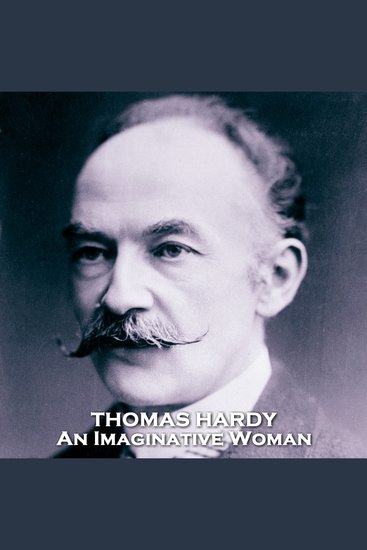
  • Imaginative Woman An - From their pens to your ears genius in every story - cover

    Imaginative Woman An - From...

    Thomas Hardy

    • 0
    • 0
    • 0
    Thomas Hardy was born in the hamlet of Upper Bockhampton about three miles east of Dorchester in Dorset, England, on 2nd June 1840.  
    Despite a fairly wide education and being an avid reader his parents thought it unlikely he would lead a successful scholarly or clerical career and he was apprenticed in 1856, at age 16, to a local architect whose speciality was in church restoration.  Hardy’s only opportunity to read was in the morning before work between the hours of five and eight.  
    On the back of a failed love affair he moved to London and spent five years working as an assistant to the architect Arthur Blomfield, also a restorer and designer of churches. Hardy though had by now become disillusioned with institutionalised forms of Christianity and abandoned any lingering hopes of ordination in the Anglican Church.  However, his writing of poetry was now flourishing, although it was still rejected for publication.  
    His novel ‘Desperate Remedies’, was published anonymously in 1871 and he now resolved to write full time though he was not yet in a position to achieve financial security or literary success. His second novel, ‘Under the Greenwood Tree’, appeared in 1872 and in 1873 ‘A Pair of Blue Eyes’, the most autobiographical of his works arrived. With ‘Far From the Madding Crowd’ in 1874, came critical acclaim, public attention and financial success. This was repeated in 1878 with ‘The Return of the Native’, and the ensuing years saw him rise to ever greater popularity.  
    His classic ‘The Mayor of Casterbridge’ arrived in 1886 and 5 years later ‘Tess of the d’Urbervilles’. The latter only saw publication after extensive alterations to its plot and the deletion of long passages to lessen the shock to the prudish Victorian audience who were dismayed by the seduction and ruin of a young girl by a rakish aristocrat.  
    ‘Jude the Obscure’, his last novel, suffered the same fate when it was published in 1895.  The uproar so disturbed him that he returned to poetry. In 1898 he had an earlier poetry collection, ‘Wessex Poems’ published. 
    Hardy spent the years between 1903 and 1908 writing ‘The Dynasts’, an epic poem on the Napoleonic Wars. 
    In his twilight years came honours and awards from the great and the good in recognition of his stature as one of the most outstanding of British authors across novels, short stories and poetry. George V conferred on him the Order of Merit in 1910. 
    From 1920 to 1927 he worked, in secret, on his autobiography, which was later published after his death as the work of his second wife, Florence Hardy.  
    Thomas Hardy OM died on the 11th January 1928. 
    His heart was buried alongside his first wife in Stinsford churchyard, Dorchester.
    Zum Buch

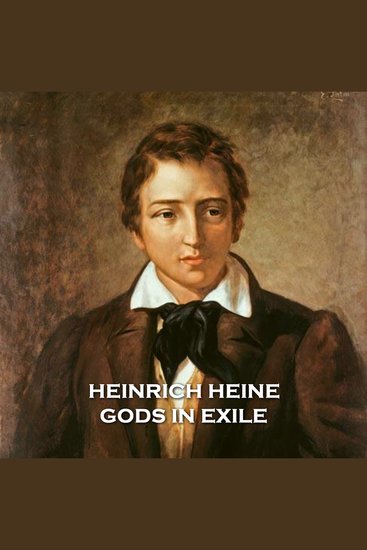
  • Gods in Exile - Heine pulls at many threads in this essay short story using the reincarnation of the famous Greek gods into medieval Christian Europe as his subject matter to do this - cover

    Gods in Exile - Heine pulls at...

    Heinrich Heine

    • 0
    • 0
    • 0
    Christian Johann Heinrich Heine was born in Düsseldorf, Germany on 13th December 1797 to assimilated Jewish parents. 
     
    Heine studied law at the universities of Bonn, Göttingen, and Berlin but his greater commitment was to studying poetry and literature.   
     
    He converted to Protestantism in order to obtain work as there were draconian anti-Jewish laws in force at the time.   
     
    He was part of the German Romantic movement but also responsible in part for ushering in the post-Romantic crisis and the presumed failure of art as unable to overcome or explain the growing traumas of modernity.  However, his literary reputation was cemented in the second half of the 1820’s with his poetry collection ‘The Book of Songs’ together with his collection of ‘Pictures of Travel’ stories that blended fact and fiction together into commercial and critical successes. 
     
    After the July 1830 Revolution in France, he went to live in Paris, where he remained until his death.  
     
    Here he wrote much in the way of essays discussing the political and cultural scene in France together with volumes of social criticism on Germany. 
     
    By 1835, his works had been banned by the German government.  His lifelong subsidised lifestyle ended in 1844 when his uncle died leaving him nothing.  He turned once more to lyric poetry and created perhaps his finest poetical works.  A trip to Germany resulted in the long satirical poem ‘Germany. A Winter's Tale’. His second volume of poetry, ‘New Poems’ in 1844, included poems that had originally appeared in Karl Marx’s newspaper ‘Forward’ and continued the satirical style he now preferred.   
     
    In May 1848, Heine, in poor health, fell and was paralyzed and confined to his bed.  He called it his ‘mattress-grave’ and only death would remove him from it.  He was also experiencing eye problems and suffering from chronic lead poisoning. 
     
    Heinrich Heine died on 17th February 1856.  He was 58.   
     
    ‘Gods in Exile’ is perhaps a prophetic piece on his own life.  The old gods are overthrown by the new novelty of Christianity.  What will be their role now?  Is there life after for them?
    Zum Buch
  • Secrets of Self-discovery - Children's Short Stories about exploring magic within - cover

    Secrets of Self-discovery -...

    Mona Ghai

    • 0
    • 0
    • 0
    Secrets Of Self-discovery 
    Children’s Short Stories about exploring magic within 
    Are you scared of certain situations? Do changes in life haunt you and raise questions about your capabilities and create self-doubts? Do you struggle for quality time with your parents and want to build a strong relationship of love? 
    Dive in, to the short stories of ‘Secrets of Self-discovery’ and discover the real you. 
    What you will find in this book: 
    1. Inspiring Stories for Children about Self-Esteem, Self-Confidence, Courage, Friendship, Gratitude, Fantasy, Adventure, Kindness, and Self-care. 
    2. A simple and engaging writing style suitable for early readers. 
    3. Beautiful pictures to accompany the reading and stimulate the imagination. 
    This book helps parents to: 
    1. Raise happy, confident, and resilient children. 
    2. Teach kids to overcome fears and face difficult moments while better regulating their emotions 
    3. Inculcate values such as kindness, responsibility, and gratitude in your children. 
    This book with help in building a bond of love and strengthen the parent-child relationship. 
    Give your children this ultimate gift and empower them with stories that not only entertain but also impart invaluable life lessons and take them near to folk tales worth reading.
    Zum Buch
  • 3 Stories About - Class & Status - A trio of classic tales perfect for a commute walk or quiet night in - cover

    3 Stories About - Class & Status...

    Guy de Maupassant, Katherine...

    • 0
    • 0
    • 0
    There is something about the number 3.    
     
    The Ancient Greeks believed 3 was the perfect number, and in China 3 has always been a lucky number, and they know a thing or two.   
     
    Most religions also have 3 this and 3 that and, of course, in these more modern times, three’s a crowd may be too many, except when it’s a ménage à trois.  It seems good things usually come in threes. 
     
    Whatever history and culture says WE think 3, a hat-trick of stories, is a great number to explore themes and literary avenues that classic authors were so adept at creating. 
     
    From their pens to your your ears. 
     
    01 - 3 Stories About - Class and Status 
    02 - The Garden Party by Katherine Mansfield 
    03 - The Necklace by Guy de Maupassant 
    04 - The Lost Reflection by E T A Hoffman
    Zum Buch