Rejoignez-nous pour un voyage dans le monde des livres!
Ajouter ce livre à l'électronique
Grey
Ecrivez un nouveau commentaire Default profile 50px
Grey
Abonnez-vous pour lire le livre complet ou lisez les premières pages gratuitement!
All characters reduced
Winning Mindset - Unleash Your Potential and Achieve Your Goals - cover

Winning Mindset - Unleash Your Potential and Achieve Your Goals

Amol Kindre

Maison d'édition: Amol Kindre

  • 0
  • 0
  • 0

Synopsis

"Winning Mindset: Unleash Your Potential and Achieve Your Goals" is your ultimate guide to transforming your mindset for unparalleled success. This dynamic ebook reveals the secrets to cultivating a winning attitude, mastering goal setting, and developing resilience. Learn how to build powerful daily habits, harness emotional intelligence, and maintain discipline to stay focused on your path. Discover the art of effective networking, embrace lifelong learning, and balance success with well-being. Celebrate your milestones and unlock the potential within you. Ready to elevate your life? This book is your blueprint for achieving greatness.
Disponible depuis: 01/09/2024.
D'autres livres qui pourraient vous intéresser

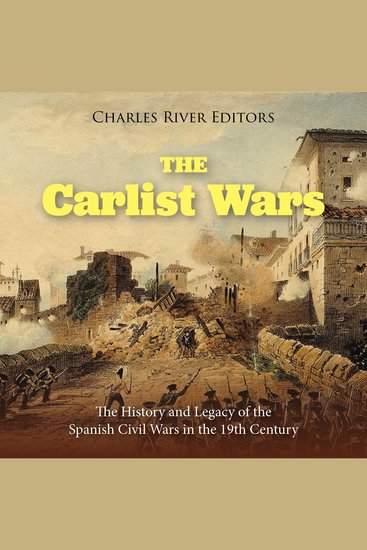
  • Carlist Wars The: The History and Legacy of the Spanish Civil Wars in the 19th Century - cover

    Carlist Wars The: The History...

    Editors Charles River

    • 0
    • 0
    • 0
    Thinking of Spain as a modern nation state today distorts the complicated reality that the Iberian Peninsula faced in the past. Spain was a nation in progress, consisting of regions united under the Spanish crown, but with strong regional identities based on different historical and cultural experiences. The largest entities were the kingdoms of León and Castile, but Spain also included the kingdoms of Navarre, Andalusia, Granada, Jaén, Aragon, and Valencia. There were also the principalities of Asturias and Catalonia, the lordship of Vizcaya, and both Guipúzcoa and Alava were “exempted provinces.” Navarre, Aragon, and Catalonia had separate Cortes, which were versions of parliaments (Parker 18-19). This complex system of entities granted privilege to local power structures over the concept of a unified nation and made administration difficult, because there were few standards that applied to all of Spain. Many of the regions had special laws that respected and allowed traditional institutions, administrative patterns, and cultural patterns. These local and regional rights were called fueros and were fiercely defended against centralization. The fueros originated as rights agreed to when the regions joined the Spanish crown. Before becoming king, the king-designate had to swear to maintain and respect the fueros. This meant that the rights of the king were to a considerable extent limited. 
    Inevitably, liberals and centralizing monarchs alike tried to change the situation over the years, which produced political tensions. The Carlists promised to maintain the older system, which is why they were so firmly backed in the Basque regions by most of the peasants and nobility. The Carlist claimants were strong Catholics and were strongly supported by the Church, and thus by the more fervently Catholic portions of the population. 
    Voir livre
  • The Religion of American Greatness - What's Wrong with Christian Nationalism - cover

    The Religion of American...

    Paul D. Miller

    • 0
    • 0
    • 0
    ECPA Top Shelf Award Winner
    Long before it featured dramatically in the 2016 presidential election, Christian nationalism had sunk deep roots in the United States. From America's beginning, Christians have often merged their religious faith with national identity. But what is Christian nationalism? How is it different from patriotism? Is it an honest quirk, or something more threatening?
    Paul D. Miller, a Christian scholar, political theorist, veteran, and former White House staffer, provides a detailed portrait of—and case against—Christian nationalism. Building on his practical expertise not only in the archives and classroom but also in public service, Miller unravels this ideology's historical importance, its key tenets, and its political, cultural, and spiritual implications.
    Miller shows what's at stake if we misunderstand the relationship between Christianity and the American nation. Christian nationalism—the religion of American greatness—is an illiberal political theory, at odds with the genius of the American experiment, and could prove devastating to both church and state. Christians must relearn how to love our country without idolizing it and seek a healthier Christian political witness that respects our constitutional ideals and a biblical vision of justice.
    Voir livre
  • Chakras - Your Plain & Simple Guide to the 7 Energy Centers of the Body - cover

    Chakras - Your Plain & Simple...

    Sasha Fenton

    • 0
    • 0
    • 0
    Your Plain & Simple Guide to the 7 Energy Centers of the Body   This accessible and user-friendly book introduces the seven major chakras—those spinning vortexes of energy throughout the body—and presents ways of healing the emotional, mental, physical, and spiritual problems that arise when the chakras are blocked, misaligned, or too open. It also describes how the chakras affect people and provides simple healing techniques, an explanation of the relationship between color and mood, tips for using gemstones to cleanse and energize, and advice for practicing aromatherapy and other complementary systems to channel energy within the body. A brief history of the chakras, a discussion of the relationship between the chakras and astrology, and an exploration of the chakras and kundalini are also included.   This is a book for anyone interested in alternative medicine and for everyone interested in leading healthier, more energetic, and happier lives.   This book was previously published as Chakras Plain & Simple.
    Voir livre
  • Shamans and Robots - On Ritual the Placebo Effect and Artificial Consciousness - cover

    Shamans and Robots - On Ritual...

    Roger Bartra

    • 0
    • 0
    • 0
    This book is a profound exploration of the external influences that shape human consciousness, from healing rituals to digital devices. In this voyage through thousands of years of psychosomatic healing, distinguished anthropologist and sociologist Roger Bartra examines the placebo effect as a key to our understanding of human consciousness. Shamans and Robots demonstrates how biology and technology become intertwined within human culture by using the various histories of ritual and symbolic healing to speculate about future developments in artificial intelligence. 


    Charting the history of the placebo effect through medieval healing, shamanism, and early psychoanalytic practices, Bartra posits that consciousness is not simply the province of the mind but something equally shaped by external systems and objects. He finds evidence of this "exocerebrum"—the extension of our brains outside the body—in the shamanistic concept of the placebo, in which external objects heal our bodies, and in modern technical devices like prostheses or robots, whose development of a mechanical consciousness would have to mimic, and in turn elucidate, the processes involved in the creation of consciousness in humans. Through this radical concept, he analyzes digital media's relationship to the functions of the human brain and probes the possibility of artificial consciousness.
    Voir livre
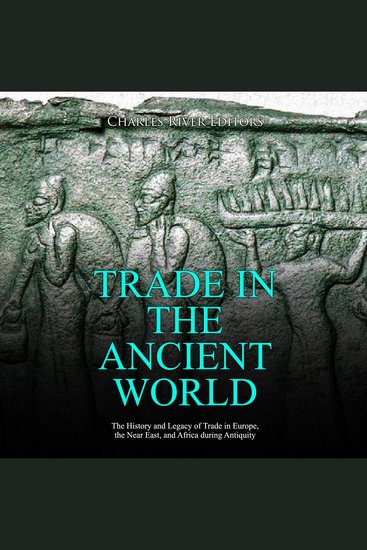
  • Trade in the Ancient World: The History and Legacy of Trade in Europe the Near East and Africa during Antiquity - cover

    Trade in the Ancient World: The...

    Editors Charles River

    • 0
    • 0
    • 0
    The concept of international trade was born in the ancient Mediterranean, which provided the perfect set of circumstances needed to produce an intricate trading system whose influence can still be seen in present-day economic practices. The ancient Mediterranean was home to a diverse range of cultures and landscapes, encompassing deserts, forests, islands and fertile plains. Different natural resources were available in different geographical areas, and with the advent of sailing ships around 3000 BCE, people were suddenly able to travel much further afield than ever before. This created an opportunity to trade local resources in international markets in exchange for exotic goods not available at home. At the same time, this shift in Mediterranean trade from a local to international scale was a catalyst for immense social, political and economic changes that helped to shape the course of Western Civilization as a whole. Ancient trade in the Mediterranean brought cultures into increasingly close contact with one another, and just as in the globalized world today, these cross-cultural influences came to shape the development of belief systems, languages, economics, politics, and art throughout wide expanses of land.  
    Over the centuries, the profits generated from trade helped establish wealthy nations and fuel economic development across the sea. By taxing imports and exports, governments could afford large infrastructure projects, like the construction of roads and harbors, which in turn helped to further increase trade and wealth. As a result, wars were fought for control of important trade routes and to maintain access to crucial commodities such as grain and precious metals. Economics became a primary consideration when establishing government policies and dealing with international relations. Some cities, most notably Rome and Athens, even built empires on the back of their mercantile success.
    Voir livre
  • The Storm of Steel - cover

    The Storm of Steel

    Ernst Jünger

    • 0
    • 0
    • 0
    The Storm of Steel is a first-hand account of World War I trench combat lifted from the diaries of Ernst Jünger, a German infantryman who would become one of Europe's most renowned writers.
    
    The book was first translated into English in 1929 by Basil Creighton, the acclaimed translator of many other classic works of German literature, and was widely hailed as a masterpiece. To many, The Storm of Steel remains the definitive account of World War I, following Jünger through several major battles as he develops from an eager young soldier into a battle-hardened officer.
    Voir livre