
Begleiten Sie uns auf eine literarische Weltreise!
Buch zum Bücherregal hinzufügen
Grey
Einen neuen Kommentar schreiben Default profile 50px
Grey
Jetzt das ganze Buch im Abo oder die ersten Seiten gratis lesen!
All characters reduced
History of Vaccines - cover

History of Vaccines

Amelia Khatri

Übersetzer A AI

Verlag: Publifye

  • 0
  • 0
  • 0

Beschreibung

History of Vaccines explores the fascinating evolution of vaccination, from ancient variolation practices to modern immunotherapies. It highlights how germ theory revolutionized our understanding of disease, prompting innovative prevention strategies. The book emphasizes that the history of vaccines reflects humanity's ongoing battle against disease, shaped by scientific progress, societal beliefs, and global health initiatives.

 
It's intriguing to note how Edward Jenner's use of cowpox to prevent smallpox marked a pivotal moment, dramatically reducing the impact of a once-devastating disease. The book unfolds chronologically, beginning with pre-vaccine era attempts at inoculation and detailing the development of vaccines for diseases like polio and measles. It examines the contributions of scientific pioneers and the challenges of vaccine production and distribution.

 
The book addresses modern vaccine development, including mRNA vaccines, efforts to combat diseases like HIV and malaria, and the rise of anti-vaccine movements. It confronts controversies, exploring the scientific evidence and the social factors contributing to vaccine hesitancy. This book offers a comprehensive and balanced account, making it valuable for anyone interested in medical history and global health.
Verfügbar seit: 12.02.2025.
Drucklänge: 67 Seiten.
Weitere Bücher, die Sie mögen werden

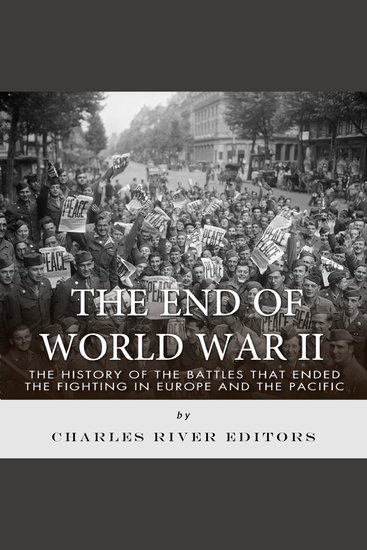
  • End of World War II The: The History of the Battles that Ended the Fighting in Europe and the Pacific - cover

    End of World War II The: The...

    Editors Charles River

    • 0
    • 0
    • 0
    After the successful amphibious invasion on D-Day in June 1944, the Allies began racing east toward Germany and liberating France along the way. The Allies had landed along a 50 mile stretch of French coast, and despite suffering 8,000 casualties on D-Day, over 100,000 still began the march across the western portion of the continent. By the end of August 1944, the German Army in France was shattered, with 200,000 killed or wounded and a further 200,000 captured. However, Adolf Hitler reacted to the news of invasion with glee, figuring it would give the Germans a chance to destroy the Allied armies that had water to their backs. As he put it, “The news couldn’t be better. We have them where we can destroy them.” While that sounds delusional in retrospect, it was Hitler’s belief that by splitting the Allied march across Europe in their drive toward Germany, he could cause the collapse of the enemy armies and cut off their supply lines.  
    Near the end of 1944, as Allied forces were pushing across the Pacific and edging ever closer to Japan, plans were drawn up to invade the Ryuku islands, the most prominent of them being Okinawa. Military planners anticipated that an amphibious campaign would last a week, but instead of facing 60,000 Japanese defenders as estimated, there were closer to 120,000 on the island at the beginning of the campaign in April 1945. The Battle of Okinawa was the largest amphibious operation in the Pacific theater, and it would last nearly 3 months and wind up being the fiercest in the Pacific theater during the war, with nearly 60,000 American casualties and over 100,000 Japanese soldiers killed. In addition, the battle resulted in an estimated 40,000-150,000 Japanese civilian casualties.
    Zum Buch
  • Holding Space - Strategies to cultivate connection and enable potential - cover

    Holding Space - Strategies to...

    Joel Hines

    • 0
    • 0
    • 0
    This book will benefit anyone interested in helping others cultivate connection and enable their potential. 
    Whether you are a leader, educator, coach, therapist or facilitator, this book provides a simple framework and practical tips for holding space. 
    Using practical examples and personal stories, this book captures what it means to hold space for others and assists you in creating safety and trust with the people you support so they can thrive and reach their full potential. 
    Joel Hines shares his learnings and experience from over 25 years of practice working with people of all ages as an educator, facilitator, leader and storyteller.
    Zum Buch
  • How to: Take effective notes when learning Chinese - cover

    How to: Take effective notes...

    Letitia Wu

    • 0
    • 0
    • 0
    The palest ink is better than the best memory!This is an audio version of the same-named video course.  This mini-course will walk you through the process of taking notes on Chinese. And also, you will learn to select the best notebook and use it effectively. Most importantly, you will learn to use colors to make your notes easy to read and to help you understand Chinese.
    Zum Buch
  • Aotearoa New Zealand - The Convergence and Histories - cover

    Aotearoa New Zealand - The...

    Lillian Brooks

    • 0
    • 0
    • 0
    Aotearoa New Zealand, located in the southwestern Pacific Ocean, is a country with a rich and diverse history that stretches back over a thousand years. Its historical and cultural journey has been shaped by the convergence of Māori and European influences, which has made Aotearoa one of the most unique nations in the world. The story of Aotearoa is not just one of migration and colonization but also of resilience, adaptation, and the constant negotiation of identity, land, and culture. 
    The Māori people, the indigenous inhabitants of New Zealand, arrived from eastern Polynesia in several waves of migration around the 13th century. Over the centuries, they developed a sophisticated culture, which included a rich oral tradition, strong tribal structures, and deep spiritual and cultural ties to the land. The Māori worldview was shaped by the concept of whenua (land), whakapapa (genealogy), and wairua (spirit), and their connection to the environment played a fundamental role in shaping their social and cultural practices. 
    The arrival of Europeans, led by explorers such as Abel Tasman in 1642 and Captain James Cook in 1769, marked a turning point in New Zealand’s history. Initial encounters between Māori and Europeans were characterized by curiosity, exchange, and occasional conflict. However, as European settlement expanded throughout the 19th century, the effects on Māori society became profound. The introduction of new technologies, ideas, and diseases, coupled with land confiscation and colonization, reshaped the cultural landscape of the country. This period led to the displacement of Māori from their ancestral lands and the beginning of a long history of legal and political struggles to protect their rights and sovereignty.
    Zum Buch
  • Dheean Vala Ghar - cover

    Dheean Vala Ghar

    Prof Jagtar Singh

    • 0
    • 0
    • 0
    The author has included 15 stories in this book, which depict the ups and downs of social interactions and the tragedies faced by the oppressed and marginalized people in society. Additionally, the book attempts to highlight people's struggles by portraying simple and rural characters, capturing the essence of their pain. According to the author, some of the stories in this collection are based on real-life events
    Zum Buch
  • 20 Battles - Searching for a South African Way of War 1913-2013 - cover

    20 Battles - Searching for a...

    Evert Kleynhans, David Brock Katz

    • 0
    • 0
    • 0
    Favouring manoeuvre over attrition and often punching above their weight, South African soldiers have become known for their tenacity, dash and ability to defy the odds. Their unique directive command style has also helped them to excel in defining battles and operations, from the campaign in German South West Africa in 1915 to the cross-border operations in Angola during the Border War.
    In 20 Battles, military historians Evert Kleynhans and David Brock Katz investigate the evolution of South Africa's armed forces over a century from 1913 to 2013. They track the evolution of the doctrine and structure of the defence force, uncovering historical continuity and the lessons learned from past battles and operations.
    What is clear is that when South African soldiers have the freedom to operate according to their manoeuvre doctrine, as they had in East Africa in 1916 and southern Ethiopia in 1941, they can achieve stunning results. But when hemmed in by rigid doctrine and a top-down command style, as at Delville Wood in 1916 and Tobruk in 1942, the results can be tragic.
    20 Battles combines both battlefield drama and crisp analysis and in the process provides a much-needed perspective on the South African way of war.
    Zum Buch