Begleiten Sie uns auf eine literarische Weltreise!
Buch zum Bücherregal hinzufügen
Grey
Einen neuen Kommentar schreiben Default profile 50px
Grey
Jetzt das ganze Buch im Abo oder die ersten Seiten gratis lesen!
All characters reduced
Democracy in America - cover

Democracy in America

Alexis de Tocqueville

Übersetzer Henry Reeve

Verlag: DigiCat

  • 0
  • 0
  • 0

Beschreibung

In "Democracy in America," Alexis de Tocqueville presents a profound exploration of the young American democracy and its societal implications following his visit in the early 1830s. Structured as a two-volume work, Tocqueville's literary style combines astute observations, philosophical analysis, and sociological insights, reflecting the Enlightenment thought prevalent in 19th-century Europe. He meticulously examines the principles of equality, individualism, and the interplay between liberty and social order, offering a balanced critique of democracy's strengths and weaknesses, which has become a seminal text in political theory and sociology. Alexis de Tocqueville, a French aristocrat and political thinker, was profoundly influenced by the turbulent political landscape of his homeland, which experienced revolutions and upheavals during his lifetime. His commitment to understanding democracy was informed by his own observations of the American experiment, contrasting it with Europe's struggles to achieve similar democratic ideals. His nuanced perspectives as a foreign observer provide invaluable insights into the social fabric and political dynamics of early America, making the text a significant contribution to comparative politics. I highly recommend "Democracy in America" to readers seeking to grasp the complexities of democratic society and its implications for contemporary governance. Tocqueville's insights remain remarkably relevant today as they encourage critical reflection on the nature of freedom, equality, and civic responsibility, making it essential reading for anyone interested in the evolutionary trajectory of democratic ideals.
Verfügbar seit: 13.11.2022.
Drucklänge: 797 Seiten.
Weitere Bücher, die Sie mögen werden

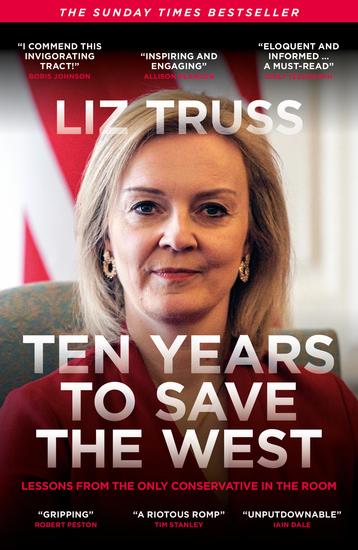
  • Ten Years to Save the West - Lessons from the only conservative in the room - cover

    Ten Years to Save the West -...

    Liz Truss

    • 0
    • 0
    • 0
    'I want to provide a call to action for fellow conservatives who believe in our nation and our way of life and who share my frustration at what has been going wrong with our politics and governance. I want others to heed the warnings of what I saw happening and learn the lessons of the battle I lost.'
    Over the course of a decade as a minister, Liz Truss sought to champion limited government and individual freedom in the face of the left-wing political agenda that frames the debate in so many institutions. Ousted by the establishment but still fighting for conservatism, Truss argues here that the rise of authoritarianism and the adoption of fashionable ideas propagated by the global left give us barely a decade to preserve the economic and cultural freedoms and institutions that the West holds so dear.
    Peppered with newsworthy anecdotes from Truss's time in public life – such as her memorable last meeting with Queen Elizabeth II, her confrontations with the regimes in Moscow and Beijing, her encounters with the Trump administration and her dismay at the political class's attempt to betray Brexit – Ten Years to Save the West is an urgent and impassioned call to conservatives about the radical changes that are needed for us to save the West. Ignore her warning at your peril.
    Zum Buch
  • Summary: Chaos - Charles Manson the CIA and the Secret History of the Sixties by Tom O’ Neill & Dan Piepenbring: Key Takeaways Summary & Analysis Included - cover

    Summary: Chaos - Charles Manson...

    Brooks Bryant

    • 0
    • 0
    • 0
    Disclaimer: This book is not the official, but a summary & it does not accompany the official. 
    Dive into the murky depths of one of America's most baffling and haunting criminal cases. Our summary of 'CHAOS' by Tom O’Neill and Dan Piepenbring peels back the layers of the Manson murders, revealing a web of governmental intrigue, CIA mind-control experiments, and a turbulent era that reshaped the nation. 
    Originally planned as a simple retelling of the infamous Manson Family murders, O’Neill’s research led him down a rabbit hole of dark and disturbing truths, challenging the official narrative that has been accepted for decades. Our summary distills years of meticulous investigation into a gripping read that will leave you questioning everything you thought you knew about this iconic case. 
    Are the Manson murders just the tip of a malevolent iceberg? Who were the real puppet masters behind the scenes? Explore these questions and more as you navigate through a labyrinth of conspiracies, cover-ups, and chilling secrets. You'll never look at the '60s—or the American justice system—the same way again.
    Zum Buch
  • Criminal Justice in Divided America - Police Punishment and the Future of Our Democracy - cover

    Criminal Justice in Divided...

    David A. Sklansky

    • 0
    • 0
    • 0
    How a broken criminal justice system has fueled the crisis of American democracy, and how we can address both problems together.Criminal Justice in Divided America shows how police, courts, and prisons helped to break American democracy and how better approaches to public safety and criminal accountability can help to repair it. Engaging critically with concerns from both the left and the right, Sklansky lays out a clear and deeply researched agenda for reforming police departments, prosecutors' offices, criminal trials, and punishment. Sklansky seeks pragmatic solutions that take account of political realities: the lofty ideal of empowering "the people" or "the community" can mean little when members of the public or the community disagree. While efforts to "defund" the police have exacerbated political conflicts without addressing the underlying problem of how and when force should be used to protect public safety, reforms aimed at improving police accountability, restraining prosecutorial power, and expanding the role of juries can bring together warring parties who share a concern for justice.Ultimately, Sklansky argues, reform must be rooted in a strong commitment to pluralism―bridging political divides rather than worsening them, strengthening democracy, and securing the broad support that enables durable change.
    Zum Buch
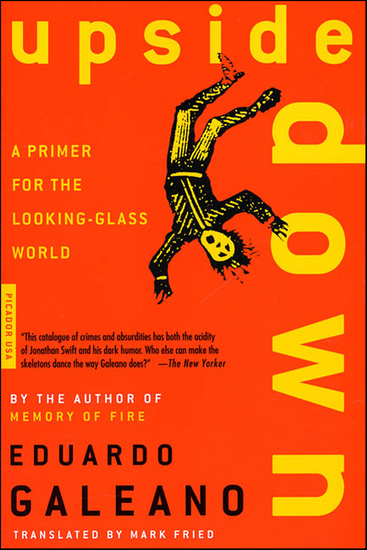
  • Upside Down - A Primer for the Looking-Glass World - cover

    Upside Down - A Primer for the...

    Eduardo Galeano

    • 0
    • 0
    • 0
    From the winner of the first Lannan Prize for Cultural Freedom, a bitingly funny, kaleidoscopic vision of the First World through the eyes of the Third.Eduardo Galeano, author of the incomparable Memory of Fire Trilogy, combines a novelist's intensity, a poet's lyricism, a journalist's fearlessness, and the strong judgments of an engaged historian. Now his talents are richly displayed in Upside Down, an eloquent, passionate, sometimes hilarious exposé of our first-world privileges and assumptions.In a series of lesson plans and a “program of study” about our beleaguered planet, Galeano takes the reader on a wild trip through the global looking glass. From a master class in “The Impunity of Power” to a seminar on “The Sacred Car” —with tips along the way on “How to Resist Useless Vices” and a declaration of “The Right to Rave” —he surveys a world unevenly divided between abundance and deprivation, carnival and torture, power and helplessness. We have accepted a reality we should reject, Galeano teaches us, one where machines are more precious than humans, people are hungry, poverty kills, and children toil from dark to dark.A work of fire and charm, Upside Down makes us see the world anew and even glimpse how it might be set right.“Galeano's outrage is tempered by intelligence, an ineradicable sense of humor, and hope.” —Los Angeles Times
    Zum Buch
  • Reagan-Mondale Debate 1 - cover

    Reagan-Mondale Debate 1

    Ronald Reagan, Walter Mondale

    • 0
    • 0
    • 0
    The first of two debates between President Ronald Reagan and former Vice President Walter F. Mondale was held in Louisville, Kentucky on October 7, 1984. Barbara Walters was the debate moderator. James Weigart, Diane Sawyer, and Fred Barnes were the three panelists who asked questions. 
    This first debate was on the economy and domestic issues. Questions focused on the following topics: the nation’s economy, leadership qualities, religion, political issues, abortion, federal taxation, social welfare programs, the presidential campaign, and closing statements. Reagan won a landslide victory in 1984 winning every state except Minnesota and the District of Columbia. 
    Note: 43 seconds of the audio (part of Barbara Walter’s introduction) was garbled. The section from 57 seconds to 1 minute 40 seconds was omitted. This omitted section can be seen and heard in the text and video versions at the Ronald Reagan Presidential Library. Search online for “Ronald Reagan major speeches” to see both a text version and a video version of this debate.  
    Audio recording courtesy of the Ronald Reagan Presidential Library. 
    aspenleafmedia.com
    Zum Buch
  • On Disinformation - How to Fight for Truth and Protect Democracy - cover

    On Disinformation - How to Fight...

    Lee McIntyre

    • 0
    • 0
    • 0
    The effort to destroy facts and make America ungovernable didn't come out of nowhere. It is the culmination of seventy years of strategic denialism. In On Disinformation, Lee McIntyre shows how the war on facts began, and how ordinary citizens can fight back against the scourge of disinformation that is now threatening the very fabric of our society. Drawing on his twenty years of experience as a scholar of science denial, McIntyre explains how autocrats wield disinformation to manipulate a populace and deny obvious realities, why the best way to combat disinformation is to disrupt its spread, and most importantly, how we can win the war on truth. 


    McIntyre goes through the history of strategic denialism to show how we arrived at this precarious political moment and identifies the creators, amplifiers, and believers of disinformation. On Disinformation lays out ten everyday practical steps that we can take as ordinary citizens—from resisting polarization to pressuring our Congresspeople to regulate social media—as well as the important steps our government (if we elect the right leaders) must take. 


    On Disinformation empowers us to save our republic from autocracy before it is too late.
    Zum Buch