Rejoignez-nous pour un voyage dans le monde des livres!
Ajouter ce livre à l'électronique
Grey
Ecrivez un nouveau commentaire Default profile 50px
Grey
Abonnez-vous pour lire le livre complet ou lisez les premières pages gratuitement!
All characters reduced
School Governance Effects - cover

School Governance Effects

Zuri Deepwater

Traducteur A AI

Maison d'édition: Publifye

  • 0
  • 0
  • 0

Synopsis

School Governance Effects explores the vital link between governance models and institutional performance in K-12 education. It examines how different governance structures, from centralized public systems to decentralized models, influence a school's ability to meet objectives, maintain financial health, and cultivate accountability. The book highlights that a school's governance model's effectiveness hinges not just on its structure but on its alignment with the school community's unique needs. For example, the book stresses that successful resource allocation is not solely about the amount of funding, but how effectively that funding aligns with the school's specific educational goals.

 
The book progresses by first defining and categorizing various school governance models within a historical context. It then evaluates their effects on school efficiency, accountability, and stakeholder engagement. It emphasizes adaptive governance, advocating for continuous evaluation and adjustment of governance structures. The analysis blends quantitative data, like student performance statistics, with qualitative insights from case studies and surveys. This approach provides a comprehensive understanding of how governance impacts transparency, stakeholder involvement, and performance evaluation within educational institutions.

 
This book offers a valuable resource for policymakers, school administrators, and researchers by presenting evidence-based recommendations for selecting and implementing governance models that optimize both efficiency and accountability. It provides a framework for evaluating the effectiveness of existing models and identifying areas for improvement, and it engages with ongoing debates surrounding educational reforms.
Disponible depuis: 21/02/2025.
Longueur d'impression: 98 pages.

D'autres livres qui pourraient vous intéresser

  • History of Tibet: A Captivating Guide to Ancient Kingdoms the Tibetan Empire Mongol Invasions Buddhism Chinese Rule and Modern Times - cover

    History of Tibet: A Captivating...

    Captivating History

    • 0
    • 0
    • 0
    Embark on an epic journey through the heart and history of Tibet! 
    Discover the majestic landscapes, ancient traditions, and the relentless quest for freedom in this captivating journey. Explore the spiritual and everyday life of Tibetan civilization, from the mysterious beginnings of its people to their ongoing struggles under Chinese rule. 
    Inside, you will discover:Ancient Beginnings: Trace the roots of Tibetan civilization and delve into its spiritual heritage.Spiritual Legacy: Learn about the origins of the Dalai Lama and the profound impact of Tibetan Buddhism.Kingdoms and Conquests: Explore the historical alliances and conflicts, including the pivotal Mongolian period.Under Chinese Rule: Unravel the complex history of Tibetan-Chinese relations from ancient ties to modern struggles. 
    Why This Audiobook:Unique Cultural Insights: This audiobook offers a deep dive into the heart of Tibetan culture, spirituality, and history, illuminating a world that remains largely mysterious to the outside observer.Timely and Relevant: At a time when the global conversation about cultural preservation and autonomy is more pertinent than ever, this audiobook provides essential context about one of the world’s most enduring struggles for cultural survival and political independence.Comprehensive and Accessible: Written with both the passionate historian and the casual reader in mind, this audiobook balances scholarly detail with engaging narrative, making the rich history of Tibet accessible to all. 
    Don’t miss out! Scroll up and click the “add to cart” button to start your journey into the heart of Tibet today!
    Voir livre
  • The Digital Minimalism Revolution - How to Simplify Your Life in the Digital Age - cover

    The Digital Minimalism...

    Brian Gibson

    • 0
    • 0
    • 0
    Our hyper-connected world is constantly bombarded with digital distractions that consume our time and attention. The digital world can feel overwhelming and all-consuming, from social media notifications to endless email chains. The Digital Minimalism Revolution offers a fresh perspective on regaining control of our digital lives and finding balance in an age of information overload. Drawing on the latest research and real-life examples, this book offers practical strategies for reducing our dependence on technology while maximizing its benefits. Whether you want to enhance your productivity, deepen your relationships, or enjoy more downtime, The Digital Minimalism Revolution will inspire you to declutter your digital world and reclaim your time and attention for what truly matters.
    Voir livre
  • Rethinking global value chains amid geo-economic fragmentation - cover

    Rethinking global value chains...

    Matteo Bursi, Ettore Greco

    • 0
    • 0
    • 0
    The uneven recovery from the 2008 global financial crisis led to a stabilisation of international trade and capital flows. However, in the following years the surge of protectionist measures and deepening rivalries between big powers precipitated a crisis of the rule-based multilateral order. The pandemic crisis and the impact of the Russian invasion of Ukraine have boosted international economic fragmentation along geopolitical lines and may drive the global economy towards a reversal of the globalisation process that marked the second half of the 20th century.
    Mounting cross-border restrictions on the exchange of essential goods and services during the recent poly-crisis has caused big disruptions in global production networks evamping the debate on the future of global economic interdependence, and the potentialities and downsides of reshoring, nearshoring or friendshoring processes. Indeed, the reconfiguration of global value chains (GVCs) has been increasingly debated as an economic policy tool to secure the supply of critical products and establish economic security at the national level. Such defensive posturing raises concerns over how to manage emerging trade-offs between the benefits of openness (economic integration) and those of autonomy (economic security).
    The Istituto Affari Internazionali (IAI), in the framework of its partnership with Intesa Sanpaolo, launched a task force of experts to contribute to the current discussion on the implications and possible future configurations of international production networks at a time of a resurgence of national economic security. The overall research effort has involved different regional perspectives and multidisciplinary approaches to shed light on the implications of the policy-driven process of international economic fragmentation in the fields of trade, technology, labour, international finance, global public goods and other dimensions of international economic relations.
    Voir livre
  • Who killed Napoléon? 10 New scientific investigations to rescue history - cover

    Who killed Napoléon? 10 New...

    Gérard Lucotte, Philippe Bornet

    • 0
    • 0
    • 0
    “Let the muse of history be silent, and make way for genetics.” Jean Tulard. 
    “Fascinating.” Jean-Noël Fabiani, Professor Emeritus, Chair of the History of Medicine. 
    
    Until recent years, many mysteries and rumors have surrounded Napoleon. Was Napoleon's body taken by the British and placed in Westminster Abbey? Was he poisoned with arsenic? Did he die of hereditary stomach cancer, as the English claimed, or of hepatitis and dysentery rampant on that unhealthy island? Was Napoleon III descended from the Emperor? Did the Emperor's physician remove Napoleon's penis after his death on St. Helena in 1821?
    To answer these and many other questions, Professor Gérard Lucotte spent twelve years working on this subject. He was commissioned by Prince Charles Napoléon (a descendant of the Emperor, through the branch descended from Jérôme Bonaparte, the Emperor's youngest brother) and Count Walewski (a descendant of Napoleon the First’s natural son) to work on Napoléon's DNA. Thanks to his genetics laboratory and electron microscope, he has achieved a gigantic feat that will astound all Napoleon enthusiasts.
    Voir livre
  • Waning Crescent - The Rise and Fall of Global Islam - cover

    Waning Crescent - The Rise and...

    Faisal Devji

    • 0
    • 0
    • 0
    A compelling examination of the rise of Islam as a global historical actor Until the nineteenth century, Islam was variously understood as a set of beliefs and practices. But after Muslims began to see their faith as an historical actor on the world stage, they needed to narrate Islam's birth anew as well as to imagine its possible death. Faisal Devji argues that this change, sparked by the crisis of Muslim sovereignty in the age of European empire, provided a way of thinking about agency in a global context: an Islam liberated from the authority of kings and clerics had the potential to represent the human race itself as a newly empirical reality. Ordinary Muslims, now recognized as the privileged representatives of Islam, were freed from traditional forms of Islamic authority. However, their conception of Islam as an impersonal actor in history meant that it could not be defined in either religious or political terms. Its existence as a civilizational and later ideological subject also deprived figures like God and the Prophet of their theological subjectivities while robbing the Muslim community of its political agency. Devji illuminates this history and explores its ramifications for the contemporary Muslim world.
    Voir livre
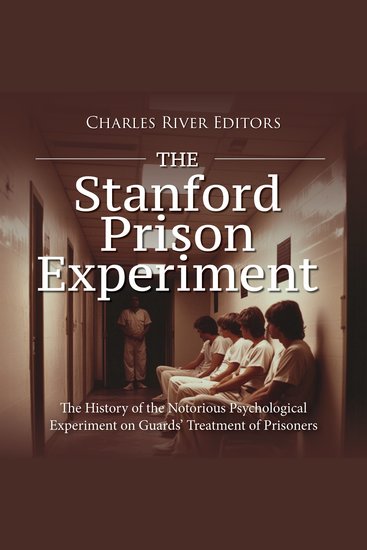
  • Stanford Prison Experiment The: The History of the Notorious Psychological Experiment on Guards’ Treatment of Prisoners - cover

    Stanford Prison Experiment The:...

    Editors Charles River

    • 0
    • 0
    • 0
    What happens when you put good people in a bad place? 
    That was the question that an experiment in 1971 set out to answer when Stanford University professor and psychologist Philip Zimbardo used funding provided by the U.S. Office of Naval Research to create a make-believe prison in the basement of a university building. Male students were offered the chance to take part in the two-week experiment (and to make $15 per day). All applicants were carefully screened to ensure that they were healthy, emotionally and psychologically stable. 24 men were selected out of 75 that had applied. These men were then randomly assigned to play the role of either prisoners or guards in the “prison.” 
    Initially, nobody was particularly concerned: after all, these were stable, intelligent young men who understood that they would be playing a role for just two weeks. Some people even considered that the experiment was pointless because everyone involved knew that they were simply acting roles for a limited time, so they couldn’t be expected to behave in the ways that real prisoners and guards did. 
    Nonetheless, the experiment began on August 15th, 1971, and just six days later, on August 20th, it was abruptly and unexpectedly terminated after the “guards” had become brutal and sadistic and the “prisoners” had become withdrawn, fearful, and apathetic. There were real concerns that someone might end up being seriously hurt or suffer long-term psychological damage. 
    How could a group of nice, healthy, intelligent young men suddenly transform into sadistic thugs? How could another equally intelligent group of young men suddenly become apathetic victims of this brutality? What did this say about the malleability of human behavior, even when everyone involved knew that this wasn’t real?
    Voir livre