Rejoignez-nous pour un voyage dans le monde des livres!
Ajouter ce livre à l'électronique
Grey
Ecrivez un nouveau commentaire Default profile 50px
Grey
Abonnez-vous pour lire le livre complet ou lisez les premières pages gratuitement!
All characters reduced
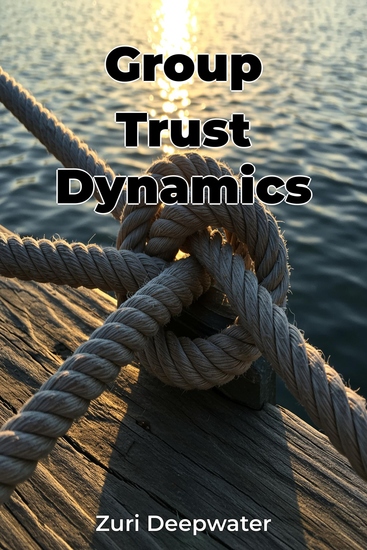
Group Trust Dynamics - cover

Group Trust Dynamics

Zuri Deepwater

Traducteur A AI

Maison d'édition: Publifye

  • 0
  • 0
  • 0

Synopsis

Group Trust Dynamics explores the complex world of trust within groups and organizations, examining how it's formed, maintained, and sometimes lost. This book uniquely combines insights from organizational psychology and behavioral economics to provide a holistic understanding. It emphasizes that trust isn't a static trait but a dynamic process influenced by psychological biases, economic incentives, and communication. For example, cognitive biases like the halo effect can significantly impact trust assessments, while economic incentives shape trusting behavior in group settings. 

 
The book delves into the psychological underpinnings of trust judgments, the economic incentives that drive trusting behavior, and the critical role of communication and shared experiences. It reveals how trust directly impacts team performance, innovation, and employee well-being. The approach blends rigorous research with clear explanations and real-world examples, making it accessible to a broad audience.

 
Structured in three major sections, the book first analyzes the psychological aspects of trust, then the economic dimensions, and finally, the impact of communication and leadership. It culminates with practical strategies for building trust and addresses the ethical implications of trust management, offering valuable insights for managers, leaders, and anyone seeking to enhance collaboration within their teams.
Disponible depuis: 21/02/2025.
Longueur d'impression: 109 pages.

D'autres livres qui pourraient vous intéresser

  • American Indian Symbolism - cover

    American Indian Symbolism

    Manly Palmer Hall

    • 0
    • 0
    • 0
    The North American India is commonly a symbolist, a spiritualist, and a savant. Like most: native people groups, his spirit was en affinity with the grandiose organizations appearing about him. Besides the fact that his Manidos controlled creation from their lifted up seats over the mists, however they additionally plunged into the universe of men and blended with their red kids. The dim mists looming into the great beyond were the smoke from the calumets of the divine beings, who could construct flames of frozen wood and utilize a comet for a fire. The Native American inhabited the woods, streams, and sky with heaps of superphysical and undetectable creatures. There are legends of whole clans of Indians who lived in lake bottoms; of races who were never found in the daytime yet who, approaching from their secret caverns, wandered the earth around evening time and waylaid unwary explorers; likewise of Bat Indians, with human bodies and batlike wings, who lived in bleak woodlands and distant bluffs and who dozed hanging head descending from extraordinary branches and offshoots of rock. The red man's way of thinking of basic animals is evidently the result of his private contact with Nature, whose mysterious miracles become the producing reason for such powerful hypotheses.
    Voir livre
  • Postmortem - What Survives the John Wayne Gacy Murders - cover

    Postmortem - What Survives the...

    Courtney Lund O'Neil

    • 0
    • 0
    • 0
    On a December night in 1978, Courtney Lund O'Neil's mother, teenaged Kim Byers, saw her friend Rob Piest alive for the last time. At the end of his shift at the pharmacy where they both worked, fifteen-year-old Rob went outside to speak to a contractor named John Wayne Gacy about a possible job. That night Rob became Gacy's final victim; his body was later found in the Des Plaines River. Kim's testimony, along with a receipt belonging to her found in Gacy's house, proving that Rob had been there, would be pivotal in convicting the serial killer who assaulted and killed over thirty young men and boys. 


    Though she grew up far from Des Plaines, Courtney has lived in the shadow of that nightmare, keenly aware of its impact on her mother. In search of deeper understanding and closure, Courtney and Kim travel back to Illinois. Postmortem transforms their personal journey into a powerful exploration of the ever-widening ripples generated by Gacy's crimes. From the 1970s to the present day, his shadow extends beyond the victims' families and friends—it encompasses the Des Plaines neighborhood forever marked by his horrific murders, generations of the victims' families and friends, those who helped arrest and convict him, and many others. Postmortem is a complex story of loss and violence, grief and guilt, and the legacy that remains long after a killer is caught.
    Voir livre
  • The Irish Potato Famine - The Immigration Genocide and Deaths of Ireland - cover

    The Irish Potato Famine - The...

    Kelly Mass

    • 0
    • 0
    • 0
    From 1845 to 1852, the Great Hunger, also referred to as the Potato Famine, was a period of a lot of starvation and illness in Ireland. The period was known in Irish at the time as a Drochshaol, loosely translated as "the hard days," with the most badly affected districts in the west and south of Ireland, where the Irish language was popular (or actually "the bad life"). 
    The year 1847, at times called "Black '47," was the absolute worst year of the period. Around 1 million people died and over a million left the nation throughout the Great Famine, triggering the nation's population to come by 20% to 25%, with certain cities coming by as much as 67 percent between 1841 and 1851. And between the years 1845 and 1855, about 2.1 million people were leaving Ireland, primarily aboard package ships but also on steamboats and barks. This actually made it one of the biggest mass migrations from a single isle in all of history. 
    Let’s explore this tragic event in history, and let’s see what led up to this, what happened afterwards, and how historians look at it now.
    Voir livre
  • The Decline and Fall of the Human Empire - Why Our Species Is on the Edge of Extinction - cover

    The Decline and Fall of the...

    Henry Gee

    • 0
    • 0
    • 0
    "Henry Gee presents a pithy, fascinating account of the stages of biological evolution. ... a meditative and friendly listening experience. —AudioFile on A (Very) Short History of Life on EarthWritten and read by the award-winning author of A (Very) Short History of Life on Earth: a history of humanity on the brink of decline.A Next Big Idea Club Must-Read SelectionWe are living through a period that is unique in human history. For the first time in more than ten thousand years, the rate of human population growth is slowing down. In the middle of this century population growth will stop, and the number of people on Earth will start to decline—fast. In this provocative book, award-winning science writer Henry Gee offers a concise, brilliantly-told history of our species—and argues that we are on a rapid, one-way trip to extinction. The Decline and Fall of the Human Empire narrates the dramatic rise of humanity, how a scattered range of small groups across several continents eventually inbred, interacted, fought, established stable communities and food supplies, and began the process of dominating the planet. The human story is relatively brief—the oldest fossils of H. Sapiens date to approximately 300,000 years ago—yet the spread of our species has been unstoppable…until recently. As Gee demonstrates, our population has peaked, and is declining; our environment is becoming inimical to human life in many locations; our core resources of water, arable land, and air are diminishing; and new diseases, simmering conflicts, and ambiguous technologies threaten our collective health. Can we still change our course? Or is our own extinction inevitable?There could be a way out, but the launch window is narrow.Unless Homo sapiens establishes successful colonies in space within the next two centuries, our species is likely to stay earthbound and will have vanished entirely within another ten thousand years, bringing the seven-million-year story of the human lineage to an end.With assured narration, dramatic stories, and his signature sprightly humor, Henry Gee envisions new opportunities for the future of humanity—a future that will reward facing challenges with ingenuity, foresight, and cooperation.A Macmillan Audio production from St. Martin’s Press.
    Voir livre
  • Christian Relics and the Arma Christi: The History of the Medieval Search for Relics Related to the Passion of Christ - cover

    Christian Relics and the Arma...

    Editors Charles River

    • 0
    • 0
    • 0
    Holy relics can be found in many different religions, whether Christian, pagan, Hindu, or Buddhist. A relic is defined as something directly associated with a revered saint, teacher, ancestor, or some miraculous manifestation of deity in the material world. A relic and a reliquary are two types of sacramental tools. A reliquary is a container or box for a relic, allowing it to be displayed to the public and thus transfer its powers to magical and liturgical works. There is another definition of a relic: anything that would be a miraculous manifestation of a deity in the material world. In Christianity, there are countless numbers of relics, most of them being associated with Jesus Christ. 
    In the early years of Christianity, it was forbidden to move and share the remains of saints and martyrs, and they were protected so that their final resting places, such as catacombs and cemeteries, remained intact. The earliest recorded Christian relics, specifically the bones and ashes of martyrs, date from the 2nd century. 200 years later, St. Ambrose and others set out to dig up the corpses and honor them. At that time, it was considered that every holy body could be dismembered and divided among the faithful to worship it. The remains of corpses sometimes came into someone else's hands as a gift, and sometimes they were stolen. At one point, the demand for holy bodies was such that bodyguards were assigned to dying saints to prevent their bodies from being dismembered after death. 
    The veneration of the relics of saints was so common among the faithful because they believed saints in Heaven interceded for believers on Earth. As a result, numerous healings and miracles were attributed to the relics, and many stories and myths about miracles arose from these beliefs. By word of mouth, the stories spread among the faithful, and finally, they were recorded in books.
    Voir livre
  • Healing Your Inner Child - Transformative CBT Methods to Overcome Abandonment Trauma Heal From Childhood Emotional Neglect and Find Inner Peace - cover

    Healing Your Inner Child -...

    Daniel Hill

    • 0
    • 0
    • 0
    Do you often feel like a part of you is still trapped in the past, unable to move forward?  
    Are you haunted by feelings of abandonment or emotional neglect from your childhood?  
    Does this lingering pain impact your relationships, self-esteem, or everyday happiness?  
    You might be wondering why it's so hard to shake off these feelings, despite your best efforts. I know how deeply these wounds can run and how they can cast a shadow over your life. But I also know that it's possible to heal and find peace. You're not alone in this journey. 
    Does any of these situations sound familiar? 
    - You feel a persistent sense of loss or emptiness, as if something crucial is missing from your life. 
    - Childhood memories of being ignored, unloved, or unsupported frequently resurface, affecting your current state of mind. 
    - There's a constant battle with low self-esteem and feelings of unworthiness. 
    - You find yourself repeating unhealthy patterns in your personal and professional life. 
    - Intimacy feels challenging or frightening due to past emotional neglect. 
    Here's a little sneak preview of what you’ll get: 
    - Three Ways That You Were Made to Feel Unsafe as a Child 
    - What Happens When the Inner Child Is Wounded? 
    - The Unsafe Messages That Kids Are Exposed To 
    - How to Develop a Relationship With Your Inner Child in Two Easy Steps 
    - 5 Easy Steps to Heal Trauma 
    - Reparenting's Four Pillars and How to Get Started 
    - Cognitive Behavioral Therapy to Address Trauma and Fear of Abandonment 
    - How to Overcome Childhood Emotional Neglect 
    - The Three Elements of Emotion 
    - Trauma Bonding: How to Heal from ItYour path to healing and inner peace is just a click away. Don't let the shadows of the past dictate your future. 
    Voir livre