Begleiten Sie uns auf eine literarische Weltreise!
Buch zum Bücherregal hinzufügen
Grey
Einen neuen Kommentar schreiben Default profile 50px
Grey
Jetzt das ganze Buch im Abo oder die ersten Seiten gratis lesen!
All characters reduced
Piping Hot! (Pot-Bouille) - A Realistic Novel - cover

Piping Hot! (Pot-Bouille) - A Realistic Novel

Zola Émile

Verlag: DigiCat

  • 0
  • 0
  • 0

Beschreibung

In "Piping Hot!" (Pot-Bouille), Émile Zola masterfully exposes the intricate and often sordid tapestry of Parisian life during the Second Empire. This novel, the tenth installment in Zola's Rougon-Macquart series, employs a naturalistic literary style that meticulously details the everyday struggles and moral complexities of a group of bourgeois residents in a French boarding house. Through a lens of social realism, Zola captures the essence of ambition, hypocrisy, and the quest for social ascent, while his vivid characterizations offer a nuanced understanding of the human condition amidst the fervent backdrop of urban modernization. Émile Zola, an influential figure in the naturalism literary movement, was deeply influenced by his personal experiences in a rapidly industrializing France. His commitment to portraying the darker aspects of society stems from a desire to unveil the underlying social injustices and human behaviors. Zola's exposure to working-class struggles and his passions for social reform led him to construct complex narratives that examine the interplay of environment and heredity on individuals' lives, culminating in the compelling characters of "Piping Hot!" This novel is a crucial read for those interested in the foundations of modern literature and social commentary. Zola's keen observations and gripping narrative not only prefigure the concerns of contemporary society but also challenge readers to reflect on their own ethical boundaries. "Piping Hot!" invites you to immerse yourself in its richly textured world, making it an essential addition to the canon of literary realism.
Verfügbar seit: 02.06.2022.
Drucklänge: 348 Seiten.
Weitere Bücher, die Sie mögen werden

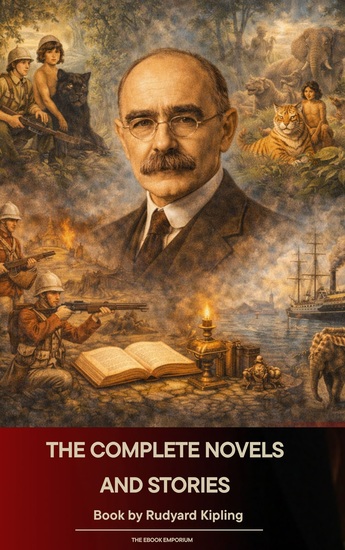
  • The Complete Novels and Stories of Rudyard Kipling - cover

    The Complete Novels and Stories...

    Rudyard Kipling

    • 0
    • 0
    • 0
    What stories shape a sense of courage, duty, and belonging?
    
    The Complete Novels and Stories of Rudyard Kipling brings together the full fiction of one of the most influential writers in the English language. From imperial India to the jungles of childhood imagination, Kipling's stories explore loyalty and power, discipline and freedom, innocence and experience.
    
    This comprehensive collection includes Kipling's novels and short stories, capturing his unmatched gift for storytelling, vivid settings, and unforgettable characters. Whether portraying soldiers and administrators, adventurous youths, or talking animals, Kipling combines narrative excitement with moral complexity and sharp observation.
    
    His work helped define adventure fiction while leaving a lasting imprint on children's literature and modern storytelling.
    
    Inside this eBook, you'll explore:
    
    All novels and short stories by Rudyard Kipling in one collection
    
    Iconic works such as The Jungle Book and Kim
    
    Stories of adventure, empire, childhood, and identity
    
    A cornerstone of British and world literature
    
    Awarded the Nobel Prize in Literature and read worldwide for generations, Rudyard Kipling's fiction remains powerful, engaging, and endlessly influential.
    
    Enter worlds of courage, conflict, and imagination. Buy now and experience the complete novels and stories of Rudyard Kipling.
    Zum Buch
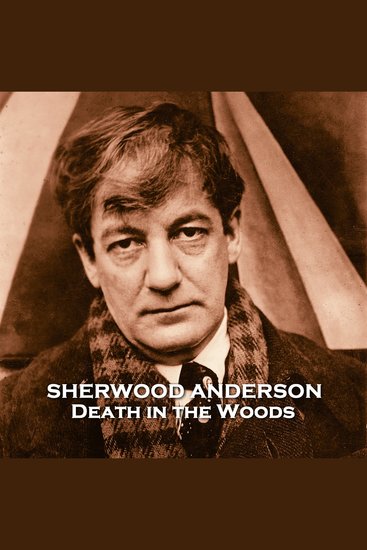
  • Death in the Woods - From their pens to your ears genius in every story - cover

    Death in the Woods - From their...

    Sherwood Anderson

    • 0
    • 0
    • 0
    Sherwood Anderson was born on 13th September 1876 in Camden, Ohio. 
    When his father’s business failed the family was forced to move on a regular basis before finally settling in Clyde, Ohio.   
    Anderson, one of 7 children, left school at 14 to take a number of jobs to help with the family finances. These were difficult years. 
    He moved to Chicago in search of opportunities before joining the Army for the US-Spanish War of 1898.  He then entered Wittenberg Academy in Springfield, Ohio to complete his education before moving back to Chicago to take up a writing job. 
    In 1904 he married Cornelia Lane, her family had resources and Anderson was keen, with this family backing, to run a business. 
    The early years of their marriage produced 3 children but a nervous breakdown in 1907 and another in 1912, despite his success as a business entrepreneur, resulted in him abandoning his family and deciding that a literary career would be best for him.   
    A move back to Chicago resulted in a job in advertising, a divorce from Cornelia and marriage to Tennessee Mitchell.  
    That same year his first book ‘Windy McPherson’s Son’ was released and in 1919, his most famous book, ‘Winesburg, Ohio’, a collection of short stories about life in an Ohio town was released. 
    Anderson continued to write short stories, novels and non-fiction but his only true bestseller came with ‘Dark Laughter’.  His influence on writers that followed, from Faulkner to Hemingway, was immense. He also married a further two times.   
    Sherwood Anderson died in in Colón, Panama, on the 8th March, 1941. He was 64. An autopsy revealed that a swallowed toothpick had resulted in peritonitis. 
    His headstone epitaph reads ‘Life, Not Death is the Great Adventure.’
    Zum Buch
  • Festival The (Unabridged) - cover

    Festival The (Unabridged)

    H. P. Lovecraft

    • 0
    • 0
    • 0
    "The Festival" is a short story by H. P. Lovecraft written in October 1923 and published in the January 1925 issue of Weird Tales.
    Zum Buch
  • The Comedy of Errors - cover

    The Comedy of Errors

    William Shakespeare

    • 0
    • 0
    • 0
    The Comedy of Errors is one of Shakespeare's earliest and shortest plays. This comedy utilizes slapstick humor, word play, and mistaken identities to create a series of farcical accidents. Over time, the play's title has become an idiom used to describe "an event or series of events made ridiculous by the number of errors that were made throughout."
    In Ephesus, the law forbids entry to any merchants from Syracuse, and if they are discovered within the city, they must pay a thousand marks or be put to death. Aegeon, an old Syracusian merchant, is arrested and Solinus, the Duke of Ephesus, listens to his story of coming to the city. Long ago, Aegeon was on a sea voyage. Traveling with him was his wife, his twin sons, and their twin slaves. The family becomes separated during a tempest; Aegeon, one son, and one slave were rescued together, and the others were never to be seen again. Years later his son Antipholus and his slave Dromio left to search for their long lost siblings; after the boys didn't return, Aegeon set out to bring his son back home. Moved by this story, the duke allows Aegeon one day to get the money to pay his fine and to find his family.
    Zum Buch
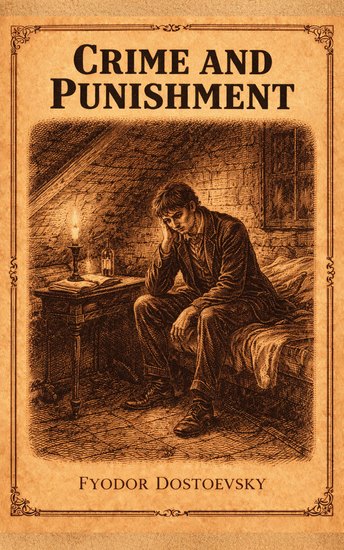
  • Crime and Punishment - cover

    Crime and Punishment

    Fyodor Dostoevsky

    • 0
    • 0
    • 0
    Crime and Punishment is a towering masterpiece of psychological fiction that delves into guilt, morality, redemption, and the turbulent depths of the human conscience. In this profound and gripping novel, Fyodor Dostoevsky explores the devastating consequences of a single, irreversible act and the spiritual struggle that follows.
    
    The story centers on Rodion Raskolnikov, a destitute former student living in St. Petersburg. Intelligent, proud, and isolated, he develops a dangerous theory: that certain extraordinary individuals possess the moral right to transgress laws for a higher purpose. Driven by desperation and intellectual arrogance, he commits a brutal murder, believing himself justified and immune to remorse.
    
    Yet the true punishment is not delivered by the courts—it unfolds within his own mind. Tormented by guilt, paranoia, and feverish confusion, Raskolnikov spirals into psychological torment. His interactions with a cast of vividly drawn characters—among them the compassionate and self-sacrificing Sonia, the relentless investigator Porfiry Petrovich, and his devoted mother and sister—intensify his inner conflict. Each encounter forces him to confront the moral implications of his philosophy and the emotional cost of his actions.
    
    Dostoevsky masterfully portrays the suffocating atmosphere of poverty-stricken urban life, using the crowded streets and claustrophobic rooms of the city to mirror the protagonist's mental anguish. The novel probes profound questions: What defines justice? Can intellectual reasoning justify immoral acts? Is redemption possible after grave wrongdoing? Through Raskolnikov's suffering, the narrative examines the limits of rationalism and the necessity of compassion, humility, and faith.
    
    Dark, suspenseful, and deeply philosophical, Crime and Punishment is more than a tale of murder—it is an exploration of conscience and the human capacity for both destruction and spiritual renewal. Dostoevsky's insight into the complexities of guilt and redemption has ensured the novel's enduring place as one of the greatest achievements in world literature.
    Zum Buch
  • A Wicked Woman - From their pens to your ears genius in every story - cover

    A Wicked Woman - From their pens...

    Jack London

    • 0
    • 0
    • 0
    John Griffith Chaney was born on January 12th, 1876 in San Francisco.   
    His father, William Chaney, was living with Flora Wellman when she became pregnant.  Chaney insisted she have an abortion.  Flora's response was to turn a gun on herself.  Although her wounds were not severe the trauma made her temporarily deranged. 
    In late 1876 his mother married John London and the young child was brought to live with them as they moved around the Bay area, eventually settling in Oakland where now, calling himself Jack, he completed grade school. 
    Jack worked hard at several jobs, sometimes 12-18 hours a day, but his dream was university.  He studied hard and borrowed the money to enrol in the summer of 1896 at the University of California in Berkeley. 
    In 1897, at 21, Jack searched out newspaper accounts of his mother's suicide attempt and for the name of his biological father. He wrote to Chaney, then living in Chicago, who claimed he could not be Jack’s father because he was impotent and casually asserted that London's mother had relations with other men.  Jack, devastated by the response, quit Berkeley and went to the Klondike. Other accounts suggest that his dire finances presented Jack with the excuse he needed to leave. 
    In the Klondike Jack began to gather material for his writing but also accumulated many health problems, including scurvy, which together with hip and leg problems he would carry for the rest of his life. 
    During the late 1890's Jack was regularly publishing short stories and by the turn of the century full blown novels. 
    By 1904 Jack had married, fathered two children and was now in the process of divorcing.  A stint as a reporter on the Russo-Japanese war of 1904 was equal amounts trouble and experience. But that experience was always put to good use in a continuing and remarkable output of work. 
    In 1905 he married Charmian Kittredge who at last was a soul and companion who brought him some semblance of peace despite his advancing alcoholism and his incurable wanderlust. 
    Twelve years later Jack had amassed both wealth and a literary reputation through such classics as ‘The Call of the Wild’, ‘White Fang’ and many others. He had a reputation as a social activist and was a tireless friend of the workers.   
    Jack London died suffering from dysentery, late-stage alcoholism and uremia, aged only 40, on November 22nd 1916 at his property in Glen Elen in California.
    Zum Buch