Begleiten Sie uns auf eine literarische Weltreise!
Buch zum Bücherregal hinzufügen
Grey
Einen neuen Kommentar schreiben Default profile 50px
Grey
Jetzt das ganze Buch im Abo oder die ersten Seiten gratis lesen!
All characters reduced
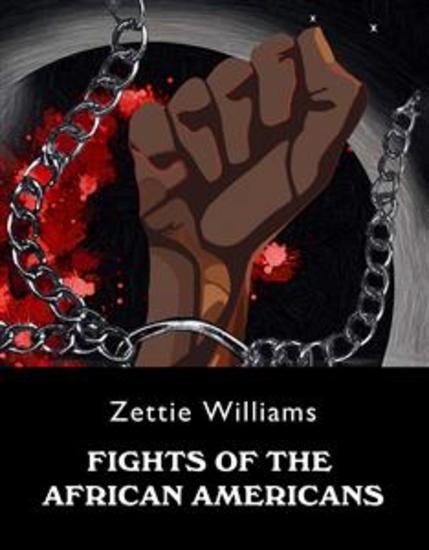
Fights of the African Americans - cover

Fights of the African Americans

Zettie Williams

Verlag: BooxAi

  • 0
  • 0
  • 0

Beschreibung

It is my hope that the readers of this book will come to realization that although people are of different colors and creed, we are all God's children. Everyone have the same body parts inside of them and no race is better than another. There are many opportunities in the world and each of us should not be discouraged or hindered from taking advantage of the opportunities. I hope that people, especially people of color will dream big and follow through on their dreams.
Verfügbar seit: 26.07.2022.

Weitere Bücher, die Sie mögen werden

  • Hate and Reconciliation - Approaches to Fostering Relationships between People and Peace - cover

    Hate and Reconciliation -...

    Guido Cuyvers

    • 0
    • 0
    • 0
    Hatred is human and current. It is an intrinsic part of what can happen between people. Personal experiences can lead people to hate someone. In society and even on a global level, hatred is again and again the motor of misunderstanding and often also of violence between people. Sometimes hate smolders almost unconsciously; at other times he is furious and serves as a flag for serious violence. 


    Hatred has many faces and seems omnipresent, that much is clear. The term "Erida complex," after the Greek goddess of hate, symbolizes the common and deeply rooted nature of hatred. After examining the nature of hate, this book focuses a wide-angle lens on its many faces, in individuals and groups as well as peoples. Facing the negativity of hatred, this book presents constructive approaches to fostering relationships between people and peace.
    Zum Buch
  • Upside Down - A Primer for the Looking-Glass World - cover

    Upside Down - A Primer for the...

    Eduardo Galeano

    • 0
    • 0
    • 0
    From the winner of the first Lannan Prize for Cultural Freedom, a bitingly funny, kaleidoscopic vision of the First World through the eyes of the Third.Eduardo Galeano, author of the incomparable Memory of Fire Trilogy, combines a novelist's intensity, a poet's lyricism, a journalist's fearlessness, and the strong judgments of an engaged historian. Now his talents are richly displayed in Upside Down, an eloquent, passionate, sometimes hilarious exposé of our first-world privileges and assumptions.In a series of lesson plans and a “program of study” about our beleaguered planet, Galeano takes the reader on a wild trip through the global looking glass. From a master class in “The Impunity of Power” to a seminar on “The Sacred Car” —with tips along the way on “How to Resist Useless Vices” and a declaration of “The Right to Rave” —he surveys a world unevenly divided between abundance and deprivation, carnival and torture, power and helplessness. We have accepted a reality we should reject, Galeano teaches us, one where machines are more precious than humans, people are hungry, poverty kills, and children toil from dark to dark.A work of fire and charm, Upside Down makes us see the world anew and even glimpse how it might be set right.“Galeano's outrage is tempered by intelligence, an ineradicable sense of humor, and hope.” —Los Angeles Times
    Zum Buch
  • The Second Estate - How the Tax Code Made an American Aristocracy - cover

    The Second Estate - How the Tax...

    Ray D. Madoff

    • 0
    • 0
    • 0
    A revelatory book that lifts the curtain on America’s most consequential public deception: how the rich get richer using tools the government gave them. 
     
    Amid conflicting narratives about the drivers of wealth and inequality in the United States, one constant hovers in the background: the US tax code. No political force has been more consequential—or more utterly opaque—than the 7,000-page document that details who pays what in American society and government. Most of us have a sense that it’s an unfair system. But does anyone know exactly how it’s unfair? 
     
    Legal scholar Ray D. Madoff knows. In The Second Estate, she offers an unprecedented look behind the scenes of America’s byzantine system of taxation, laying bare not only its capacity to consolidate wealth but also the mechanisms by which it has created two fundamentally separate American societies: the working Americans who pay and the ultra-rich who benefit. 
     
    This is not a story of offshore accounts or secret tax havens. In The Second Estate, Madoff shows that the US system itself has, over time, been stripped and reconstituted such that it now offers a series of secret paths, hidden in plain sight, for wealthy people in the know to avoid taxation altogether. Through the strategic avoidance of traditional income, leveraging of investments and debt, and exploitation of rules designed to promote charitable giving, America’s wealthy do more than just pay less than their share; they remove themselves from the tax system entirely. Wealth becomes its own sovereign state, and the living is surprisingly—and maddeningly—cheap.
    Zum Buch
  • Image Control - Art Fascism and the Right to Resist - cover

    Image Control - Art Fascism and...

    Patrick Nathan

    • 0
    • 0
    • 0
    Susan Sontag meets Hanif Abdurraqib in this fascinating exploration of the unexpected connections between how we consume images and the insidious nature of Fascism. 


    Images come at us quickly, often without context. A photograph of Syrian children suffering in the wake of a chemical attack segues into a stranger's pristine Instagram selfie. Before we can react to either, a new meme induces a laugh and a share. While such constant give and take might seem innocent, even entertaining, this barrage of content numbs our ability to examine critically how the world, broken down into images, affects us. Images without context isolate us, turning everything we experience into mere transactions. It is exactly this alienation that leaves us vulnerable to fascism—a reactionary politics that is destroying not only our lives and our nations, but also the planet's very ability to sustain human civilization. 


    Who gets to control the media we consume? Can we intervene, or at least mitigate the influence of constant content? Mixing personal anecdotes with historical and political criticism, Image Control explores art, social media, photography, and other visual mediums to understand how our culture and our actions are manipulated, all the while building toward the idea that if fascism emerges as aesthetics, then so too can anti-fascism.
    Zum Buch
  • Hamburg Climate Futures Outlook 2024 - Conditions for Sustainable Climate Change Adaptation - cover

    Hamburg Climate Futures Outlook...

    Anita Engels, Jochem Marotzke,...

    • 0
    • 0
    • 0
    Many countries, communities, and social actors around the world are struggling to cope with the impacts of climate change. Adapting to climate change in a sustainable manner involves a huge collective effort and is barely happening. How can sustainable climate change adaptation become plausible? The Hamburg Climate Futures Outlook 2024 provides a unique systematic and global assessment of the context conditions for sustainable climate change adaptation, evaluating the social dynamics of deep decarbonization and the physical dynamics in regional climate variability and extremes. Through nine case studies across the globe, the assessment provides insights into key barriers and opportunities for sustainable climate change adaptation.
    Zum Buch
  • I Hope We Choose Love - A Trans Girl's Notes from the End of the World - cover

    I Hope We Choose Love - A Trans...

    Kai Cheng Thom

    • 0
    • 0
    • 0
    What can we hope for at the end of the world? What can we trust in when community has broken our hearts? What would it mean to pursue justice without violence? How can we love in the absence of faith? 


    In a heartbreaking yet hopeful collection of personal essays and prose poems, blending the confessional, political, and literary, Kai Cheng Thom dives deep into the questions that haunt social movements today. With the author's characteristic eloquence and honesty, I Hope We Choose Love proposes heartfelt solutions on the topics of violence, complicity, family, vengeance, and forgiveness. Taking its cues from contemporary thought leaders in the transformative justice movement such as adrienne maree brown and Leah Lakshmi Piepzna-Samarasinha, this provocative book is a call for nuance in a time of political polarization, for healing in a time of justice, and for love in an apocalypse.
    Zum Buch