Begleiten Sie uns auf eine literarische Weltreise!
Buch zum Bücherregal hinzufügen
Grey
Einen neuen Kommentar schreiben Default profile 50px
Grey
Jetzt das ganze Buch im Abo oder die ersten Seiten gratis lesen!
All characters reduced
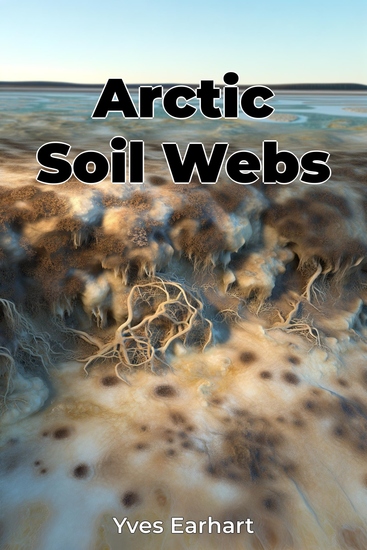
Arctic Soil Webs - cover

Arctic Soil Webs

Yves Earhart

Übersetzer A AI

Verlag: Publifye

  • 0
  • 0
  • 0

Beschreibung

Arctic Soil Webs uncovers the hidden world beneath the Arctic’s frozen surface, where thawing permafrost threatens to unleash vast stores of carbon—twice the amount in Earth’s atmosphere—into the climate system. The book explores how soil ecosystems, from microbes to shrubs, shape and respond to rapid environmental change, blending microbiology, ecology, and climatology to reveal their global significance. Central to its thesis is biological resilience: Arctic organisms have evolved ingenious survival strategies, like microbial communities that metabolize ancient carbon under ice, but these adaptations may falter as warming disrupts delicate balances.

 
Structured to zoom from microscopic interactions to planetary impacts, the book begins with genomic studies of permafrost microbes, whose metabolic pathways determine whether carbon escapes as CO₂ or methane. It then tracks how soil fauna, like nematodes, redistribute nutrients, and how encroaching shrubs alter microbial activity—processes that collectively influence greenhouse gas emissions. Field experiments in Siberia and Alaska, alongside climate models, highlight the disconnect between lab predictions and real-world emissions, underscoring the urgency of refining forecasts.

 
What sets Arctic Soil Webs apart is its portrayal of Arctic soils as dynamic, interconnected networks rather than inert carbon vaults. By linking microbial activity to atmospheric science and policy, it bridges disciplines while advocating for protecting permafrost as a climate priority. Accessible yet rigorous, the book translates complex concepts—like carbon flux—into relatable terms, using ice core data and warming simulations to illustrate high stakes. For anyone curious about climate change’s invisible drivers, it offers a stark reminder: the fate of these frozen ecosystems will ripple far beyond the poles.
Verfügbar seit: 25.01.2025.
Drucklänge: 71 Seiten.


Weitere Bücher, die Sie mögen werden

  • At the Edge of Mysteries - The Discovery of the Immune System - cover

    At the Edge of Mysteries - The...

    Shantha Perera

    • 0
    • 0
    • 0
    In December 2019 a new virus emerged, one that caused a global pandemic. Millions were infected. In the recesses of their fragile bodies a battle raged: between the immune system and the virus. But what is the immune system? What are its components? How do they work?
    Zum Buch
  • Exoplanets - Pulsar Planets and Super Earths Beyond Our Solar System - cover

    Exoplanets - Pulsar Planets and...

    Steff Jaywan

    • 0
    • 0
    • 0
    Exploring exoplanets opens up a realm of possibilities for understanding the vastness of the cosmos. With over 4,000 confirmed exoplanets discovered to date, each new finding offers a glimpse into the incredible diversity of worlds that exist beyond our solar system. 
      
    These exoplanets vary in size, composition, and orbital characteristics, ranging from rocky planets similar to Earth to gas giants many times the size of Jupiter. Some orbit their stars at a distance where liquid water, and potentially life, could exist—a key factor in the search for habitable worlds. By studying the atmospheres and compositions of exoplanets, scientists aim to uncover clues about their formation, evolution, and potential for hosting life. The ongoing discovery and study of exoplanets continue to reshape our understanding of the universe and our place within it.
    Zum Buch
  • AI-Powered Publishing - Launch Your Own Profitable eBooks Planners & Guides on Amazon - cover

    AI-Powered Publishing - Launch...

    Dave Jones

    • 0
    • 0
    • 0
    Unlock the Future of Passive Income with AI + Amazon KDP 🚀 
    Are you ready to turn your creativity into cash—without the guesswork? Make Money with AI: 50 Amazon KDP Ideas for Digital Products & eBooks is your ultimate guide to leveraging artificial intelligence to generate profitable, low-effort publishing ideas. Whether you're a seasoned entrepreneur or a curious beginner, this book delivers actionable strategies to help you build a scalable income stream through Amazon Kindle Direct Publishing. 
    Inside, you'll discover:💡 50 AI-powered content ideas tailored for KDP success🧠 How to use free and paid AI tools to create high-quality eBooks and digital products📈 Tips for optimizing your listings, covers, and keywords to boost visibility💸 Monetization strategies that work—even if you’re not a writer 
    No fluff. No hype. Just smart, sustainable ways to make money online using the power of AI. 
    Start your publishing empire today—one idea at a time.
    Zum Buch
  • The Invention of Tomorrow - A Natural History of Foresight - cover

    The Invention of Tomorrow - A...

    Thomas Suddendorf, Jonathan...

    • 0
    • 0
    • 0
    A spellbinding exploration of the human capacity to imagine the future  
     
    Our ability to think about the future is one of the most powerful tools at our disposal. In The Invention of Tomorrow, cognitive scientists Thomas Suddendorf, Jonathan Redshaw, and Adam Bulley argue that its emergence transformed humans from unremarkable primates to creatures that hold the destiny of the planet in their hands.  
     
    Drawing on their own cutting-edge research, the authors break down the science of foresight, showing us where it comes from, how it works, and how it made our world. Journeying through biology, psychology, history, and culture, they show that thinking ahead is at the heart of human nature—even if we often get it terribly wrong. Incisive and expansive, The Invention of Tomorrow offers a fresh perspective on the human tale that shows how our species clawed its way to control the future.
    Zum Buch
  • Gateways to the Otherworld - cover

    Gateways to the Otherworld

    Philip Gardiner

    • 0
    • 0
    • 0
    Is there an answer to the most profound question mankind has been asking itself for as long as there has been consciousness: is there life after death? 
     
    We discover that a technique exists with which we can all travel and journey to "other realities" that exist within us. Through the science of quantum physics, Gardiner shows that ancient man was far more advanced than we previously believed. The author actually undergoes his own experiments to prove the point. 
     
    Is there a universal frequency so perfect that it allows the mind to travel into other realms? Did our ancestors know of this special harmony? How does all this relate to the holographic universe and the concept of quantum entanglement? Does the Great Pyramid hold a real secret to the quantum realm? Are there ancient methods of healing that would benefit mankind? 
     
    In an all-encompassing work, the author uses the science of the day in conjunction with the most ancient of teachings, bringing them into current-day reality. Based on the best-selling book of the same name. 
     
    Join us on this journey in a very special and unique audio book version.
    Zum Buch
  • The Black Death - Plague and Transformation - cover

    The Black Death - Plague and...

    Harris Ropes

    • 0
    • 0
    • 0
    The story of the Black Death begins long before it reached the shores of Europe. At the heart of the devastation was a bacterium called Yersinia pestis, the microorganism responsible for one of the deadliest pandemics in human history. This pathogen is believed to have originated in the arid plains of Central Asia, where it lived in a natural reservoir within rodent populations, particularly marmots. These animals, though mostly isolated in remote areas, became the starting point for a chain of transmission that would eventually span continents. 
    Early outbreaks of plague-like illnesses were recorded in China and other parts of Asia as early as the 13th century, suggesting that the bacterium was already circulating in the region. However, it was the growing network of trade routes, especially the Silk Road, that allowed the disease to move rapidly from one community to another. Merchants, caravans, and travelers unknowingly carried infected fleas and rats from one trading hub to the next, creating a direct path for the disease to follow. 
    One of the most significant early episodes linked to the Black Death's arrival in Europe occurred during the Mongol siege of the Crimean city of Caffa (modern-day Feodosiya) in 1346. According to some historical accounts, the Mongols, after suffering an outbreak in their own ranks, used the infected corpses of their dead as biological weapons by catapulting them over the city walls. While the historical accuracy of this account is debated, it symbolizes the critical role Caffa played as a point of transmission. From this port city, fleeing Genoese merchants are believed to have carried the disease back to Italy by ship, bringing the plague directly into European trading centers.
    Zum Buch