Begleiten Sie uns auf eine literarische Weltreise!
Buch zum Bücherregal hinzufügen
Grey
Einen neuen Kommentar schreiben Default profile 50px
Grey
Jetzt das ganze Buch im Abo oder die ersten Seiten gratis lesen!
All characters reduced
In Their Surroundings - Localizing Modern Jewish Literatures in Eastern Europe - cover

In Their Surroundings - Localizing Modern Jewish Literatures in Eastern Europe

Yfaat Weiss, Natasha Gordinsky, Efrat Gal-Ed, Sabine Koller

Verlag: Vandenhoeck & Ruprecht

  • 0
  • 0
  • 0

Beschreibung

From the second half of the nineteenth century through to World War II, Eastern Europe, especially the territories that formerly made up the Pale of Settlement in the Tsarist Empire, witnessed a Jewish cultural flowering that went hand-in-hand with a multifaceted literary productivity in the Hebrew and Yiddish languages. Accompanied and sometimes directly affected by the dramatic political ruptures of the era, many authors experimented with various modernist poetics in the context of a culturally and literarily closely interwoven milieu. This beautifully illustrated catalogue presents for the first time some of the key figures of the era, including in each case a portrait of the author and a close reading of selected texts, including Yosef Ḥayim Brenner, Leah Goldberg, Moyshe Kulbak, and Deborah Vogel. Of particular interest here is the productive entanglement of cultures and literatures, of cultural contact and transfer, and the significance of space and place for the development of modern Jewish literatures.
Verfügbar seit: 12.12.2022.
Drucklänge: 278 Seiten.

Weitere Bücher, die Sie mögen werden

  • Structuralism - Philosophy and Patterns in Human Culture - cover

    Structuralism - Philosophy and...

    Hector Davidson

    • 0
    • 0
    • 0
    Structuralism is an intellectual movement that emerged in the early to mid-20th century, primarily influenced by the works of linguists, anthropologists, and philosophers. Its foundational premise is that human culture, including language, myths, and social institutions, can be understood through underlying structures that govern them. These structures are not always immediately visible but influence how individuals and societies behave, think, and organize themselves. 
    At its core, structuralism asserts that elements of human culture must be studied in relation to one another within a larger system. For example, language can only be fully understood when the relationships between words and their meanings are considered. This perspective contrasts with earlier intellectual traditions that focused on individual elements, seeking meaning through isolated concepts. Instead, structuralism emphasizes the interconnections and patterns that form the basis of human existence. 
    The intellectual origins of structuralism can be traced back to the work of Swiss linguist Ferdinand de Saussure. In his work, Saussure argued that language is a system of signs, each of which acquires meaning not by its inherent qualities but through its relationship to other signs. His concept of the "signifier" (the word or symbol) and the "signified" (the concept or meaning) set the stage for structuralist thought. Saussure’s approach highlighted the importance of studying language as a system of differences, where meanings are produced not in isolation but in opposition to other meanings.
    Zum Buch
  • 7 Seconds to Die - A Military Analysis of the Second Nagorno-Karabakh War and the Future of Warfighting - cover

    7 Seconds to Die - A Military...

    John Antal, Alexander Kott

    • 0
    • 0
    • 0
    The first full analysis of the second Nagorno-Karabakh war—the first war in history won primarily by unmanned systems. 


    The second Nagorno-Karabakh war—fought between Armenia and Azerbaijan between September 24 and November 10, 2020—was the first war in history won primarily by unmanned systems. 


    This forty-four-day war resulted in a decisive military victory for Azerbaijan. Armenia was outfought, outnumbered, and outspent and lost even though they controlled the high ground in a mountainous region that favored traditional defense. Azerbaijan's alliance with Turkey, and close technological support from Israel, strategically isolated Armenia. In addition, Turkey's posturing influenced the Russians not to intervene to support Armenia. That Azerbaijan attacked Armenia during the pandemic was an additional factor. The fact that Azerbaijan won the war is not extraordinary, considering the correlation of forces arrayed against Armenia. What is exceptional is that this was the first modern war primarily decided by unmanned weapons. In this war the Turkish-made BAYRAKTAR TB2 Unmanned Air Combat Vehicle (UCAV) and the Israeli-made HAROP Loitering Munition (LM) dominated the fighting and provided Azerbaijan with a war-winning advantage.
    Zum Buch
  • Quantum Shift The: How to Upgrade Your Mind Like a Supercomputer - Unlocking Your Brain’s True Potential with Science and Strategy - cover

    Quantum Shift The: How to...

    JOSEPH ALLEN

    • 0
    • 0
    • 0
    Do you ever feel like your mind is stuck in an outdated operating system? What if you could upgrade it? 
    The Quantum Shift is your guide to reprogramming your brain, unlocking peak performance, and achieving breakthrough thinking. Through neuroscience, cognitive psychology, and cutting-edge strategies, this book will teach you how to:*Rewire your brain for success using neuroplasticity.Master the art of focus and deep work.Enhance memory and learning with proven techniques.Develop unshakable mental resilience and emotional intelligence.Tap into your superconscious mind for creative problem-solving.Upgrade your mind. Upgrade your life. The shift starts now.
    Zum Buch
  • The Iranian Revolution - Rise of the Ayatollahs - cover

    The Iranian Revolution - Rise of...

    Nova Ashford

    • 0
    • 0
    • 0
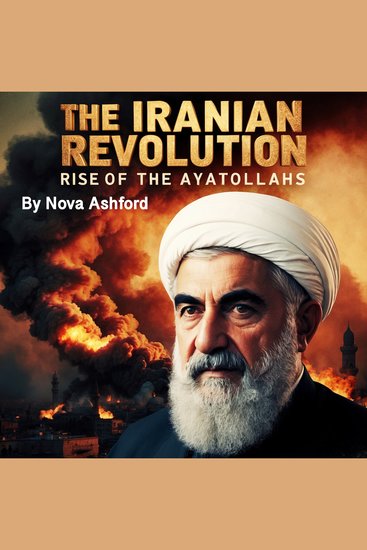
    Before the streets of Tehran echoed with revolutionary chants and the name of Ayatollah Khomeini became a global symbol of defiance, Iran was ruled by Mohammad Reza Shah Pahlavi—a monarch whose ambition was to modernize his country at any cost. Known as the "King of Kings," the Shah envisioned an Iran that could rival Western nations in technology, infrastructure, and global prestige. His White Revolution, launched in the 1960s, was a sweeping series of reforms aimed at rapidly modernizing the nation. Land redistribution, women's suffrage, industrial expansion, and increased secular education were all central to his vision. In the eyes of Western powers, especially the United States, he was a key ally and a symbol of stability in a volatile region. 
    But beneath this polished exterior, discontent festered. The Shah’s modernization efforts, while bold, were top-down and often clashed with Iran’s deeply rooted religious and traditional structures. Many in the rural population saw land reforms as chaotic and unfair, while urban intellectuals criticized the regime's autocratic nature. The clergy, once influential in shaping public life and morality, saw their role increasingly diminished. Religious scholars and conservative families grew uneasy as Western influence crept deeper into Iranian society, challenging long-standing cultural and Islamic norms. 
    Moreover, the Shah ruled with an iron grip. Political dissent was crushed by SAVAK, the brutal secret police known for its surveillance, torture, and disappearances. Political parties were neutered or banned altogether, and elections were often staged performances. Public criticism of the monarchy was not tolerated, driving opposition voices either underground or into exile. Despite vast oil revenues, economic inequality widened, and rapid urbanization led to overcrowded cities, job shortages, and growing disillusionment among the working class and youth.
    Zum Buch
  • A Rare Recording of Bill Wilson - cover

    A Rare Recording of Bill Wilson

    Bill Wilson

    • 0
    • 0
    • 0
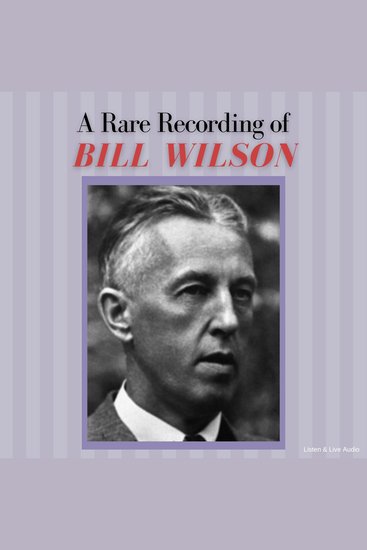
    Bill Wilson (1895 – 1971), also known as Bill W., was the co-founder of Alcoholics Anonymous (AA), a group dedicated to helping alcoholics break their habit. AA has over two million members belonging to 100k groups of alcoholics helping other alcoholics achieve and maintain sobriety. In 1999 Time listed him as "Bill W.: The Healer" in the Time 100: The Most Important People of the Century. In this recording, Wilson gives a public lecture on the history of AA and his experience in 1934 when he was visited by old drinking companion Ebby Thacher, who had been sober for several weeks under the guidance of the evangelical Christian Oxford Group.
    Zum Buch
  • The Monsters We Make - Murder Obsession and the Rise of Criminal Profiling - cover

    The Monsters We Make - Murder...

    Rachel Corbett

    • 0
    • 0
    • 0
    A riveting work of true crime that tells the strange story of criminal profiling from Victorian times to our own. 
      
    Criminal profiling—the delicate art of collecting and deciphering the psychological “fingerprints” of the monsters among us—holds an almost mythological status in pop culture. But what exactly is it, does it work, and why is the American public so entranced by it? What do we gain, and endanger, from studying why people commit murder? In The Monsters We Make, author Rachel Corbett explores how criminal profiling became one of society’s most seductive and quixotic undertakings through five significant moments in its history. 
      
    Corbett follows Arthur Conan Doyle through the London alleyways where Jack the Ripper butchered his victims, depicts the tailgate outside of Ted Bundy’s execution, and visits the remote Montana cabin where Ted Kaczynski assembled his antiestablishment bombs. Along the way emerge the people who studied and unraveled these cases. We meet self-taught psychologist Henry Murray, who profiled Adolf Hitler at the request of the U.S. government and later profiled his own students—including the future Unabomber—by subjecting them to cruel humiliation experiments. We also meet the prominent Yale psychiatrist Dorothy Lewis, who ended up testifying that Bundy was too sick to stand trial. Finally, Corbett takes the story into our own time, explaining the rise of modern “predictive policing” policies through a study of one Florida family that the analytics targeted—to devastating effects. 
      
    With narrative intrigue and deft research, Corbett delves deep into the mythology and reality of criminal profilers, revealing how thin the line can be separating those who do harm and those who claim to stop it. 
      
    “Corbett [is] a gifted storyteller … A highly readable, endlessly revealing primer on the homicidal mind.”—Kirkus Reviews (starred review)
    Zum Buch