Join us on a literary world trip!
Add this book to bookshelf
Grey
Write a new comment Default profile 50px
Grey
Subscribe to read the full book or read the first pages for free!
All characters reduced
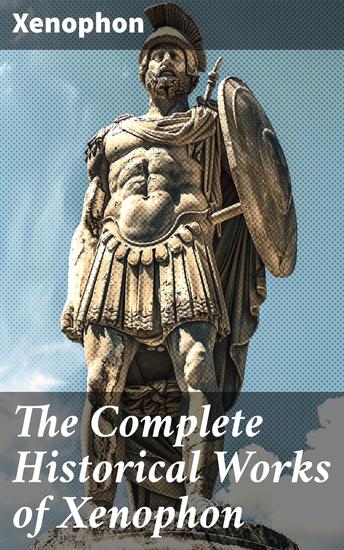
The Complete Historical Works of Xenophon - Anabasis Cyropaedia Hellenica Agesilaus Polity of the Athenians - cover

The Complete Historical Works of Xenophon - Anabasis Cyropaedia Hellenica Agesilaus Polity of the Athenians

Xenophon

Translator Henry Graham Dakyns

Publisher: Good Press

  • 0
  • 0
  • 0

Summary

The Complete Historical Works of Xenophon offers an unparalleled insight into the socio-political milieu of ancient Greece through the lens of one of its most astute observers. Comprised of works such as 'ÄòAnabasis,'Äô which chronicles his journey alongside the Ten Thousand, and 'ÄòHellenica,'Äô a continuation of Thucydides' history focusing on the Peloponnesian War, this compilation showcases Xenophon'Äôs distinctive narrative style that blends vivid storytelling with philosophical reflection. His prose, marked by clarity and precision, situates it within the broader context of classical literature, emphasizing the interplay between military leadership and ethical governance. Xenophon, a contemporary of Socrates and a soldier turned historian, was deeply influenced by the tumultuous events of his time, including the chaos of the Peloponnesian War and the decline of Athenian power. His scholarly pursuits were not merely academic; they stemmed from practical experiences and encounters with notable figures, including Socrates himself. This dual perspective as both participant and chronicler infuses his works with a unique authenticity, offering readers an intimate glimpse into the challenges of leadership and virtue. This comprehensive edition is indispensable for those seeking to understand the complex legacy of ancient Greece. It illuminates the fabric of a society undergoing profound transformation, making it a vital resource for scholars, students, and enthusiasts of classical literature and history.
Available since: 12/10/2023.
Print length: 1014 pages.

Other books that might interest you

  • Dumpster Doll - cover

    Dumpster Doll

    Michelle Mays, Michelle Moone

    • 0
    • 0
    • 0
    Michelle Mays was born into an abusive family in the Midwest. As she and her siblings cling to survival, the balance of family ties is weighed against alcoholism, drug abuse, abandonment, and despair. Hope dawns in the form of foster care, only to be deferred by multiple placements and a system not equipped to support the children it's meant to protect.Through powerful vignettes of a life disjointed, Mays's story is a journey of hope that is echoed in the experiences of thousands of children in the court and foster care systems today.Dumpster Doll is brave not because it is unique, but because it unflinchingly shines a light on family turmoil, flaws in judicial systems, and ultimately, the grit and tenacity that thousands of children exhibit each day just to make it through.
    Show book
  • EPICURUS and THE PLEASANT LIFE - A Philosophy of Nature - cover

    EPICURUS and THE PLEASANT LIFE -...

    Haris Dimitriadis

    • 0
    • 0
    • 0
    Welcome, seekers of truth! 
    This 619-page book intends to reintroduce pleasure as an innate guide to living a healthy and happy life—a simple yet powerful assertion based on empirical data, which stands up to the strictest scrutiny. 
    Along this journey, we will explore evidence throughout the historical evolution of philosophy up to the time of Epicurus, the ancient Greek philosopher who laid the foundations for a philosophy of nature. More specifically, it's the only philosophy that distinguishes pleasure as the inherent human guide to a healthy and happy life. 
    Author Haris Dimitriadis spent 15 years fervently researching the ancient Greek philosopher's teachings, a journey that he believes radically improved his worldview. In this detailed study, the author proposes that fear of pleasure characterizes contemporary society. Dimitriadis writes with open-hearted enthusiasm for his subject and believes that Epicurean philosophy has the power to change lives. With determination and perseverance, you too will find the happiness to which you are entitled. All the "goods" required for happiness are present in the natural world yet regularly overlooked or unappreciated. 
    This book is a labor of love, a vehicle by which to share my personal experience with you. Despite its technocratic nature, it is undeniably a deposition of my soul, brimming with emotion, pleasure, and pain throughout my quest for joy. I am pleased to present an empirically sound, well-documented philosophy of life that serves as a refreshing alternative to the prevailing idealistic culture. 
    And now, the caveat: happiness is indeed a choice. You are privileged to find it out through the lines of this book.
    Show book
  • Infinite World of Vision: Life Transitions for Young People with Vision Impairments - cover

    Infinite World of Vision: Life...

    Annalisa Been, Cerys Stewart,...

    • 0
    • 1
    • 0
    This project brings together stories from young people in the United Kingdom living with vision impairments, highlighting their experiences and challenges in transitioning through key life stages. Supported by the University of Bath and funded by Guide Dogs, the project was initiated by Dr. Karin Petrini and Dr. Michael Proulx, alongside Dr. Aikaterini Tavoulari, who brought both clinical and academic expertise.  
    The team collaborated with a diverse group of young people from across the UK, some with additional disabilities, who acted as co-researchers and played a key role in shaping the project's direction. After ten months of collaboration, they decided to create an audiobook, also available in print, to share their stories with a wide audience, including individuals with vision impairments, healthcare professionals, universities, and other stakeholders. 
    The audiobook features powerful, personal accounts of navigating life transitions, such as moving from childhood to adulthood, relocating to a new country, and transitioning to independent living. The stories highlight both the barriers these individuals faced and the support systems and tools that helped them overcome challenges.  
    Ultimately, the project aims to inspire, educate, and connect people, offering insights that could help others facing similar life transitions, while fostering greater understanding for those who engage with individuals with vision impairments.
    Show book
  • Small but Important Riots - The Cavalry Battles of Aldie Middleburg and Upperville - cover

    Small but Important Riots - The...

    Robert F. O’Neill

    • 0
    • 0
    • 0
    June 1863. The American Civil War was two years old, and the U.S. Army in Virginia was in chaos. Reeling after the recent defeat at Chancellorsville, the Federals, especially the Cavalry Corps, scrambled to regroup. Confederate general Robert E. Lee seized the moment to launch a second invasion of the North. At this critical moment, the much-maligned Federal cavalry stepped to center stage. 


    Small but Important Riots is a tactical study of fighting from June 17 to 22, 1863, at Aldie, Middleburg, and Upperville, placed within the strategic context of the Gettysburg campaign. It is based on Robert O'Neill's thirty years of research and access to previously unpublished documents, which reveal startling new information. 


    Since the fighting in Loudoun Valley of Virginia ended in June 1863, one perspective has prevailed—that Brigadier General Alfred Pleasonton, who commanded the Cavalry Corps, Army of the Potomac, disobeyed orders. According to published records, Pleasonton's superiors, including President Abraham Lincoln, Secretary of War Edwin Stanton, and army commander Joseph Hooker, ordered Pleasonton to search for General Robert E. Lee's Army of Northern Virginia during a critical stage of the Gettysburg campaign, and Pleasonton ignored their orders. Recently discovered documents prove otherwise.
    Show book
  • Pancho Villa - The Bandit That Fought in the Mexican Revolution - cover

    Pancho Villa - The Bandit That...

    Kelly Mass

    • 0
    • 0
    • 0
    Francisco Villa, better known as Pancho Villa, was a key figure in the Mexican Revolution, known for his transformation from a bandit to one of the revolution’s most influential commanders. Villa’s rise to prominence in the early 20th century marked him as a central player in the violent upheavals that reshaped Mexico’s political landscape. In 1911, Villa became a significant actor in the revolutionary violence that led to the overthrow of President Porfirio Díaz, ushering in Francisco I. Madero’s government. Villa, initially a leader of outlaw groups, aligned himself with Madero’s revolutionary cause, contributing to the instability that culminated in the fall of Díaz’s long-standing dictatorship. 
    The power dynamics in the revolution shifted again when General Victoriano Huerta attempted a right-wing coup in February 1913. As Madero’s government crumbled under Huerta’s forces, Madero led anti-Huerta soldiers in the Constitutionalist Army from 1913 to 1914. The civilian governor of Coahuila, Venustiano Carranza, became the leader of this anti-Huerta coalition. After Huerta’s eventual defeat and exile in July 1914, Villa and Carranza began to diverge politically. Villa, alongside other revolutionary leaders, assembled a gathering of generals in a bid to form a new government, but the resulting coalition was weak and inefficient. Though Villa and Emiliano Zapata, another revolutionary leader, were formally allied during this period, their partnership was largely theoretical. Both men supported land reform, but Villa’s reforms remained unrealized during his tenure of influence.
    Show book
  • Feudalism and Its Transition - The Evolution of Feudal Systems and Their Collapse (3 in 1) - cover

    Feudalism and Its Transition -...

    Arlo Holders

    • 0
    • 0
    • 0
    This book contains the following titles: 
      - The Feudal System: Feudalism was a dominant social, economic, and political system in medieval Europe that shaped the lives of millions from the 9th to the 15th centuries. Rooted in the decline of the Roman Empire, it emerged as a response to the need for local defense, stability, and order. With the fall of centralized authority, particularly in the wake of the collapse of Roman imperial power, local leaders, and warriors filled the vacuum, giving rise to a new hierarchical structure that became the backbone of medieval society. 
      - The End of Feudalism: Feudalism was a social, political, and economic system that dominated medieval Europe, particularly from the 9th to the 15th century. Its structure was based on the exchange of land for loyalty, military service, and labor. At its core, feudalism established a hierarchical order in which the king, or monarch, granted land, known as fiefs, to vassals (nobles) in exchange for their service. In turn, these vassals would grant portions of their land to serfs or peasants, who worked the land in return for protection and sustenance. This land-based economy was highly localized, with power concentrated in the hands of a few, and much of daily life revolved around agricultural production.
    Show book